A gerund and participle are both verbal, meaning they take a verb and turn it into a different part of speech. However, the similarity ends there because they have different functions in English grammar — a gerund adds an -ing to a verb, which turns the verb into a noun, while a participle can have -ing, -ed, -d, -t, -n, or -en and functions as an adjective or a verb tense.
Want to be more proficient in using gerunds and participles? Read on because, in this article, we’ll dig deeper into the difference between these verbal forms and how to use them correctly, including how to spot them in a sentence.
Related:
- What Is a Preposition?
- Direct and Indirect Objects: What’s the Difference?
- Common English Verbs You Should Add to Your Vocabulary
- Is “Is” a Verb?
What Is A Gerund?
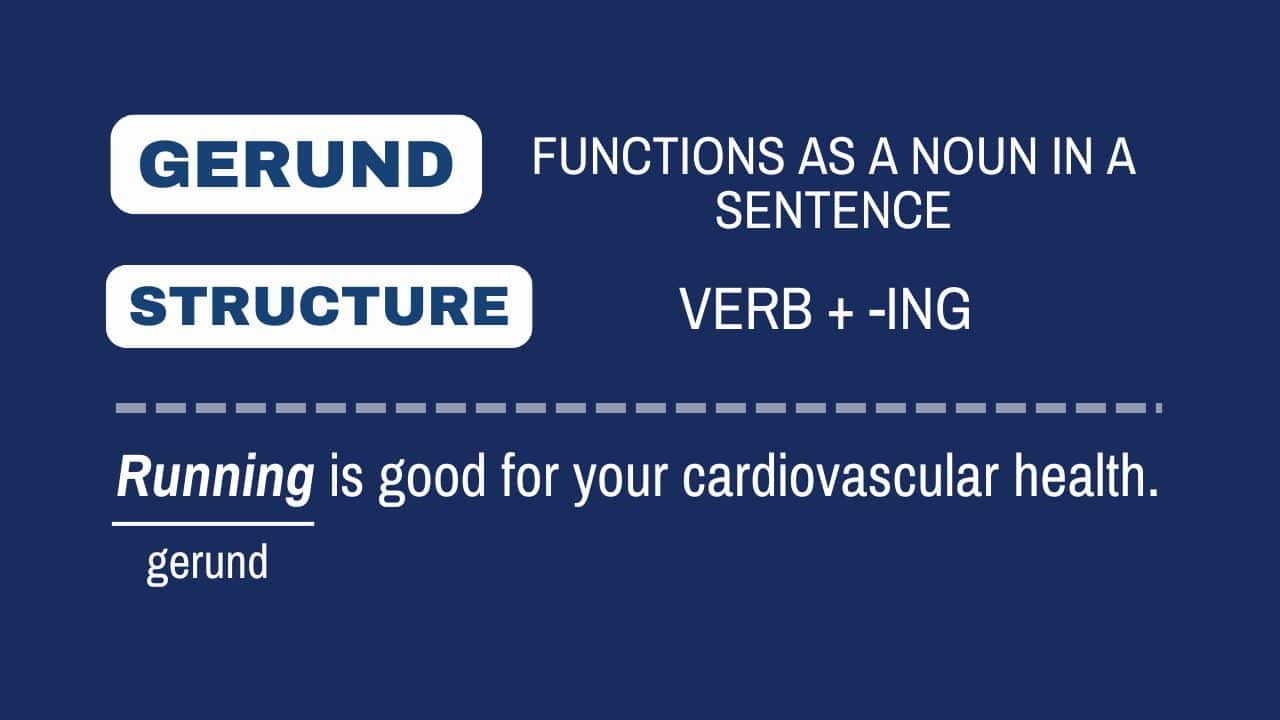
As mentioned earlier, you get a gerund when you add the suffix -ing to a verb. However, the new word, ending with -ing, is no longer considered as a verb but as a noun.
For example:
- Verb: I love to swim.
- Noun: Swimming is my favorite activity.
How about a gerund phrase? It also has an ing word (that functions as a noun) plus object or modifiers.
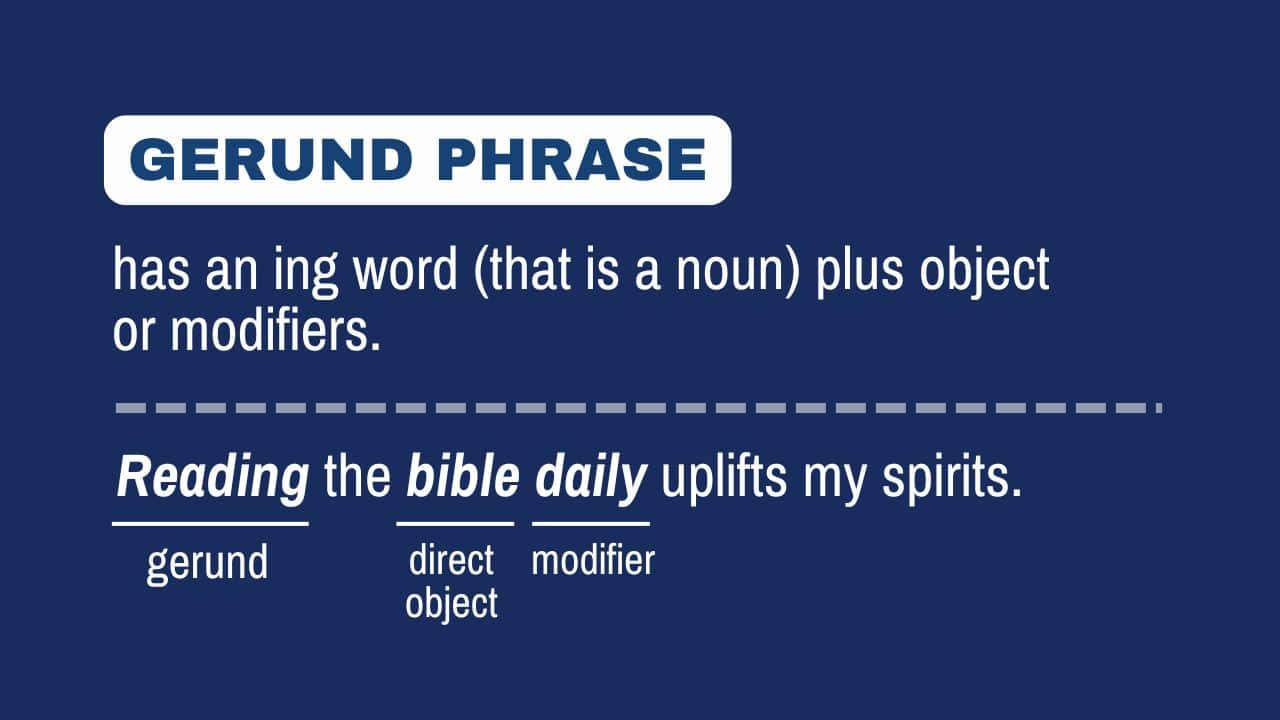
For example:
- Verb: I like to read.
- Gerund phrase: Reading the bible daily uplifts my spirits.
Gerund examples in sentences:
- With journalling, you can express your thoughts and emotions without any judgment.
- Running every morning helps clear my mind.
- Even though she didn’t have any formal training, she still gave singing a try.
- Snowboarding is a popular sport.
How to Identify A Gerund?
You can tell a gerund by checking if the ing word functions as a noun in a sentence. Ideally, gerunds serve as the subject, direct object, indirect object, object of preposition, or subject complement.
Examples:
- Reading improves the mind. (subject)
- She enjoys painting. (object)
What Are the Types Of Gerunds?
You can use gerunds in many ways when creating sentences. As a matter of fact, you can use it as the subject, direct object, indirect object, or even a subject complement in a sentence. Here’s a closer look at each one, with examples.
Subject

This type of gerund, as its name implies, takes the role of the subject in a sentence.
Example sentences:
- Swimming is good for your health.
- Reading helps you learn new things.
Direct Object

A direct object gerund becomes the object of a verb. Essentially, showing what the subject is doing.
Example sentences:
- She enjoys teaching during her free time.
- He avoids eating junk food.
- They started building their new house last month.
Indirect Object

If you want to add more detail to your sentence, you can use this type of gerund. An indirect object gerund follows a verb and before the direct object.
Example sentences:
- She gave cooking exotic dishes a try.
- The renowned dance instructor taught dancing to the children yesterday afternoon.
Object of Preposition

When you want to complete the meaning of a prepositional phrase, you can use a gerund as the object of a preposition. In this case, you write the gerund after a preposition.
Example sentences:
- He got in trouble for stealing.
- He is good at playing the guitar.
Subject Complement

A gerund can also come right after linking verbs and serve as a subject complement. Usually, this helps you rename the subject or provide additional about it. Ideally, the gerund will explain what the particular subject is or does.
Example sentences:
- My favorite pastime is reading.
- Their main goal is winning the tournament.
- Her passion is dancing with friends.
What Is a Participle?
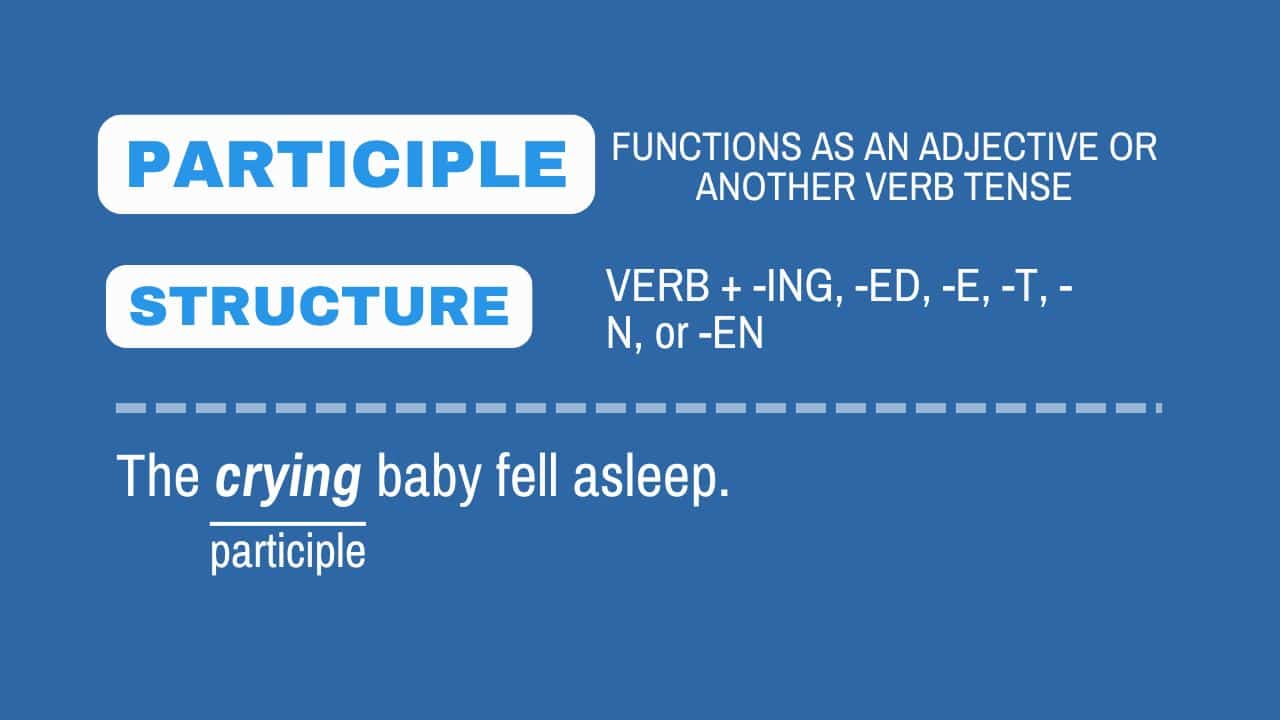
A participle is also created from a verb. But unlike a gerund, the ing form of a verb becomes an adjective or another verb tense.
While you can place participles anywhere in a sentence and use them with auxiliary verbs to form verb tenses, their main role is usually descriptive. In terms of structure, you can write participles in present, past, or perfect tense. It may also form parts of phrases that add more information to a sentence.
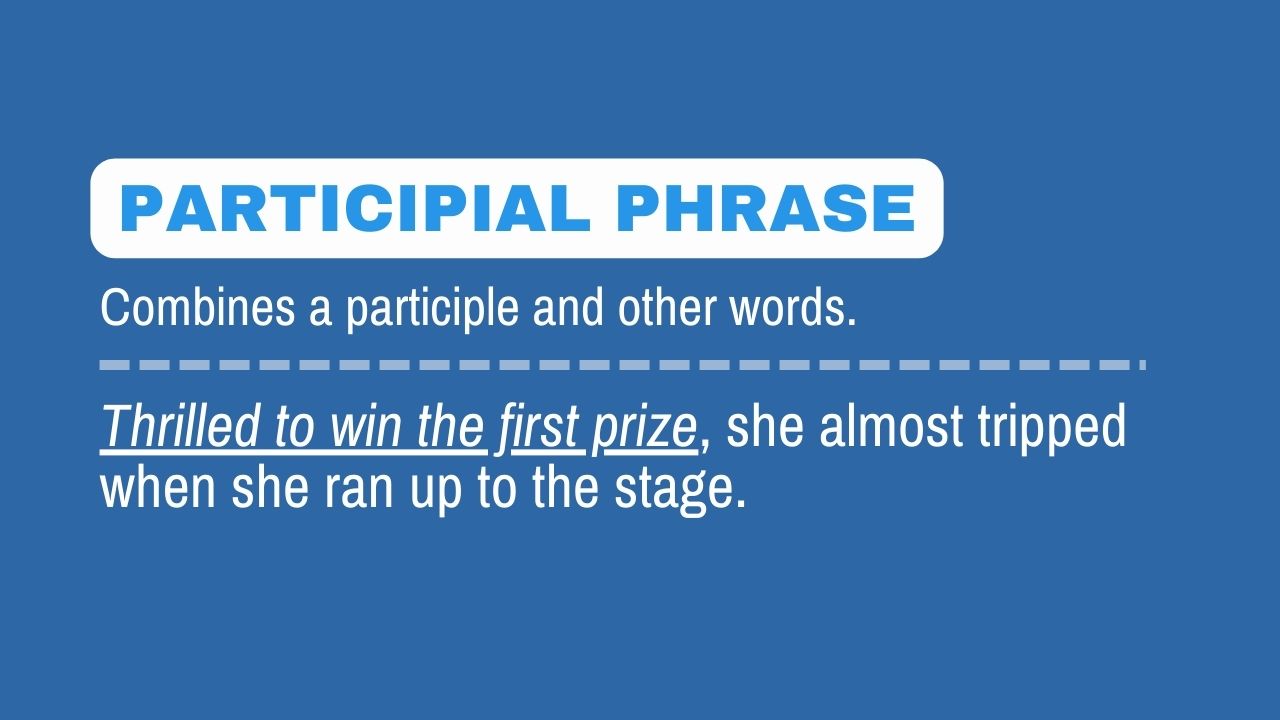
Like gerunds, a participle can be a participial phrase. The difference is that a participial phrase describes a noun (gerund phrases still function as a noun).
For example:
- Thrilled to win the first prize, she almost tripped when she ran up to the stage.
Participle examples in sentences:
- The glowing moon illuminated the night sky.
- Startled by the noise, the cat leaped off the counter.
- The broken vase lay scattered across the floor.
How to Identify a Participle?
To identify a participle, you should check whether the verb form functions as an adjective or part of a verb tense. Participles usually modify nouns or connect with auxiliary verbs to express tense and voice.
Examples:
- The dancing flames hypnotized the campers. (adjective)
- She has finished the project. (verb tense)
What Are the Types of Participles?
You can classify participles into three categories, namely perfect participle, past participle, and present participle.
Present Participle

You can add the -ing suffix to a verb’s base form to create the present participle (for example, “run” becomes “running”). In addition, you can combine auxiliary verbs with present participles to form progressive tenses that describe ongoing actions. Remember, when you use adjectives, they describe nouns.
Example sentences:
- We tried the exciting ride near the café.
- I enjoyed the exciting roller coaster.
- We watched the amazing movie you recommended.
- We saw a sleeping dog by the stairs.
Past Participle
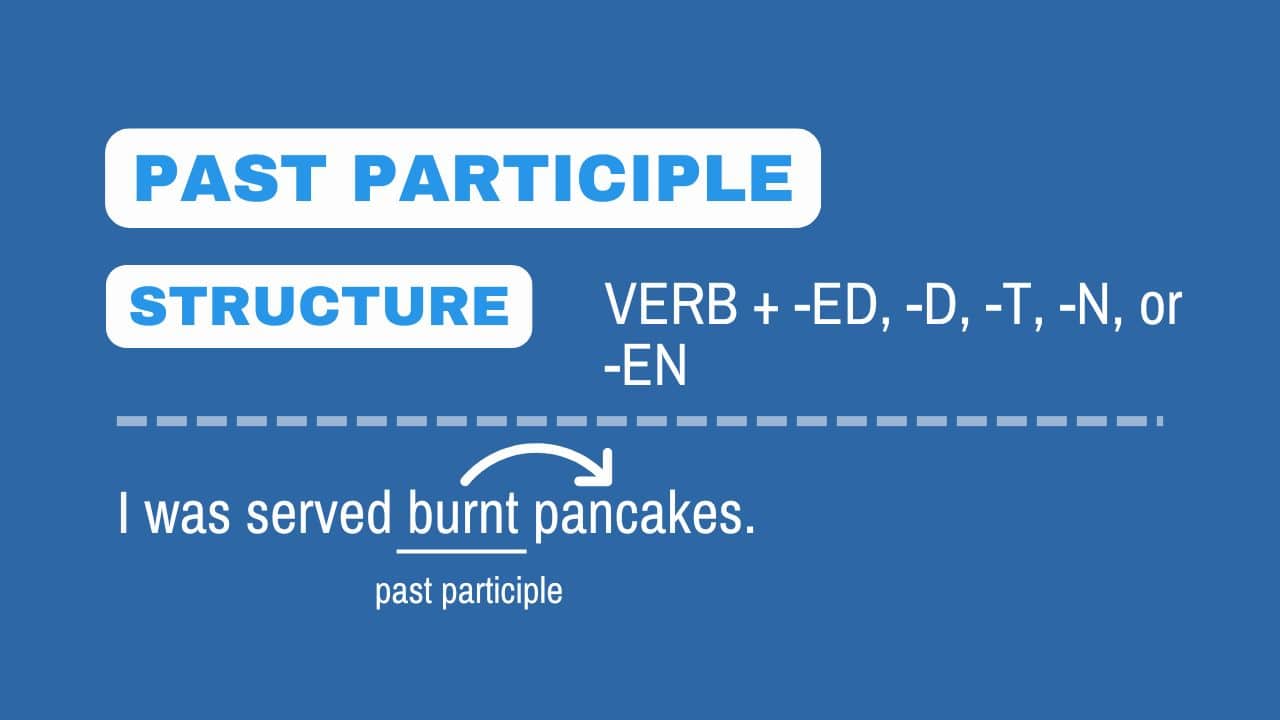
Usually, a past participle ends with -ed, -d, -t, -n, or -en and helps to form perfect tenses and passive voice. You can use them as adjectives to describe a state or condition resulting from an action.
Example sentences:
- The fallen leaves covered the ground.
- She wore a handwoven scarf that caught everyone’s attention.
- The baked cookies smelled delightful.
Perfect Participle
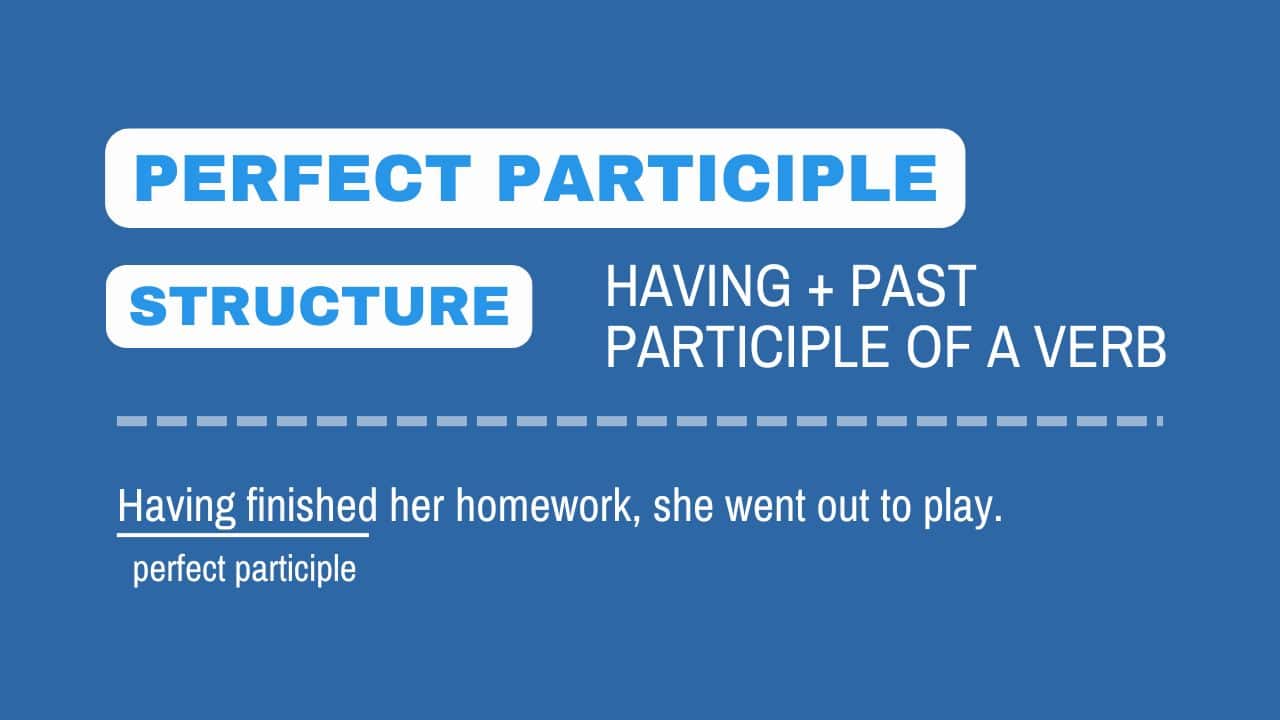
The perfect participle combines ‘having’ with the past participle of a verb (ex., “having eaten”). You can use the perfect participle to indicate that the action was completed before another action took place.
Example sentences:
- Having finished her homework, Sarah joined her friends for a movie.
- Having been warned about the storm, they decided to stay indoors.
- The athlete, having trained for months, was confident about the competition.
What’s the Difference?
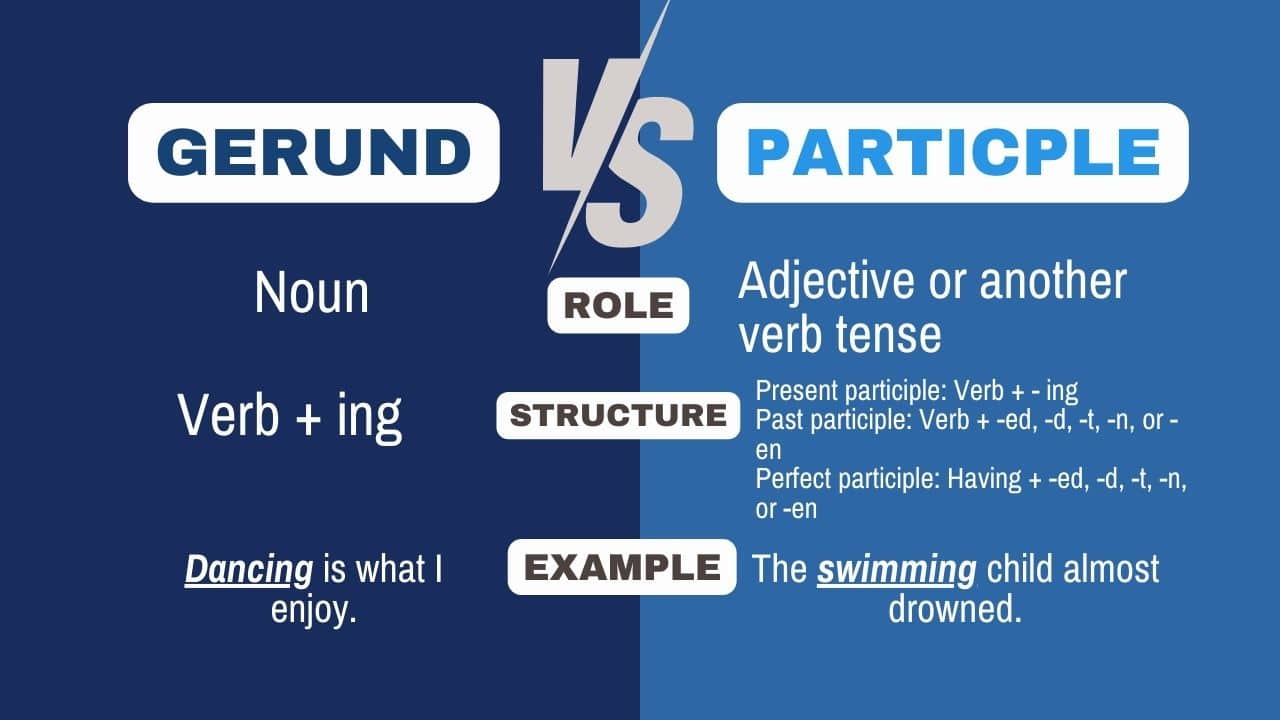
You can tell the difference between a gerund and a participle by looking at their role in a sentence. A gerund is a verbal with an -ing at the end and acts as a noun. On the other hand, a participle is a type of verb that you use in place of an adjective to provide more detail about a noun or pronoun.
| Gerund | Participle | |
| Role | Act as a noun | Act as an adjective or another verb tense |
| Structure | Verb + -ing | Present participle: Verb + – ing Past participle: Verb + -ed, -d, -t, -n, or -en Perfect participle: Having + -ed, -d, -t, -n, or -en |
| Example | Dancing is what I enjoy. | The swimming child almost drowned. |
Tip: How about infinitives? Infinitives have the word “to” before the main verb. For example, “I love to swim.”
Final Thoughts
A gerund and participle are easily confused verbals. Hopefully, you will now be able to tell them apart. And just for a quick reminder, a gerund functions as a noun and has the suffix -ing, while a participle acts as an adjective or part of a verb tense and describes the noun.