Subordinating conjunctions are connectors for sentences. They link added detail to the main point of your sentence, which helps you clarify your idea. You can use words like ‘because,’ ‘while,’ or ‘although’ to give reasons, provide details about timing, or even say something unexpected. And we’re just getting started! Keep reading to learn more about this type of conjunction —we even included clever ways that you can use it in a sentence so you can finally make your writing shine!
Related:
- Conjunctions: When and How to Use Them Properly
- What Is a Preposition?
- Preposition List (With Sentence Examples)
What Is A Subordinating Conjunction?

You can think of subordinating conjunctions as glue for different parts of your sentences. One part is the main idea (independent clause), which can stand alone. The other part is a dependent clause (subordinate clause) which gives more detail on the main idea.
You might be wondering if this type of conjunction should complete a sentence or complete an idea. Well, it can do both! Since a dependent clause is incomplete on its own, a subordinating conjunction links it to the main clause. This, in return, makes your sentence or idea complete.
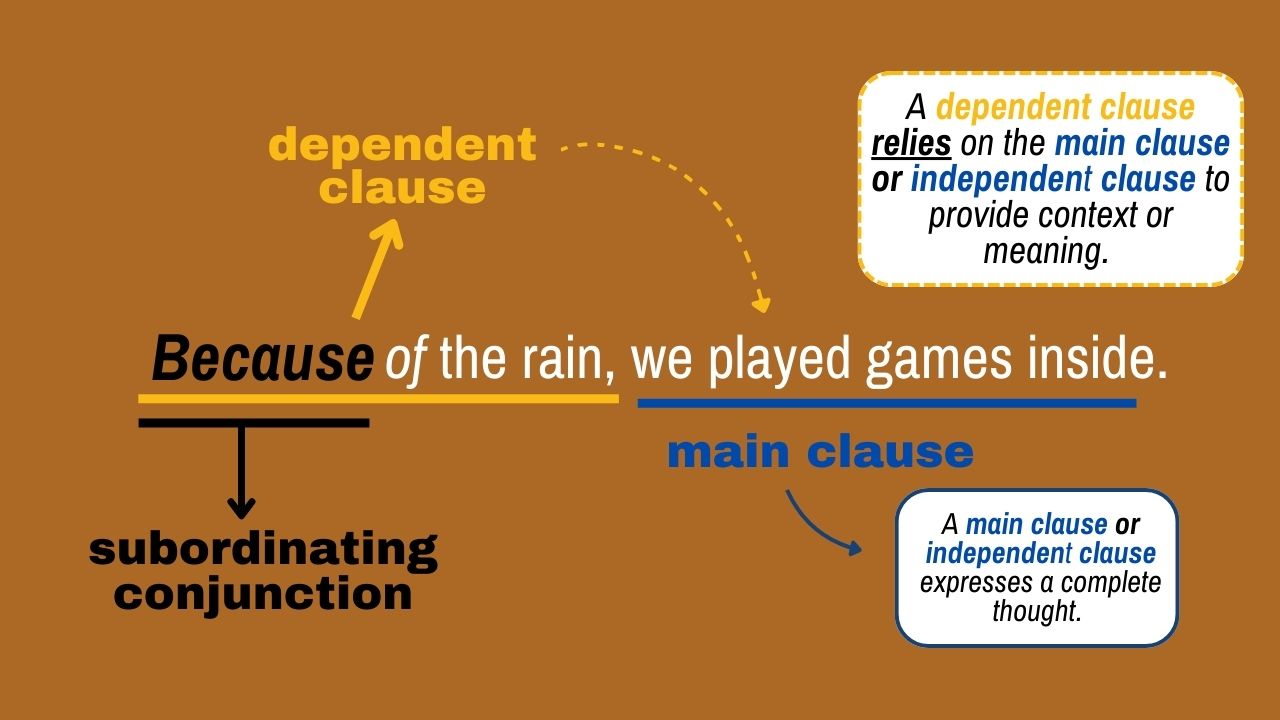
You might say, “Because of the rain, we played games inside.” The ‘because of the rain’ part is not a complete sentence by itself, so it is a dependent clause. It needs the ‘we played games inside’ part to complete the sentence and the idea.
Examples of subordinating conjunctions:
- I’ll stay up until the movie is over.
- As soon as the bell rings, we can get out of here.
- Jerry and David went on a vacation because they were tired.
- Even if it’s late, I’ll wait for you.
- Unless it rains, we’ll have the wedding outdoors.
- I can’t play video games unless I finish my homework.
What Details Should You Add in the Dependent Clause?
Those details could be location-related or specific conditions to support the main idea.
Another detail could be a contrast. You might say, “Even though it’s cold, I’m going swimming in the river.” The ‘even though’ part sets up a surprising contrast to the main idea.
Subordinating conjunctions also introduce adverb clauses. But what’s an adverb clause? An adverb clause is a part of a sentence that answers the when, where, why, how, or what.
As in, “I’ll rake the leaves if it’s sunny.” The ‘if it’s sunny’ part is an adverb clause introduced by the subordinating conjunction ‘if.’
What Are the Different Types of Subordinating Conjunctions?
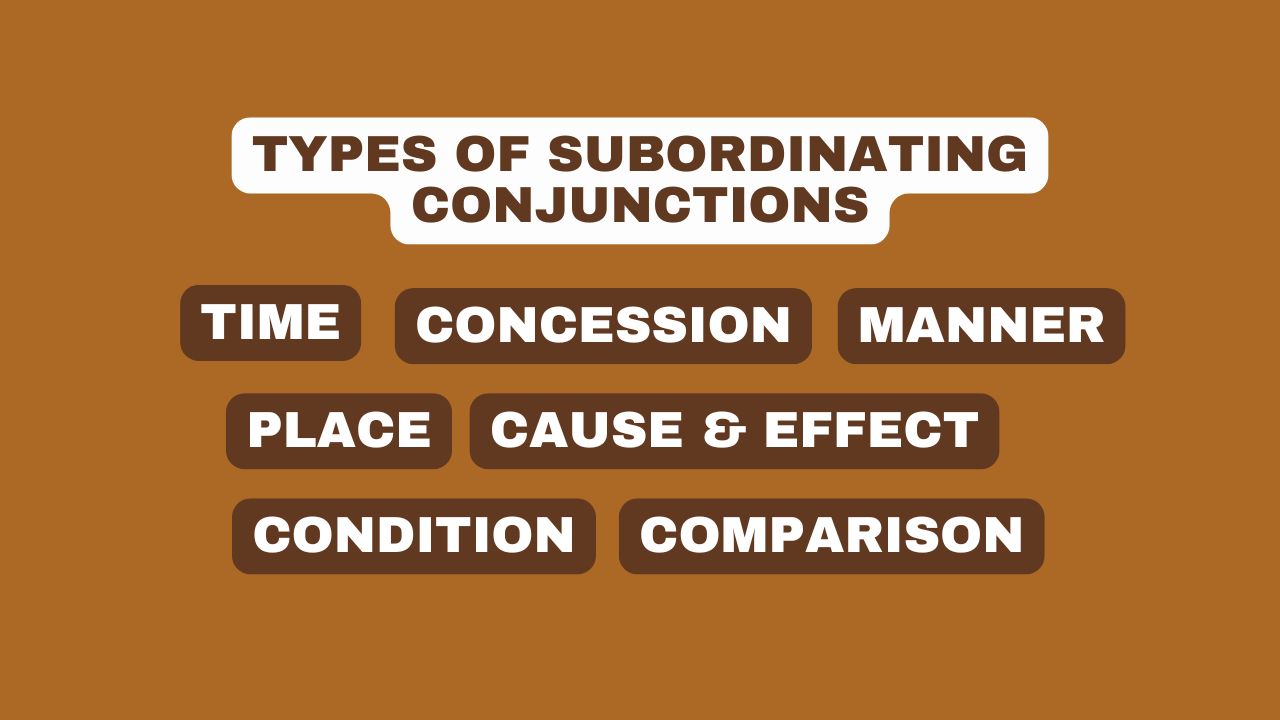
There are several types of subordinating conjunctions. Each type has a different purpose when connecting parts of your sentences—these range from conveying time and place to things like cause and effect and comparison.
Time
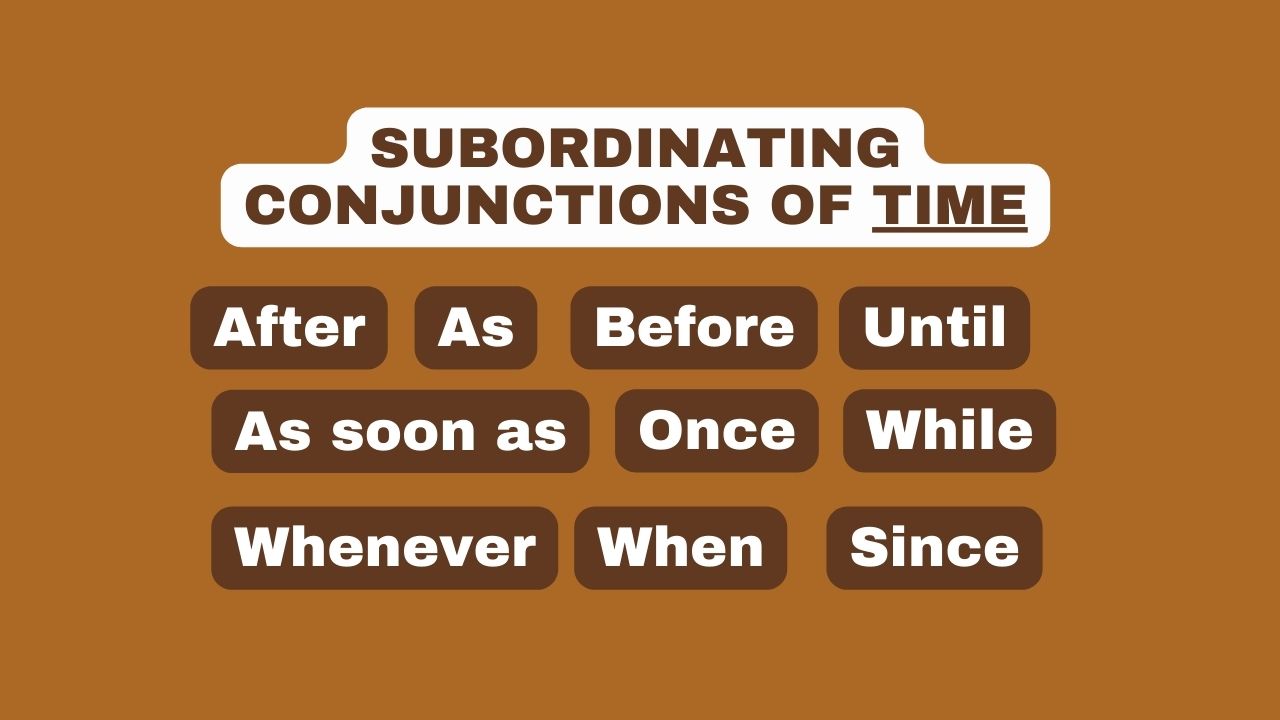
Time-related subordinating conjunctions tell you when something happens. They help you give a sense of timing for the event you’re talking about.
- After
- As
- As soon as
- Before
- Once
- Since
- Until
- When
- Whenever
- While
Place
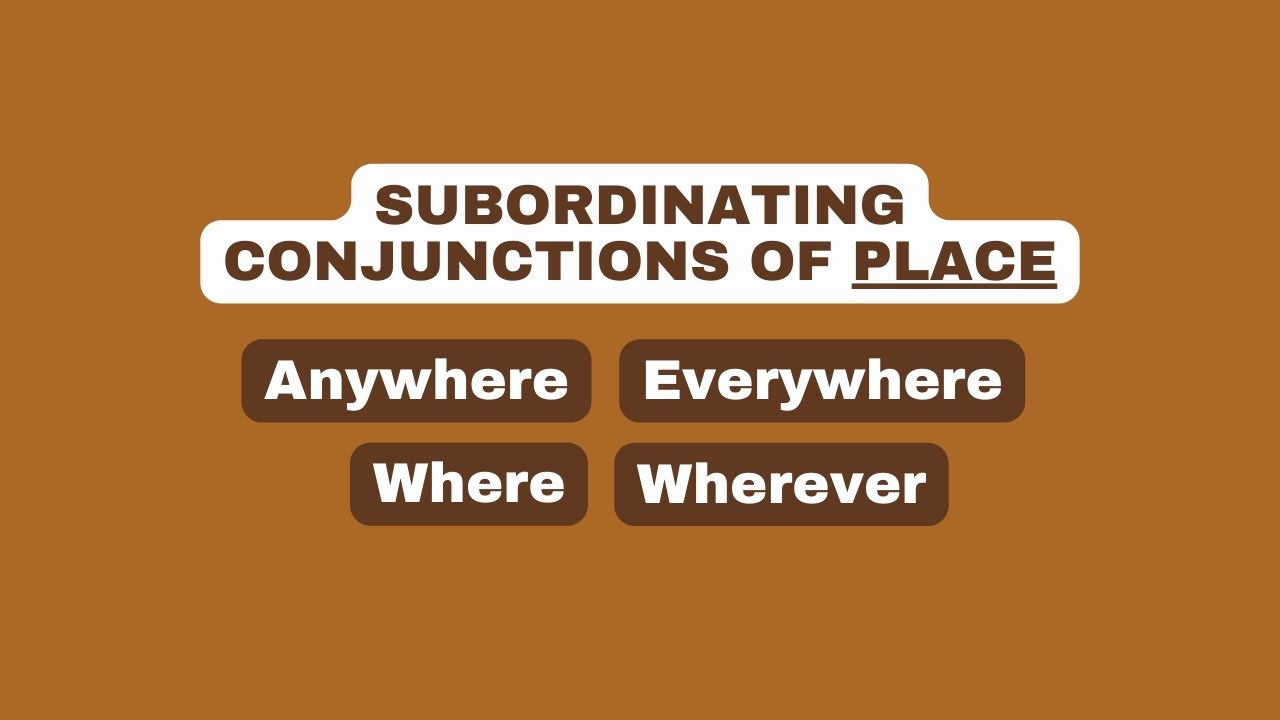
Place-related subordinating conjunctions help you describe where something happens. They help you give details about the location.
- Everywhere
- Anywhere
- Where
- Wherever
Cause & Effect Relationships
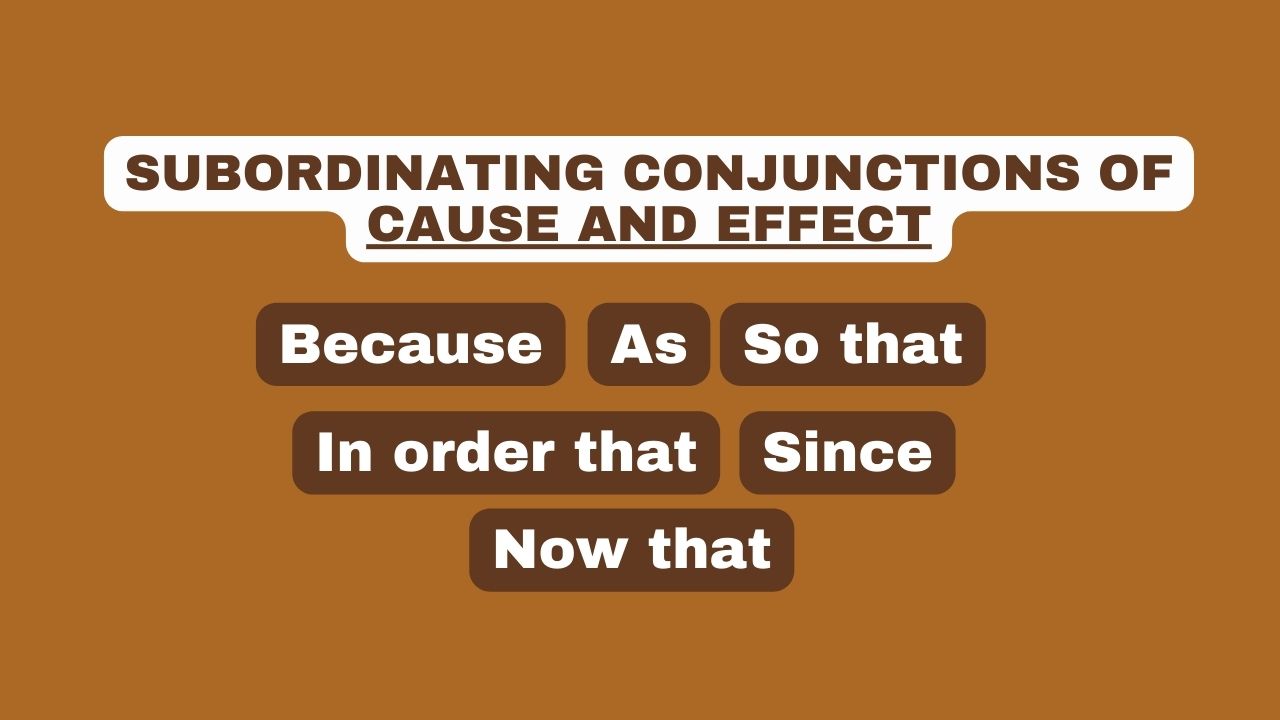
Cause and effect subordinating conjunctions help you describe why something happened. These sentence connectors give you a way to tell what happened, along with details about what made the event happen.
- Because
- As
- So that
- In order that
- Since
- Now that
Condition
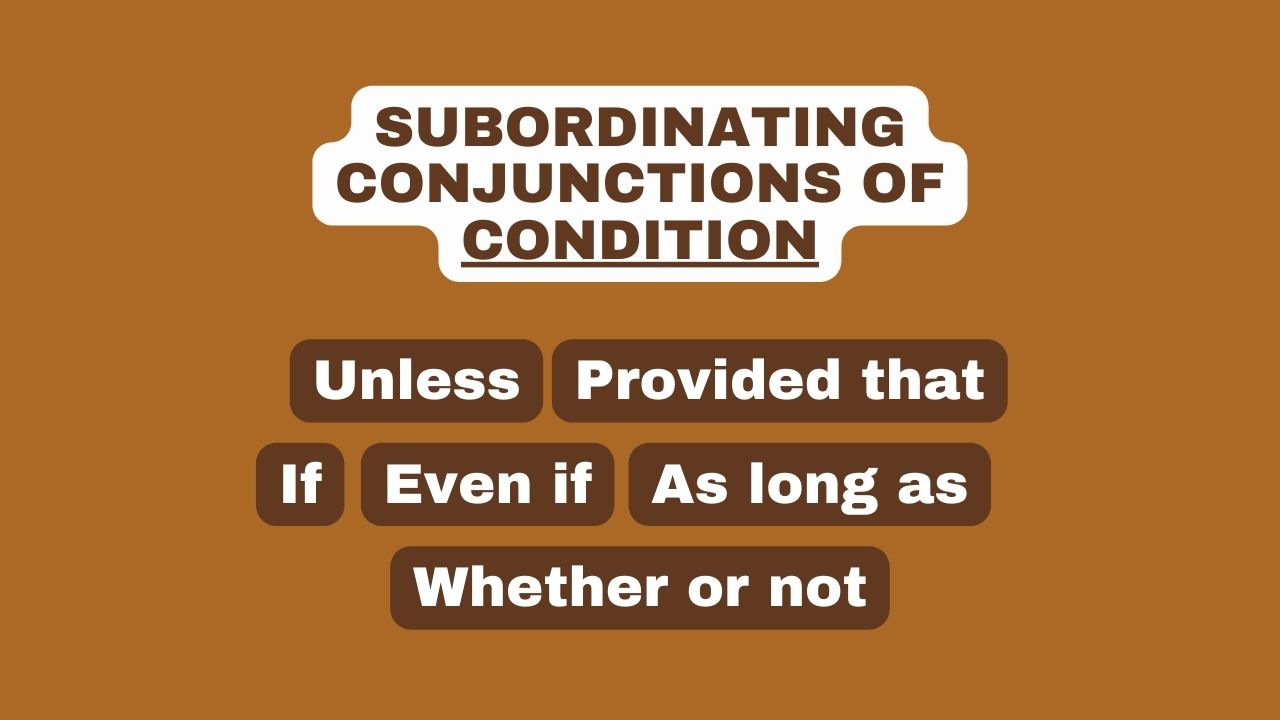
Condition-related subordinating conjunctions give you a way to describe specific circumstances that have to be met for an event to happen.
- Unless
- If
- Whether or not
- In case
- As long as
- Even if
- Provided that
Concession
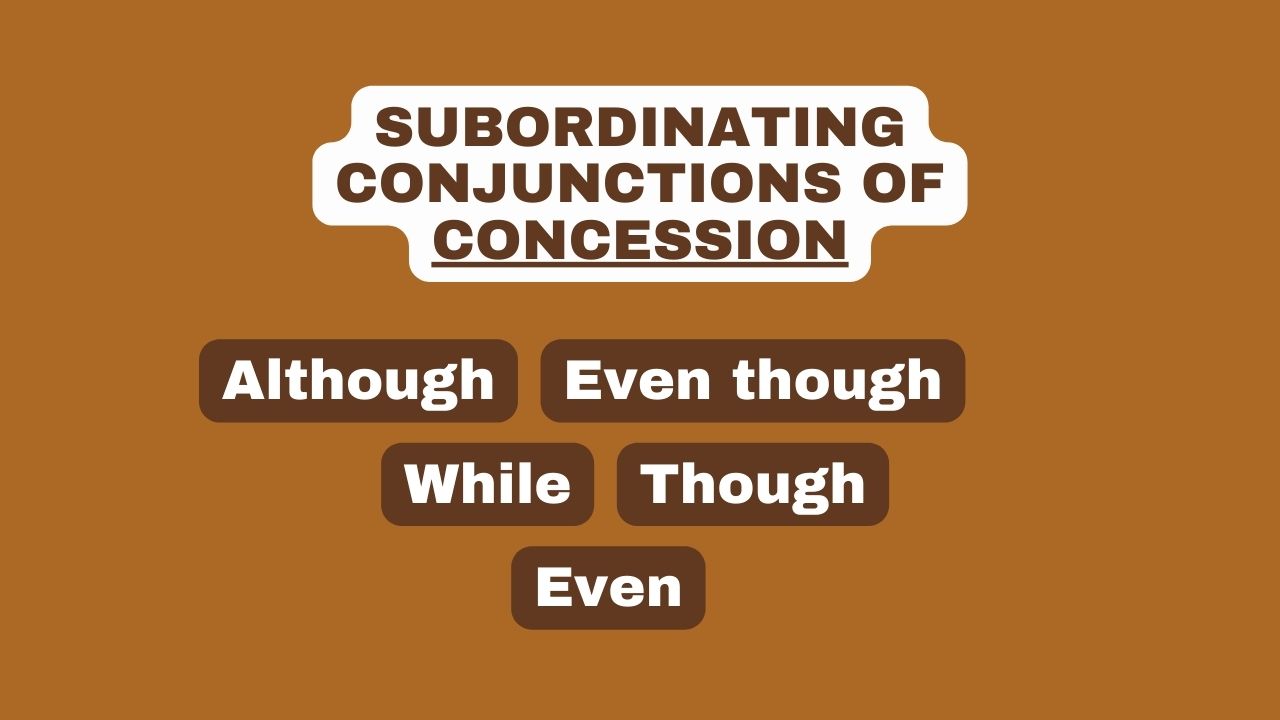
Concession-related subordinating conjunctions describe a contrast or surprising situation. You could use this type to describe an event that happened anyway despite certain conditions that made it unlikely.
- Even
- Even though
- Although
- Though
- While
Manner
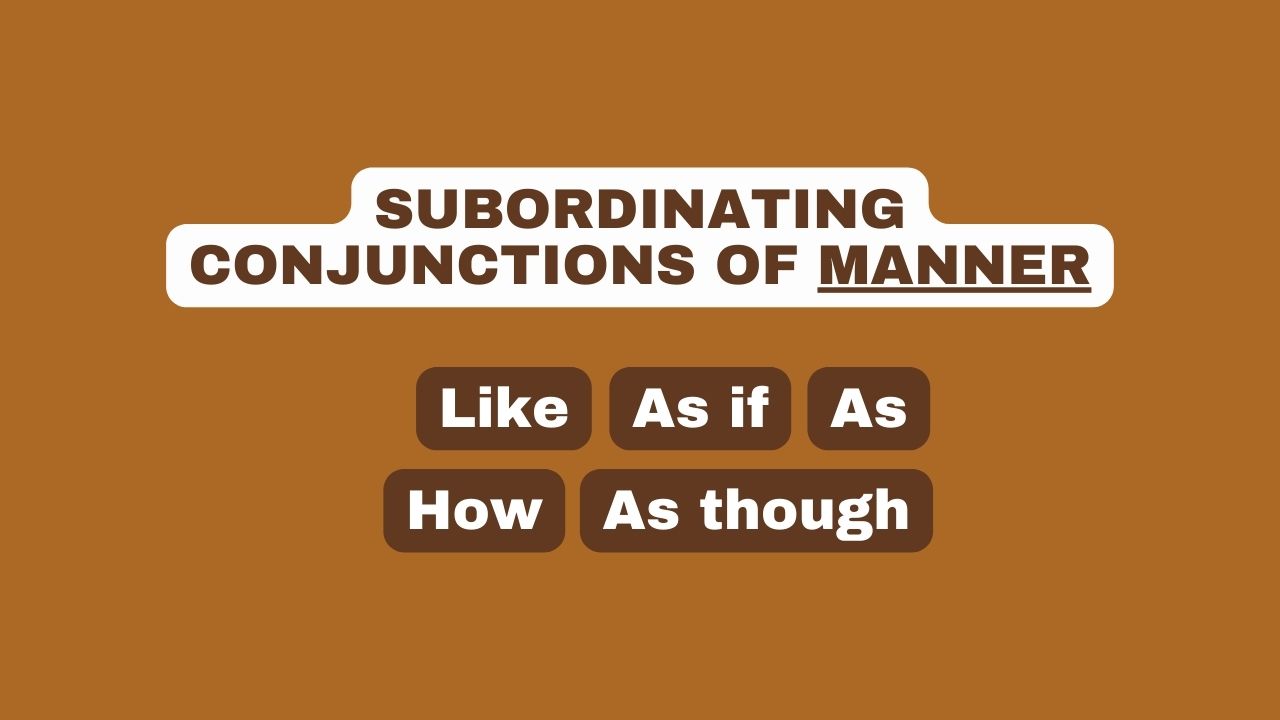
You can use manner-related subordinating conjunctions to give details on how something happened. This type of subordinating conjunction is a great way to give details on actions taken.
- Like
- As if
- As though
- How
Comparison
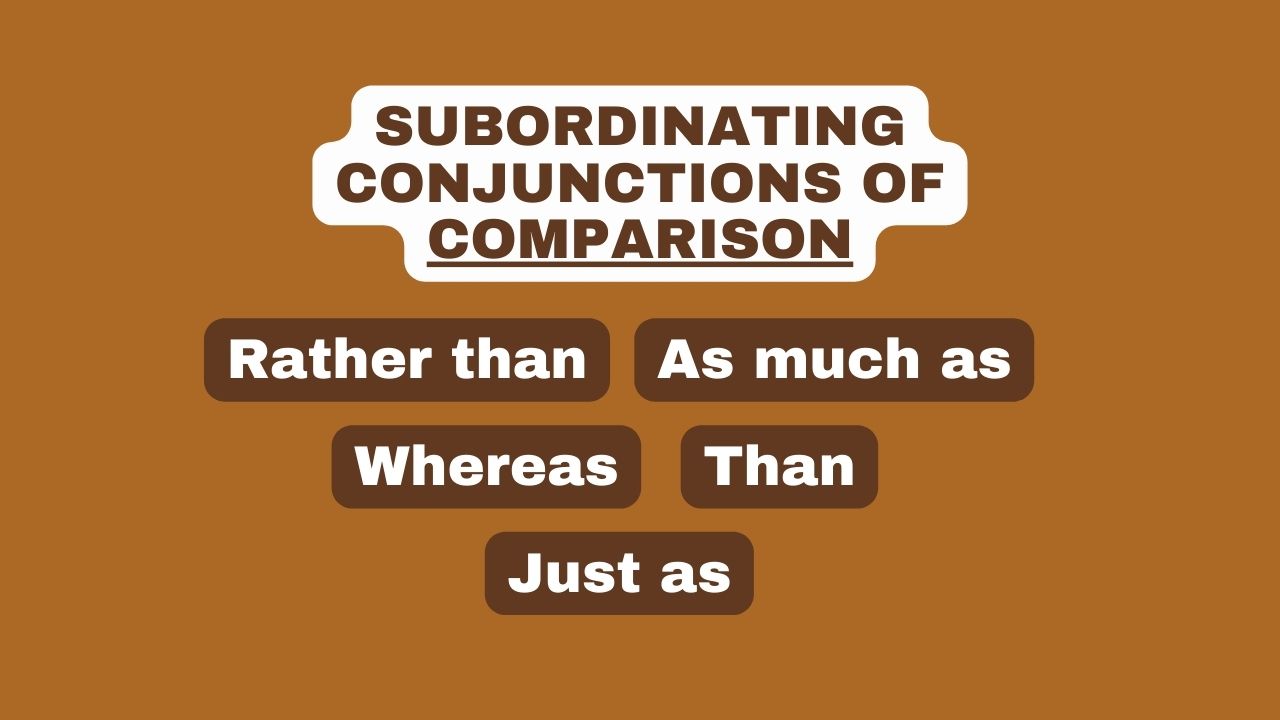
Comparison-related subordinating conjunctions focus on similarities or differences between things included in your sentence.
- As much as
- Than
- Rather than
- Just as
- Whereas
Relative Pronouns
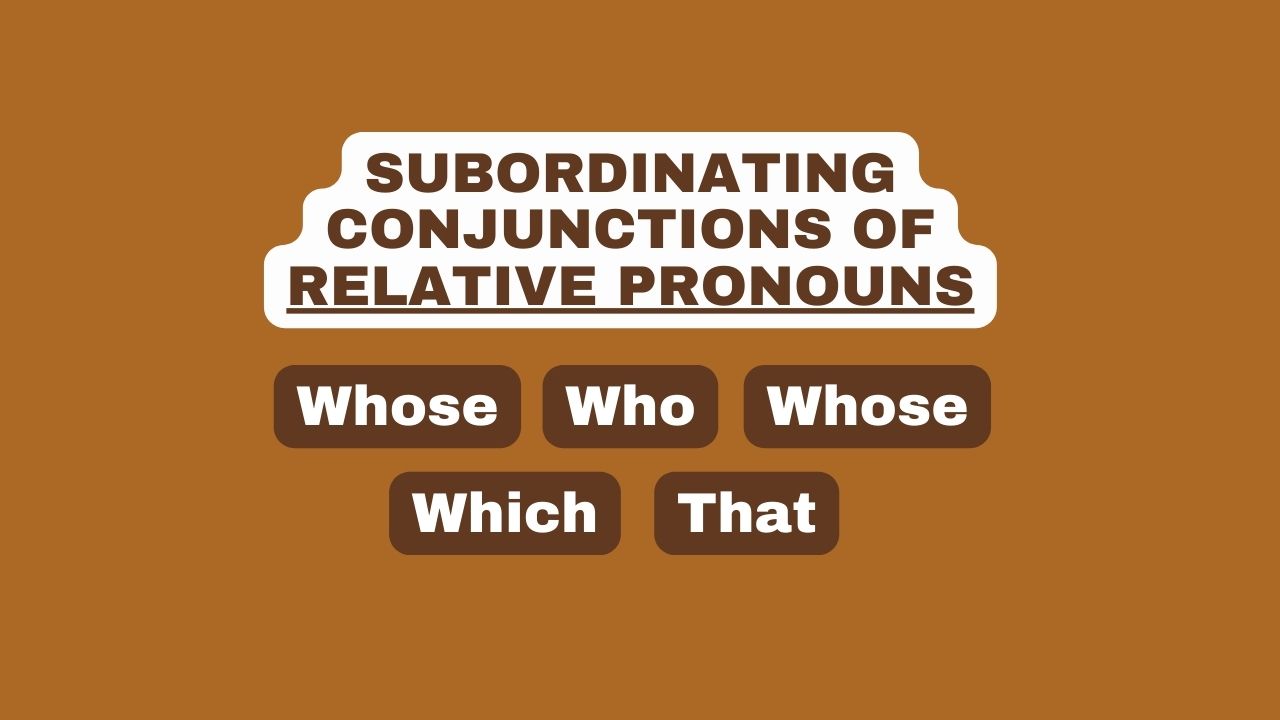
Relative pronouns are subordinating conjunctions that introduce part of a sentence that gives more information about a noun.
- Whose
- Who
- Whom
- Which
- That
How to Use Subordinating Conjunctions in a Sentence?
You use a subordinating conjunction at the beginning of the dependent clause. The dependent clause can be at the start or in the middle of a sentence.
If you use it (the dependent clause) to start the sentence, the comma placement should be after it. Keep in mind a comma should never appear before a subordinating conjunction.
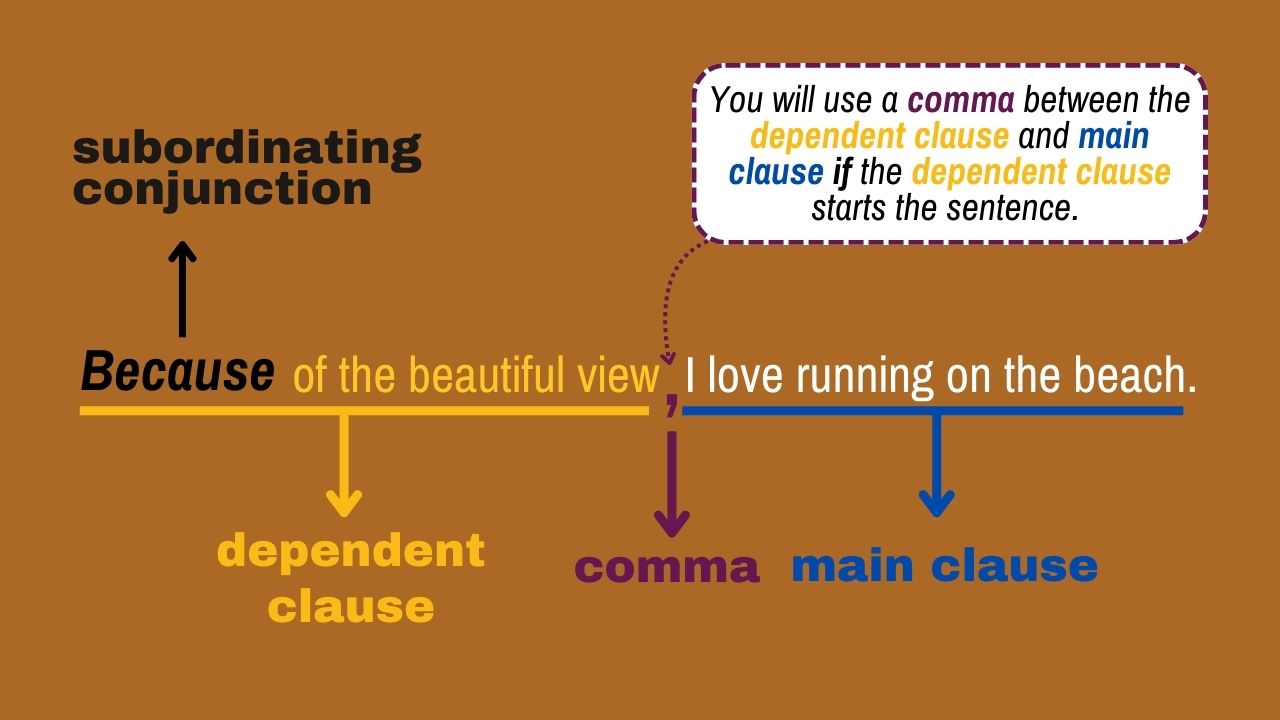
For example:
“Because of the beautiful view, I love running on the beach.”
If you put the dependent clause at the end of the sentence, no comma is needed. As in:
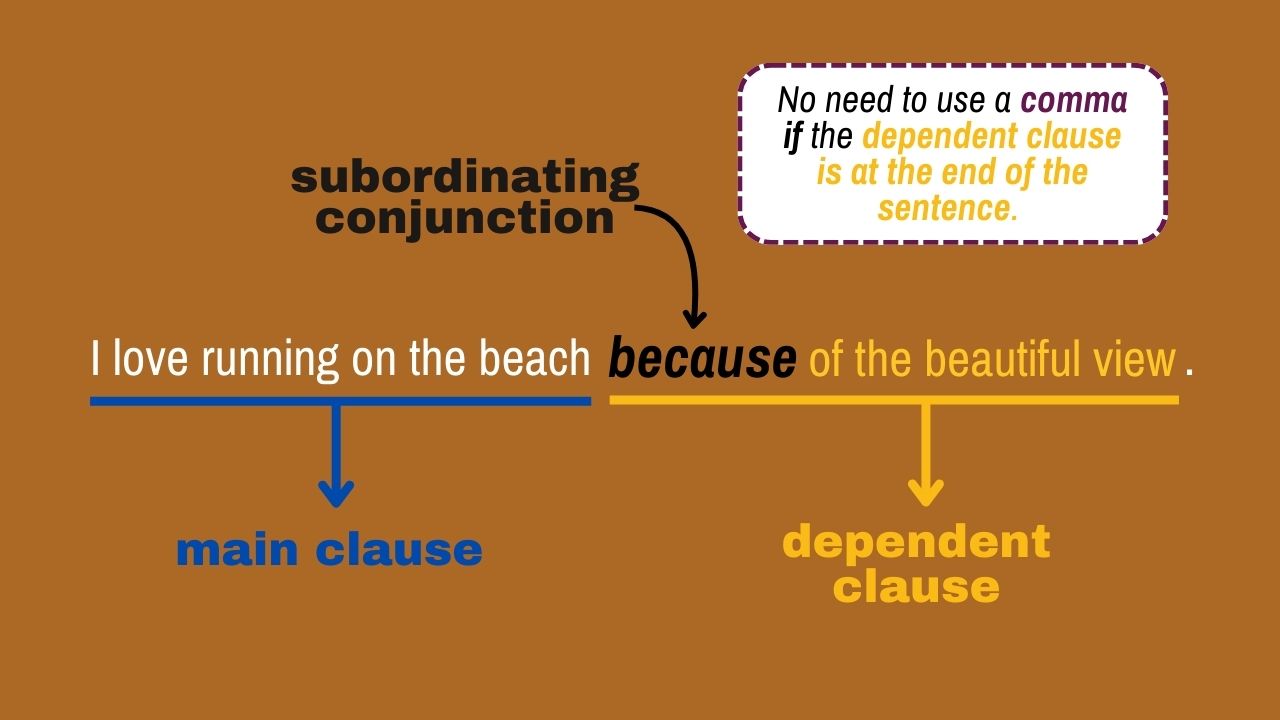
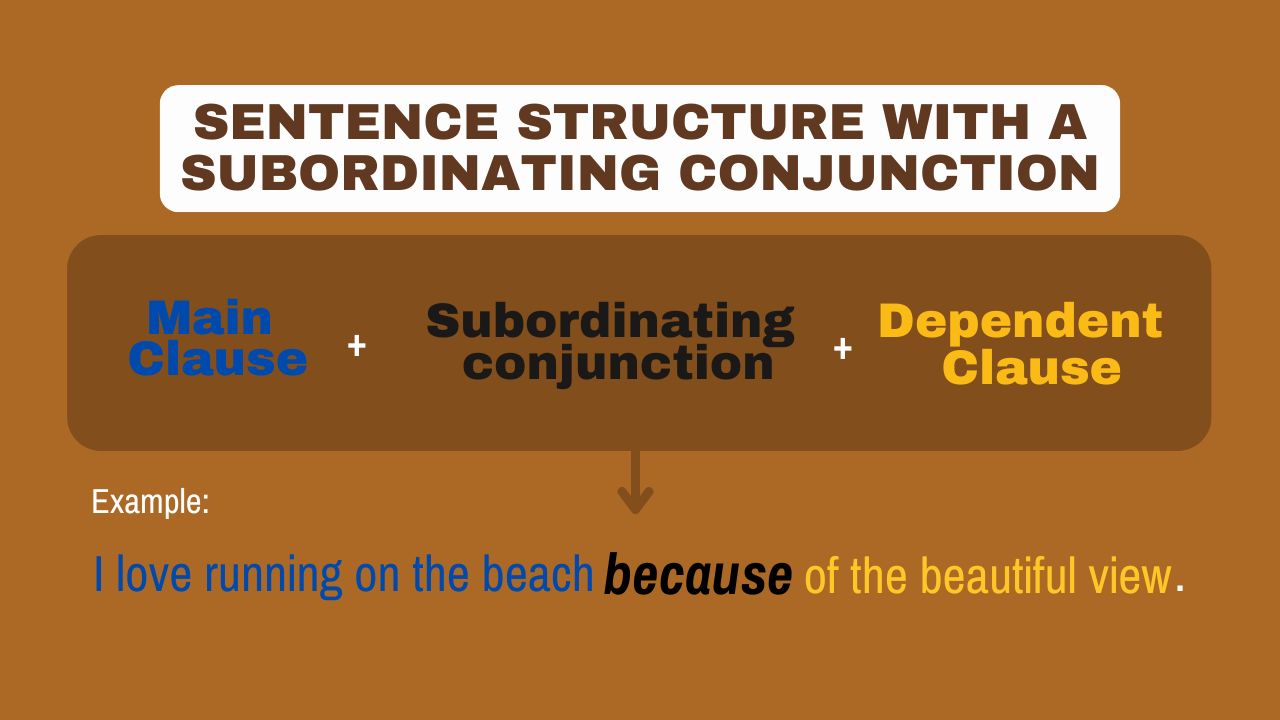
“I love running on the beach because of the beautiful view.”
So, there are two ways you can build a sentence with a subordinating conjunction:
The first way is to start with an independent clause (the main idea) and then a subordinating conjunction. Next, add a dependent clause (detail about the main idea).
Here’s what this looks like:
Another way is to start with a dependent clause followed by a subordinating conjunction, a comma, and then the main idea.
Here’s what this looks like:
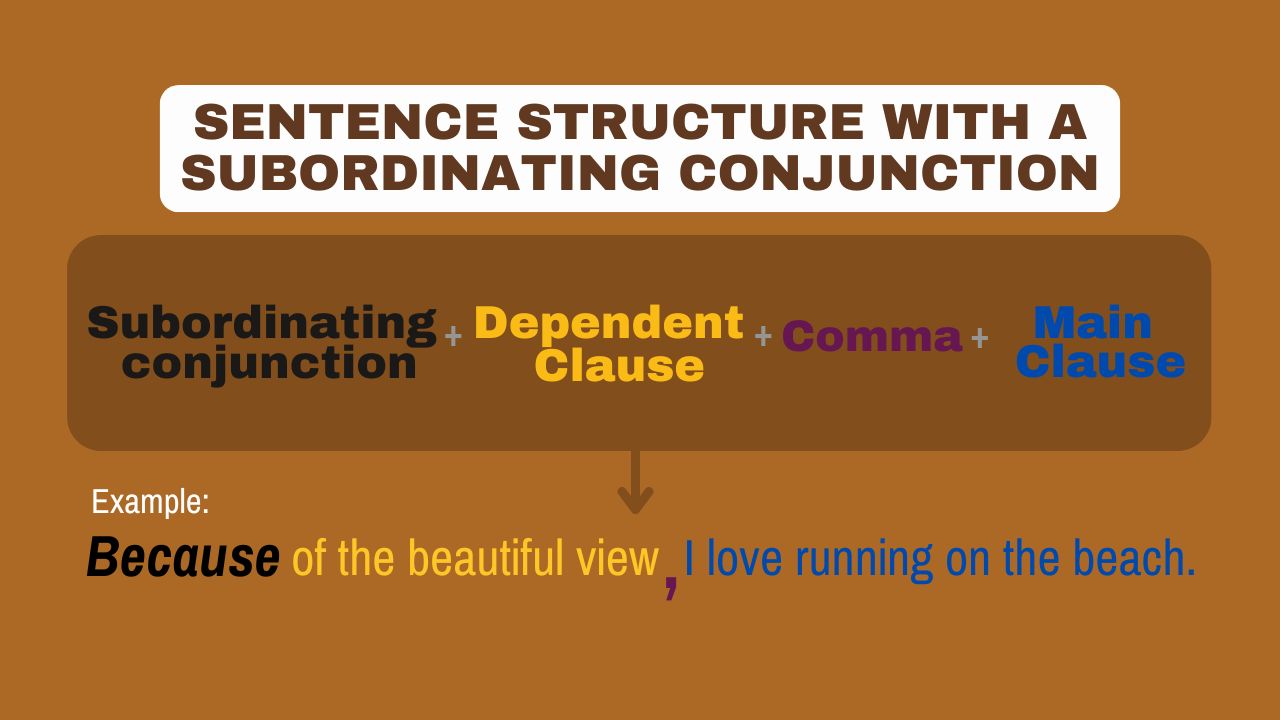
Tip: To help you remember whether or not you should use a comma, identify first where the dependent clause (a statement that can’t stand on its own) is in the sentence. If it’s in the beginning, you should add a comma at the end of the dependent clause.
Subordinating Conjunctions Versus Conjunctive Adverbs

You can use both subordinating conjunctions and conjunctive adverbs to connect ideas in sentences, but they work in different ways.
With subordinating conjunctions, you connect a dependent clause to an independent clause, which creates a complex sentence. On the other hand, you use conjunctive adverbs to create a compound sentence showing the relationship between the two independent clauses. That relationship might be contrast, cause and effect, sequence, or emphasis.
Some examples of conjunctive adverbs are ‘however,’ ‘therefore,’ and ‘then.’ They are often used in formal writing and are commonly found after a semicolon and followed by a comma.
For example:
“The process was complicated; therefore, daily repetition was necessary to ensure safety.”
In the example sentence, “therefore” is a conjunctive adverb that connects the two independent clauses.
Subordinating Conjunctions Versus Coordinating Conjunctions

Subordinating conjunctions create a dependent relationship between a dependent clause and an independent clause. On the other hand, coordinating conjunctions connect equal parts (independent clauses).
There are seven coordinating conjunctions. Just remember the acronym FANBOYS, which stands for the following coordinating conjunctions: for, and, nor, but, or, yet, so.
As an example, in the sentence “She promised to meet him, but she didn’t show up,” ‘so’ is a coordinating conjunction that connects the two independent clauses “She promised to meet him” and “She didn’t show up.”
Subordinating Conjunctions Versus Prepositions

Prepositions are different from subordinating conjunctions because they show a relationship between a noun or pronoun and another word in your sentence. This relationship can be of time, place, or direction. The relationship could also be in manner, cause, or amount.
After a preposition, you usually use a noun or pronoun, and it’s called the object of the preposition. Examples of prepositions include ‘in,’ ‘at,’ ‘on,’ ‘over,’ and ‘through.’
As an example, in the sentence “I sit in the recliner,” ‘in’ is a preposition that shows where I sit.
Subordinating Conjunctions List
- After
- As
- As soon as
- Before
- Once
- Since
- Until
- When
- Whenever
- While
- Everywhere
- Anywhere
- Where
- Wherever
- Because
- So that
- In order that
- Since
- Now that
- Unless
- If
- Whether or not
- In case
- As long as
- Even if
- Provided that
- Even
- Even though
- Although
- Though
- While
- Like
- As if
- As though
- How
- As much as
- Than
- Rather than
- Just as
- Whereas
- Whose
- Who
- Whom
- Which
- That