The letter B holds a surprising amount of botanical diversity. From the everyday staples sitting in your fruit bowl to obscure tropical varieties you’d need a plane ticket to taste, this list covers way more ground than you’d expect. Let’s get into it.
Related:
Banana
Bananas are the poster child of convenient eating, but most people have only tasted one variety their entire lives: the Cavendish. Wild bananas contain large, hard seeds and aren’t nearly as sweet as what you grab at the grocery store.
Fun Fact: One medium banana provides about 375 mg of potassium.
Black Mulberries
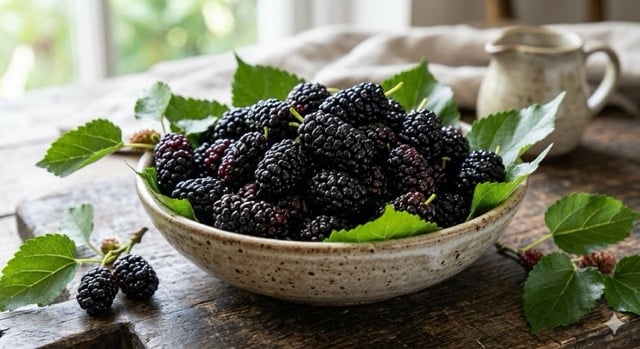
These look like elongated blackberries but carry a much more intense, tart punch than their commercial counterparts. Originating in Western Asia, the slow-growing Morus nigra tree produces delicate, seedless fruits with a heavy concentration of iron and anthocyanins.
Unfortunately, you rarely find them in a grocery store because they collapse almost immediately after being plucked.
Blackberry
Wild blackberries grow aggressively along roadsides and forest edges, spreading through thorny canes that will take over your yard if you let them. The flavor varies with ripeness: underripe berries taste tart and sour, while fully ripe ones are intensely sweet.
Brazilian Guava
This small, round fruit has bright yellow skin and pink or white flesh (depending on its origin) that smells strongly aromatic even before you cut it open. Distinct from the common guava, this smaller, rounder fruit is often called the “Araçá”. Its flesh is notably acidic and fragrant, making it a favorite in South America for creating sharp jellies or juices.
Blood Orange
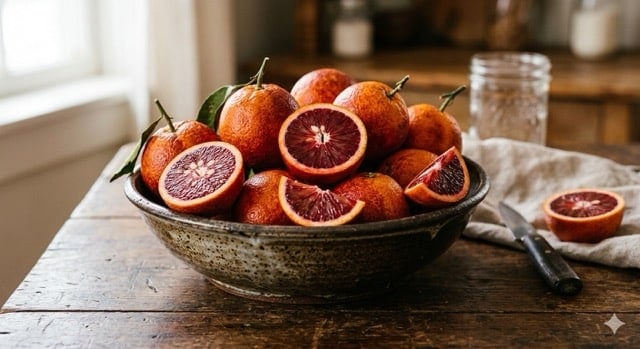
Blood oranges taste like regular oranges but with raspberry or strawberry notes mixed in, and some varieties are so tart they make your mouth pucker. Sicily produces some of the most prized blood oranges in the world, and the season is frustratingly short, usually just a few months in winter and early spring.
So, why does it have dark red flesh? Well, it comes from anthocyanins, pigments uncommon in citrus fruits, and the color develops best when temperatures range from 46°F to 59°F during fruit maturation.
Black Currant
These tiny, dark globes carry an earthy, almost medicinal flavor that makes them a staple in European syrups and liqueurs, such as Crème de Cassis. While they were banned in parts of the US for years due to a timber disease concern, they are making a comeback as a powerhouse for tart preserves.
Betel Nut
This isn’t technically a fruit but rather a seed from the areca palm. People across Asia chew betel nut wrapped in leaves as a stimulant. Unfortunately, areca nut chewing is one of the major risk factors for oral cancer. As a matter of fact, the International Agency for Research on Cancer classified it as carcinogenic.
Bael
Bael fruits have an incredibly hard shell. Once you open it, you are greeted by a sticky, aromatic pulp. The flavor is sweet with hints of marmalade. And in India, people make it into a drink called sharbat.
Fun Fact: The tree itself is sacred in Hinduism, and you’ll often find bael trees planted near temples across South Asia.
Breadfruit
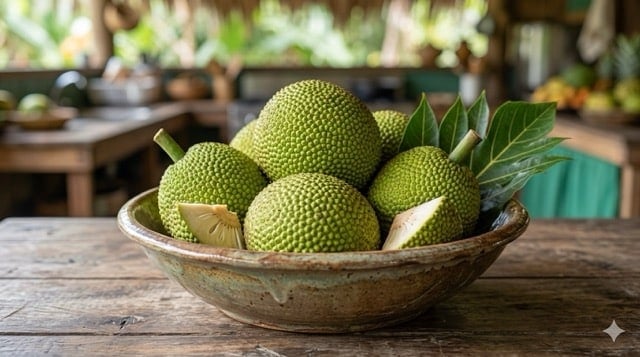
When cooked, breadfruit has a starchy texture similar to potatoes and a slightly sweet flavor that works in both savory and sweet dishes. The fruit grows to the size of a small watermelon and has a bumpy green skin that turns yellowish when ripe.
Black Diamond Apple
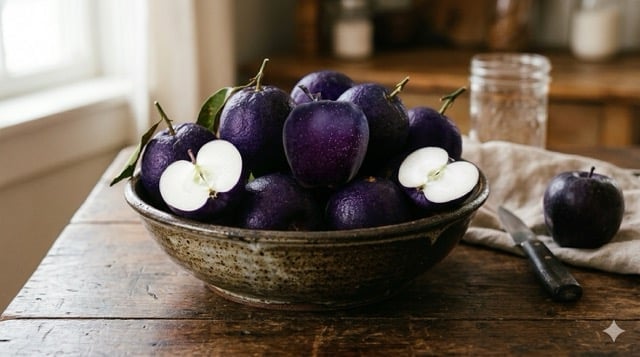
Grown at high altitudes in Nyingchi, Tibet, these fruits develop a deep, midnight-purple skin due to the intense ultraviolet light and drastic temperature swings in the mountains. While they look like something out of a dark fairy tale, the bright white flesh is surprisingly sweet, often containing a higher natural sugar content than your standard grocery store Gala. The trees are notorious for being difficult to cultivate, taking up to eight years to produce a single harvest that only lasts for a few months each year.
Black Apple
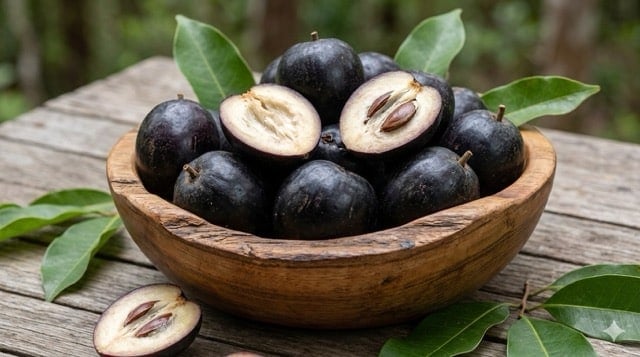
While the Tibetan variety steals the spotlight for its unique skin, the Australian Black Apple (Pouteria australis) is a distinct botanical species found in Australia’s rainforests.
It looks more like a large, dark plum than a standard apple, with a tough, leathery skin. Unlike its Asian namesake, this wild fruit isn’t typically eaten raw by choice; it is quite astringent until it is almost overripe and falling off the tree.
Bignay
These small red berries grow in clusters on trees native to Southeast Asia and turn from green to red to dark purple as they ripen. Bignay tastes quite sour when eaten raw, which is why most people cook them into jams, wines, or syrups with added sugar.
More Fruits That Start With B
- Bitter Melon
- Blood Lime
- Blueberry
- Black Cherries
- Bilberry
- Boysenberry
- Barbadine (Giant Granadilla)
- Babaco
- Bacuri
- Batuan
- Beach Plum
- Bearberry
- Bengal Currant
- Biriba
- Bitter Orange
- Black Sapote
- Black Raspberry
- Blue Tongue Fruit
- Bolwarra
- Brush Cherry
- Buddha’s Hand
- Buffaloberry
- Burdekin Plum
- Button Mangosteen