F fruits may not be as common or popular as bananas, apples, pineapples, or strawberries. But they most certainly exist and, of course, are delicious, too. So, whether you are curious about what fruits start with F or would love to try a produce you have never tasted before, read on.
Related:
- Fruits That Start With S
- Vegetables That Start With B
- What Is Veganism and Is It Different From Vegetarianism?
Fuji Apple
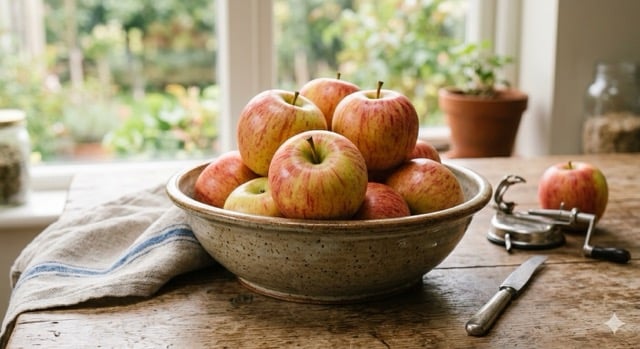
Fuji apples were cultivated in Japan in the late 1930s. They are spherical, reddish-yellow, with a very sweet flavor and a crisp texture. These apples are nutritious, too! They are high in fiber and vitamin C.
So, how would you eat them? Well, just like regular apples! You can eat them as is (or without the skin) or use them in many dishes, such as pies. And, unlike other fruits, Fuji apples last longer (especially when refrigerated), making them a practical choice if you want a healthy snack to have around the house.
Fun Fact: In 2025, United States farmers harvested over 25 million bushels of Fuji apples.
Fascell Mango
Finding the Fascell mango variety is a bit challenging because it’s mainly grown in South Florida and produced on a very limited scale. This variety has an oval shape with smooth yellow skin when ripe. Its soft, juicy flesh has a mild, traditional mango flavor and tastes sweet.
In terms of nutritional value, it contains vitamins A and C, which support skin and immune health. You can eat it as is, add it to fruit bowls, or blend it into delicious smoothies.
Finger Lime
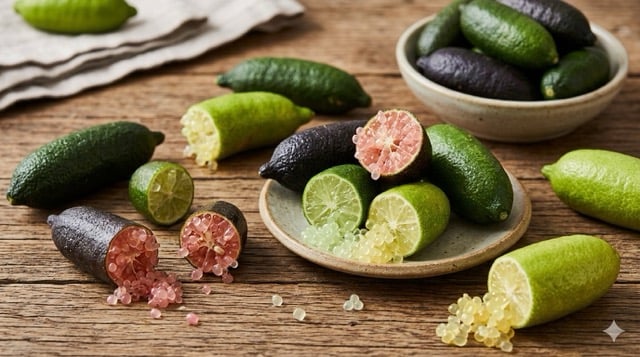
This long, narrow fruit comes from the rainforests of eastern Australia. And inside holds small, bead-like pulp often called citrus pearls or caviar. These burst with a fresh, tangy flavor when you eat them. You can use it in drinks, desserts, or as a garnish for seafood. It also works well in chutneys and marmalades.
Fairchild Tangerine
Want more citrus fruit? Give Fairchild tangerines a try. This hybrid variety between the Clementine mandarin and the Orlando tangelo has a deep orange color and a slightly flattened shape. Inside, it has juicy flesh with a rich, sweet-tart taste. And, its skin can be harder to remove than that of other tangerines.
You can eat it fresh or use it in juices and desserts. It is also a good source of vitamin C, which supports immune health.
Forest Strawberries
Forest strawberries are smaller than the ones you buy in stores. They grow naturally across the Northern Hemisphere, often in woodlands and open fields. And despite their size, they have a strong, sweet-tart flavor that’s more intense than that of regular strawberries. You can eat them fresh or use them in jams, desserts, and sauces.
Fe’i Bananas
Fe’i bananas look very different from common bananas, because instead of hanging downward in bunches, they grow upright, pointing toward the sky. Plus, their skin turns bright orange or red, with a yellow or orange flesh inside. They also need to be cooked before eating —they can taste slightly astringent when raw.
Fun Fact: They grow mainly in Pacific islands and likely originated in New Guinea.
Fazli Mango
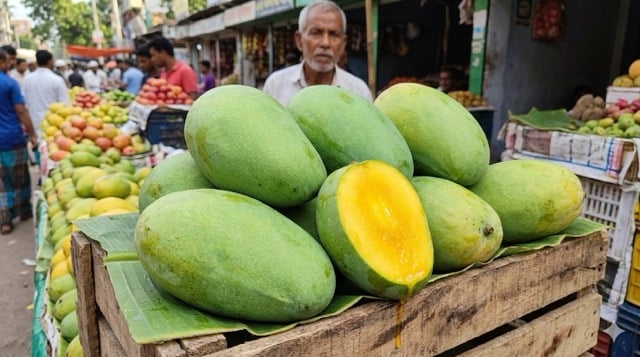
Fazli mango is one of the largest mango varieties, sometimes weighing close to a kilogram (that’s one piece only!). The skin stays greenish-yellow even when ripe, and the flesh inside is firm, juicy, and only mildly fibrous. When you taste it, you get a balanced, slightly tangy sweetness. It’s very popular for juices, jams, and pickles because of its size and texture.
Fun Fact: This type of mango is mainly grown in Bangladesh and eastern India.
Fox Grape
You may not see fox grapes in stores, but they grow naturally across eastern North America. The fruit has a thick skin and a strong, musky aroma usually described as “foxy.” And when you eat one, the skin slips off easily, leaving a soft, juicy pulp inside. If you get them from your local farmer’s market, rinse them under water and enjoy them fresh. You can also use them in juices, jelly, or wine.
Fun Fact: Concord grapes are derived from fox grapes!
False Mastic Fruit
This one might be a bit more difficult to find unless you’re in tropical regions like Florida or the Caribbean. The false mastic fruit grows on a large evergreen tree and produces small, yellow, olive-shaped fruits. The fruit is edible, but its flavor is usually described as sour or slightly unpleasant compared to that of more common fruits. It also has a sticky, gummy texture, which can make it less appealing to eat fresh. Even so, it plays an important role in its ecosystem, feeding birds and other wildlife.
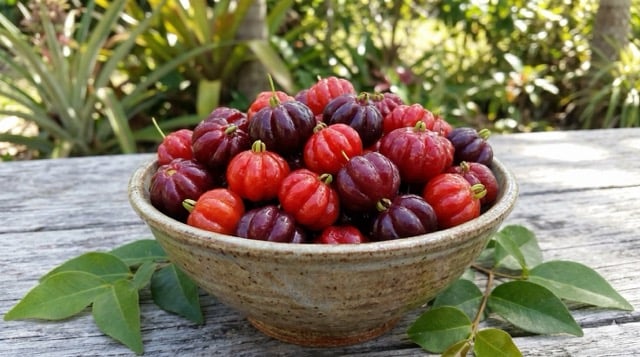
Florida Cherry
Florida cherry, also known as Surinam Cherry, among other names, is easy to recognize by its unusual shape. The fruit has deep ridges, almost like a tiny pumpkin. It starts green and turns bright red or even dark purple as it ripens. And when you bite into it, the flesh is soft, juicy, and slightly sticky. The flavor can be sweet-tart, but it sometimes has a subtle earthy or resin-like note.
Flatwood Plum
Flatwoods plums grow in the southeastern United States, especially in open woodlands and sandy areas. They grow on small trees or shrubs and produce round, purple fruits that look like mini plums. The fruit is edible, but it tends to be more tart than sweet when eaten fresh. Because of that, you’ll often see it used in jellies, jams, or preserves rather than eaten on its own.
False Jaboticaba
False jabotica is typically bigger and has thicker skin, but otherwise it looks fairly similar to the regular variety. It grows on a small, slow-growing tree and is indigenous to parts of Central and South America.
The fruit has this deep purple color and contains a juicy, soft pulp. When you taste it, it has a sweet, slightly tangy flavor that is frequently compared to grapes.
More Fruits That Start With F
- Falkland Island Cranberry
- Falmouth Gooseberry
- False Mastic Fruit
- False Pineapple (Ananas sagenaria)
- False Tamarind (Dialium guineense)
- Farkleberry
- Fascell Mango
- Faux Mango (Cecropia peltata)
- Feijoa
- Fibrous Mombin
- Fibrous Satinash
- Fiddlewood Fruit
- Fig
- Fiji Longan
- Finger Lime
- Finger Melon (Kiwano)
- Finger Sour Plum
- Fingered Citron (Buddha’s Hand)
- Firethorn Berry (Edible when cooked/processed)
- Five-Flavor Berry (Schisandra chinensis)
- Five-Leaved Bramble Berry
- Five-Way Pear
- Flamenco Pear
- Flame Grapefruit
- Flame Seedless Grape
- Flat Lemon
- Flat Peach (Donut Peach)
- Flatwood Plum
- Flavorfest Strawberry
- Florentine Citron
- Florida Cherry (Surinam Cherry)
- Florida Mulberry
- Florida Sapote
- Florida Star Apple
- Florida Strangler Fig
- Florida Tangerine
- Fony Baobab Fruit
- Forest Mulberry
- Forest Nectarine
- Forest Plum
- Forest Raspberry
- Forest Strawberries
- Formosa Plum
- Forrest’s Bird Cherry
- Fox Grape
- Fragrant Granadilla
- Fragrant Pear
- Framboise (Red Raspberry)
- Fraser’s Thimbleberry
- Freestone Peach
- French Prune Plum
- Frost Apple
- Frost Grape
- Fruta de Conde (Sugar Apple)
- Fuchsia Fruit
- Fuerte Avocado
- Fuji Apple
- Fukushu Kumquat
- Fuller’s Quince
- Fuyu Persimmon
- Fuzzy Kiwi
- Fuzzy Pear