Is it okay to use either waist or waste? Your waist is a body part between your ribs and hips. On the other hand, waste has several meanings but generally has to do with excess, trash, or becoming diminished. So both words are right, and if you read on, you’ll learn these words’ correct usage.
Related:
- Me Neither and Me Either: Which One Should You Use?
- Knew or New: Which One Should You Use?
- Entitled vs Titled: Which One Should You Use?
What Does Waist Mean?
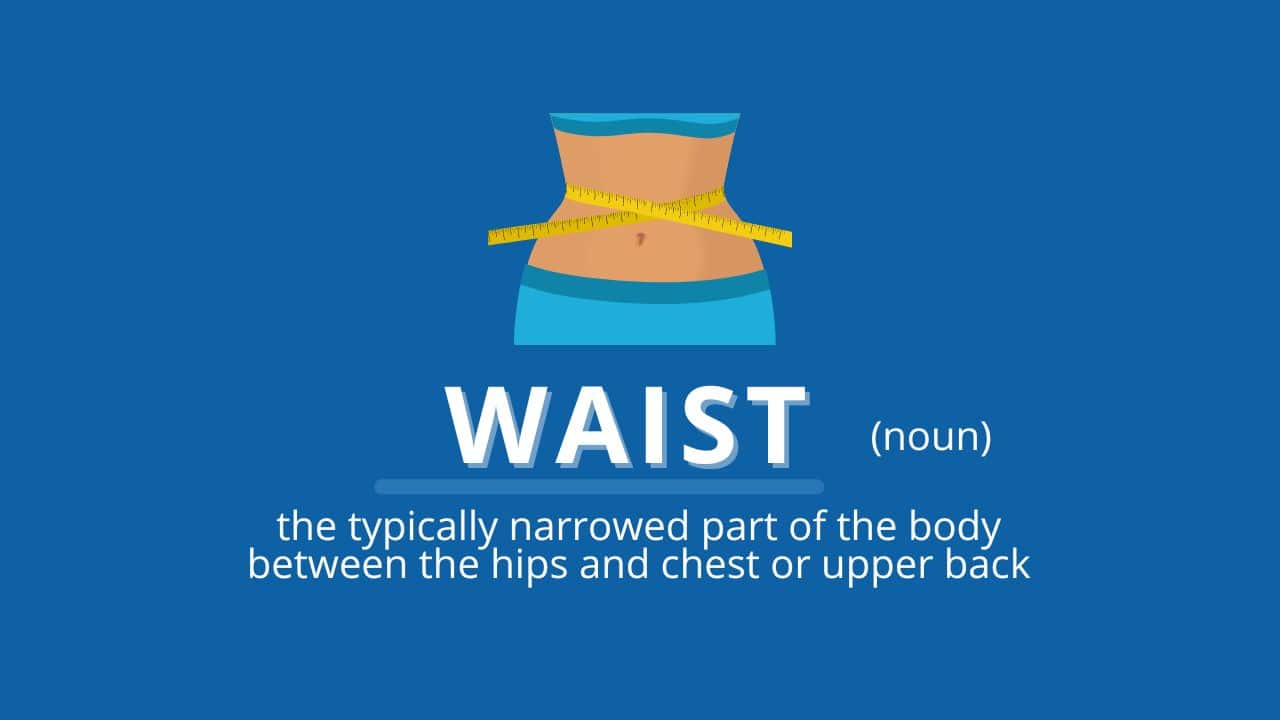
Waist is a noun that refers to the midsection of your body between your hips and ribs. Occasionally, it can function as an adjective. For instance, someone might say, “Eating a lot of ice cream causes me waist worries.”
Examples:
- During the pandemic, a lot of people ended up with an expanded waist due to being more sedentary.
- If you go rock climbing, make sure your harness is really snug around your waist.
- When exiting the shower, many people wrap a towel around their waist.
- This new belt won’t fit my waist.
- Knowing your waist size is important when buying clothes.
When and How to Use the Word Waist?
As you’ve seen, waist is an anatomical term usually used as a noun but sometimes as an adjective. However, you can also use it to form compound words. Waistband and waistline are good examples. For example, you could say “I’m watching my waistline since summer’s coming up.”
What Does Waste Mean?
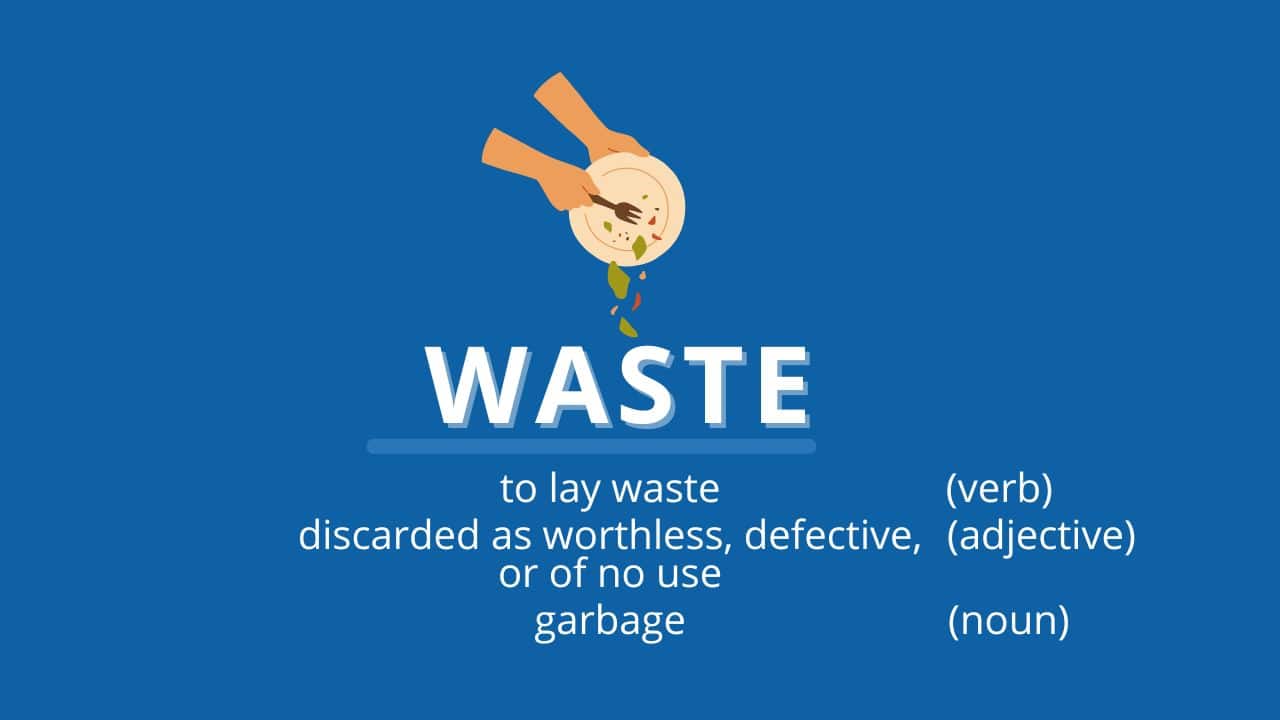
Waste can be a noun, verb, or adjective. In general, it involves garbage, excess, inefficiency, or the idea of being unproductive. Keep in mind that
waste and its related form wasted also have slang meanings. It can mean killing someone– “The soldiers wasted their enemies during the surprise attack.” It’s also slang for being intoxicated– “The frat brothers were pretty wasted after doing multiple shots in short order.”
Waste, as we see it today, comes from Middle English. However, its origins go back to the Latin vastus, meaning “unoccupied, uncultivated.”
Examples:
- How much of your waste do you recycle instead of sending it to a landfill?
- The recycling center accepts aluminum drink cans and other recyclable waste.
- This is a waste of my time!
- The owners of restaurants understand that reducing food waste saves money.
- If you water your lawn in the middle of a hot day, you will waste a lot of water to evaporation.
- When we finish your kitchen renovation, we’ll haul all the waste materials away.
When and How to Use the Word Waste?
Waste has a lot of meanings across grammatical functions. Let’s break it all down.
As a noun, waste can be garbage or leftover amounts, like trash thrown away or unneeded materials. It can also refer to something unfruitful or inefficient. For example, you could say that going to a concert where the headliner failed to show up was a waste of time.
The verb meaning signals creating trash or making a poor use of time, materials, etc.
Examples:
- You waste food and money when you throw away leftovers.
- If you don’t know what you want to talk about, please don’t waste my time.
- We’ll waste all the money we have spent on these containers if we don’t use them.
Waste can also be an adjective. For example, when planning home improvement projects, contractors figure in a waste factor because products will break or need altering.
What’s the Difference?
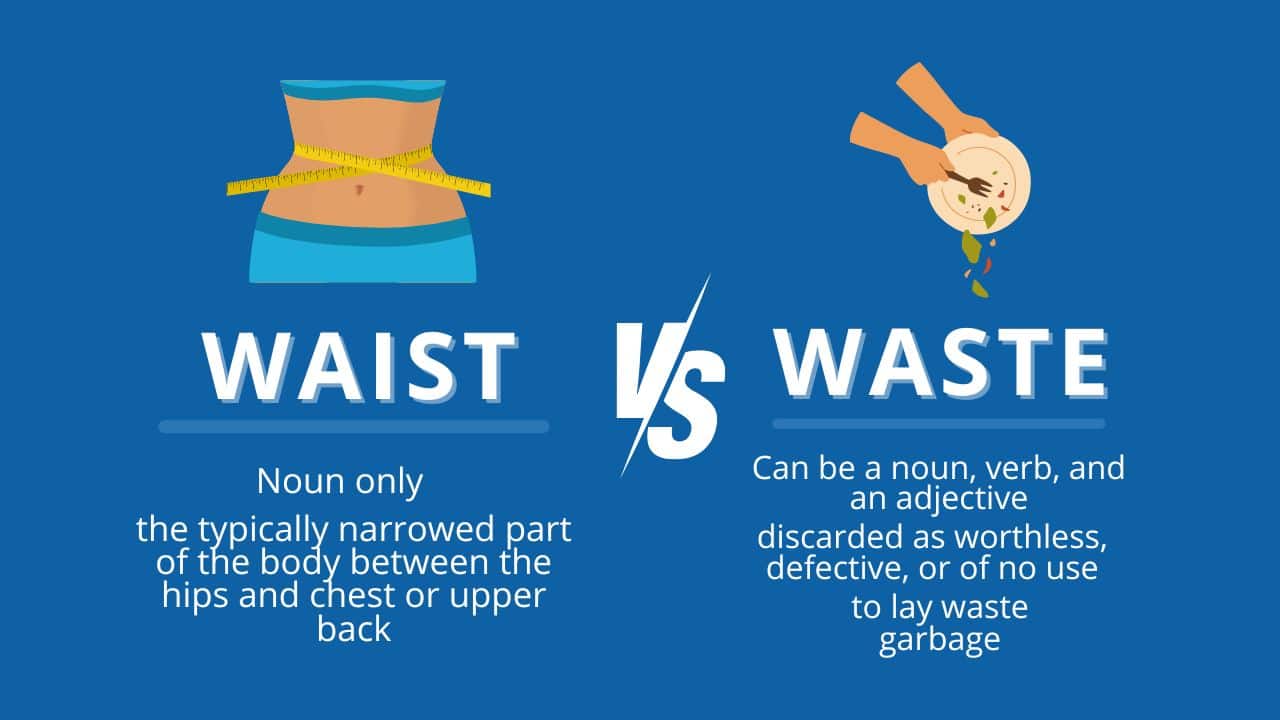
Waist and waste are homophones, words that sound the same but which have different spellings and meanings. Other than that and the fact that both start with w, they couldn’t be more different. That’s because they mean completely different things.
The waist is in the middle part of the body, between your ribs and hips. Waste has to do with garbage, unused excess, inefficiency, lack of use, etc.
Tip: There are other homophone pairs like elicit vs illicit.
Trick to Remember Which Word to Use
Remembering whether to use waist or waste can be challenging. Need a memory trick? Try these helpful tricks to remember the correct spelling and word to use:
- You can associate waste with the ideas of excess material or desolation/emptiness (like a wasteland).
- You can also associate waste with a trash can (waste bin or waste basket).
- For waist, connect it to pants since they go around your waist.
- Also, the i in waist is in the middle just as your waist is in the middle of your body.
Final Thoughts
In summary, choosing waist or waste in written communication comes down to knowing two key things. The first is that both of them are correct. After that, you have to know that the former is a part of the body. And the latter is generally related to trash or unproductivity. Remember, this helpful trick – e in waste is excess, and i in waist is in the middle just like your waist is in the middle of your body.