When constructing a sentence, it’s easy to mix up “purposely” vs “purposefully.” Though the two English words look similar, they have a shade of difference in their meanings. If you do something “purposely,” it shows you’re doing it intentionally, while “purposefully” means doing it with a sense of determination or a specific goal in mind.
Related:
- Among vs Amongst: Which One Should You Use?
- Incall or Outcall: Which One Should You Use?
- Inter vs Intra: Which One Should You Use?
What Does Purposely Mean?
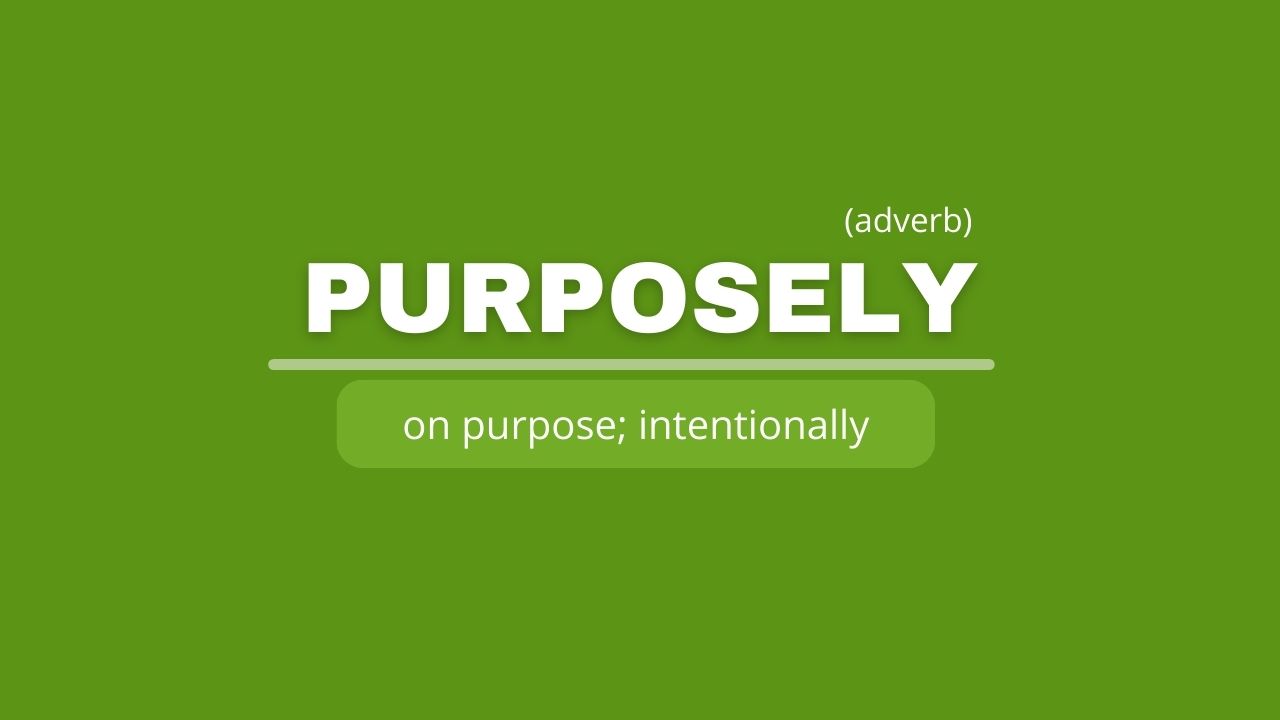
You use “purposely” to show that something was done intentionally. Specifically, it answers the question “how.” For instance, in the sentence “He purposely skipped the hard questions,” “purposely” describes how he skips the questions.
The word purposely first appeared in Middle English and comes from the root word “purpose,” which means aim or intention.
Examples:
- Elizabeth Grant purposely hid her baby bump.
- She avoided eye contact during the meeting, purposely looking down at her notebook instead.
- The kids hid behind the couch, giggling and purposely trying not to be found.
- The young people purposely made grammatical errors.
- I purposely made a long-knit dress for this event.
When and How to Use Purposely?
You can use “purposely” to clarify that an action wasn’t accidental and was planned. Ideally, you can use it to describe actions with intent or a clear goal, such as avoiding something, causing a reaction, or making a plan.
For example, “She purposely spilled the drink to get his attention” shows a clear goal, while “Tom purposely ignored Mary at the Party” indicates intent.
What Does Purposefully Mean?

When you do something “purposefully,” you’re not just going through the motions. You act with determination and focus, having thought it through and with a reason or a specific aim in mind.
Purposefully is derived from “purpose.” It later evolved into the adjective “purposeful” and then into the adverb “purposefully” by adding the suffix-ly. Like “purposeful,” “purposefully” is an adverb of manner, answering the question “how.”
Sample sentences:
- Janelly Brown purposely made her vocals sound bad.
- I purposefully hid the cushions from them.
- She purposefully threw the dish across the room to make a point.
- He purposefully blocked Clinton’s email server permission.
- You purposefully arranged your schedule to ensure you had enough time to study and relax.
- The team chose their words carefully, speaking purposefully to convince the audience.
When and How to Use Purposefully?
You use “purposefully” when there is some degree of determination, a thought to it, and guided by an aim.
For example:
- Shows determination: I was worn out, but I kept going slowly and purposefully, taking one step after the other.
- Indicates a thoughtful manner: His interactive art classes are made to encourage introverts to purposefully mingle with others.
- Shows with intentions or with a goal: I went home purposefully to speak with Mom alone.
What’s the Difference?
While “purposely” and “purposefully” sound almost the same thing and are both adverbial forms of purpose, they have a subtle difference in meaning.
“Purposefully” is stronger— it has a determined intention or deliberate aim. Meanwhile, “purposely” means doing something intentionally, and sometimes, it carries a slightly negative feel to it, indicating you did it to achieve a certain result.
In essence, when you do something purposefully, you do it full of purpose, whereas doing something “purposely” indicates you did it on purpose.
Trick to Remembering Which Word to Use
Here’s the simple trick:
- If you’re doing something with focus and effort or putting thought into it, use “purposefully.
- If you’re just doing something on purpose without any extra effort, use “purposely.”
Final Thoughts
When it comes to purposely vs. purposefully, the difference in meaning is subtle, making it easy to mix them up. You should use “purposely” when you are just doing something on purpose, while purposefully is applicable when you do something with a clear goal in mind. Next time you’re writing or speaking, just ask yourself: Am I doing this intentionally or with a clear purpose? With that in mind, you’ll know exactly which word to use.