Have you ever mixed up elicit and illicit in a sentence? While they sound similar, these two words have very different meanings. To draw out a response, you use the word elicit. But if the context revolves around something illegal, use illicit. Understanding the difference between elicit vs illicit is crucial for clear communication. Read on to learn about these words and their differences so you can use them properly.
Related:
- Me Neither and Me Either: Which One Should You Use?
- Knew or New: Which One Should You Use?
- Entitled vs Titled: Which One Should You Use?
What Does Elicit Mean?
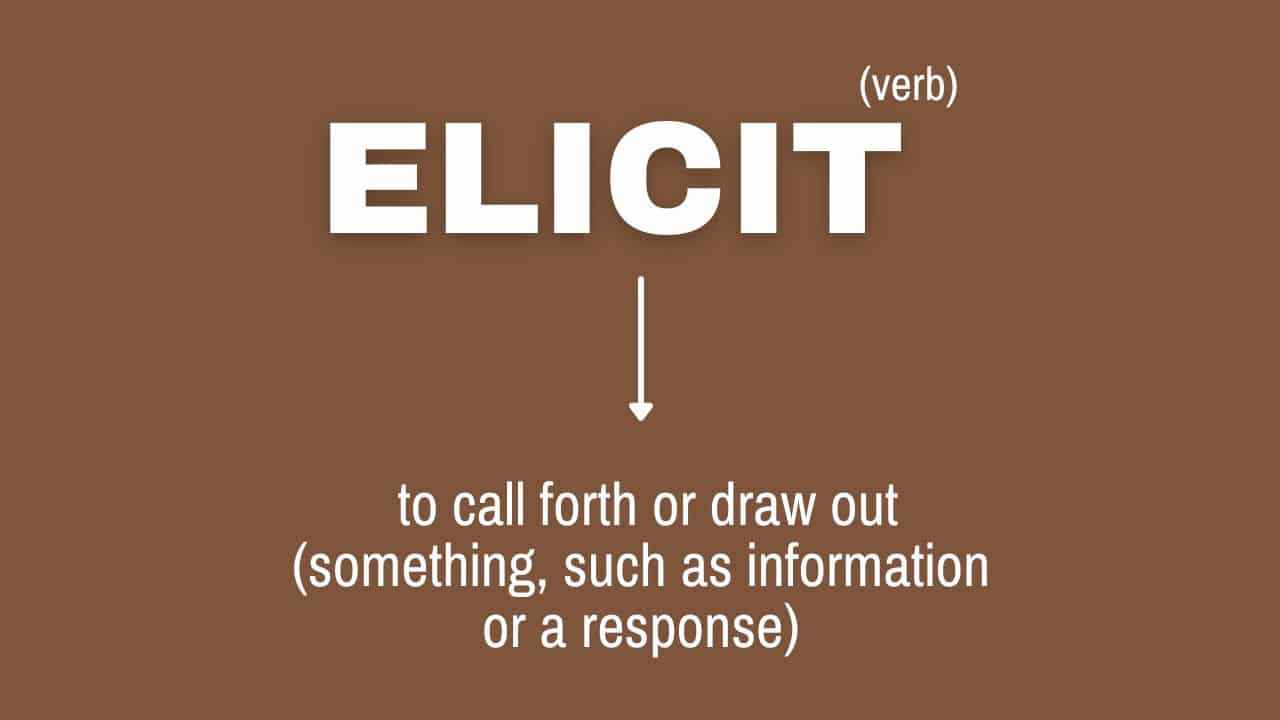
The verb elicit often refers to getting a reaction, response, or information from someone. You’re drawing it out or bringing it forth when you elicit something. The word comes from the Latin “elicitus,” meaning “to draw out or entice.”
Here are some examples of elicit in a sentence:
- The detective’s questions elicited a confession from the suspect.
- The survey was designed to elicit honest feedback from employees.
- Her tragic story elicited sympathy from her friends.
- The professor’s charisma elicited curiosity in her students.
Synonyms of Elicit
When you want to express the idea of drawing out a response or reaction, “elicit” isn’t your only option. There are other words to choose from, each with subtle nuances.
Here are some alternatives that can stand in for “elicit” in various situations:
- Bring out
- Evoke
- Extort
- Obtain
- Wrest
- Wring
When and How to Use the Word Elicit
You’ll typically use “elicit” when discussing obtaining information or reactions. It’s often used in formal or professional contexts, like scientific studies, interviews, or investigations. Remember, “elicit” is always a verb, so you’d say “to elicit a response” or “she elicited the truth.”
What Does Illicit Mean?

“Illicit” describes something illegal, unlawful, or not permitted by custom or morality. This adjective comes from the Latin illicitus, meaning “not allowed.”
Here are some examples of illicit in a sentence:
- The judge convicted him due to illicit drug use.
- Their news anchors’ illicit love affair was the talk of the town for months.
- The police arrested him for illicit drugs.
- Before you travel outside the country, make sure you don’t accidentally bring illicit items.
- The company was fined for illicit practices.
- His illicit behavior landed him in jail.
Synonyms of Illicit
When describing something that’s not allowed or goes against rules and laws, “illicit” is a powerful word, but it’s not the only one at your disposal. A range of synonyms can help you pinpoint the exact shade of meaning you’re after, whether you’re talking about legal, moral, or social boundaries.
Here are some words with similar meanings to the word “illicit”:
- Illegal
- Forbidden
- Unauthorized
- Illegitimate
- Immoral
- Prohibited
- Unlawful
- Immoral
When and How to Use the Word Illicit
Use “illicit” to describe activities, substances, or relationships that are unlawful, or that go against societal norms. It’s often used in news reports, legal documents, interviews, and conversations about crime and social issues. Remember, “illicit” is always an adjective, so you’d say “illicit activities” or “an illicit affair.”
What Is the Difference Between Elicit and Illicit?

Words that sound the same but have different spellings and meanings are known as homophones. Elicit and illicit fall into this category; they are similar-sounding words but have different meanings and spellings, and are even different parts of speech!
Let’s take a look at their differences:
- Elicit is a verb.
- Illicit is an adjective.
- Elicit is to draw out a response.
- Illicit describes something illegal.
As for pronunciation, both are pronounced ih-LIS-it. However, “elicit” has a short “e” sound at the beginning, while “illicit” starts with a short “i” sound.
It’s also worth noting the difference between “elicit” and “solicit.” While both involve getting a response, “elicit” means drawing out a response already there, while “solicit” means asking for or requesting something. So, you’d elicit a response but solicit donations.
Trick to Remember Which Word to Use
Elicit and illicit are commonly confused words. Here’s a simple trick to help you remember: “Elicit” starts with “E” for “Evoke,” while “Illicit” begins with “I” for “Illegal.”
If you’re trying to bring something out, use elicit. If you’re describing something not allowed (like illicit trafficking of narcotics), use illicit.
Another trick is to think of the “e” in “elicit” as standing for “extract.” When you elicit something, you’re essentially extracting a response or reaction from someone or something. It’s an active process, like pulling information out.
Final Thoughts
Understanding the difference between elicit vs illicit can help you communicate more effectively. Remember, elicit is about drawing out responses, while illicit refers to forbidden, illegal things. By keeping these distinctions in mind, you can use these words correctly in your writing and speech. Practice using them in context; soon, you’ll never mix them up again!