From fierce predators to colorful birds, the dense vegetation of a jungle is home to many wildlife. In this article, you’ll get to know these jungle animals, along with interesting facts.
Sloth Bears

Scientific Name: Melursus ursinus
Type of animal: Mammal
Found in: India, Sri Lanka, and Nepal
Don’t be fooled by its name! A sloth bear is not actually a sloth. In 1791, George Shaw thought this animal was related to a sloth (because of its thick claws and teeth and slow movement). But as we know now, sloth bears are actually bears!
The bears behave in a manner very similar to sloth or aardvark, sticking their pointed snout into insect nests and slurping up termites, ants, or bees through the gap where incisors would normally reside. However, don’t let its slow, sloth-like appearance fool you.
When provoked, the sloth bear will use its canines and claws to defend itself against its main predator, the Tiger, and it has been known to cause grievous injury to humans who wander too close.
Chimpanzees

Scientific Name: Pan troglodytes
Type of animal: Mammal
Found in: Central and West Africa
Chimpanzees are members of the great ape family. They share 98.7 percent of our genetic blueprint, leading researchers to surmise that we share a common ancestor far back in our genetic makeup.
It is hard to deny our link with chimpanzees because these jungle animals have social structures and behaviors similar to those of humans. As a matter of fact, in 1960, Jane Goodall made even bigger waves with her discovery that Chimpanzees were clearly using tools, making them the only animal to date to do so.
Jaguar

Scientific Name: Panthera Onca
Type of animal: Mammal
Found in: The Americas
Though they are jungle animals that you can find in the tropics of Southern Mexico and South America, did you know jaguars once roamed the desert southwest region of the United States as well? Believe it or not, the US government led a hunting campaign, and together with habitat loss, these magnificent wild cats were eradicated.
The good news is that there are several photos of these big cats snapped by hunters and trail cams in southern Arizona, with the latest recently making an appearance to close out in December 2023 with a glimpse of a giant jungle cat once again roaming the USA.
Bengal Tigers
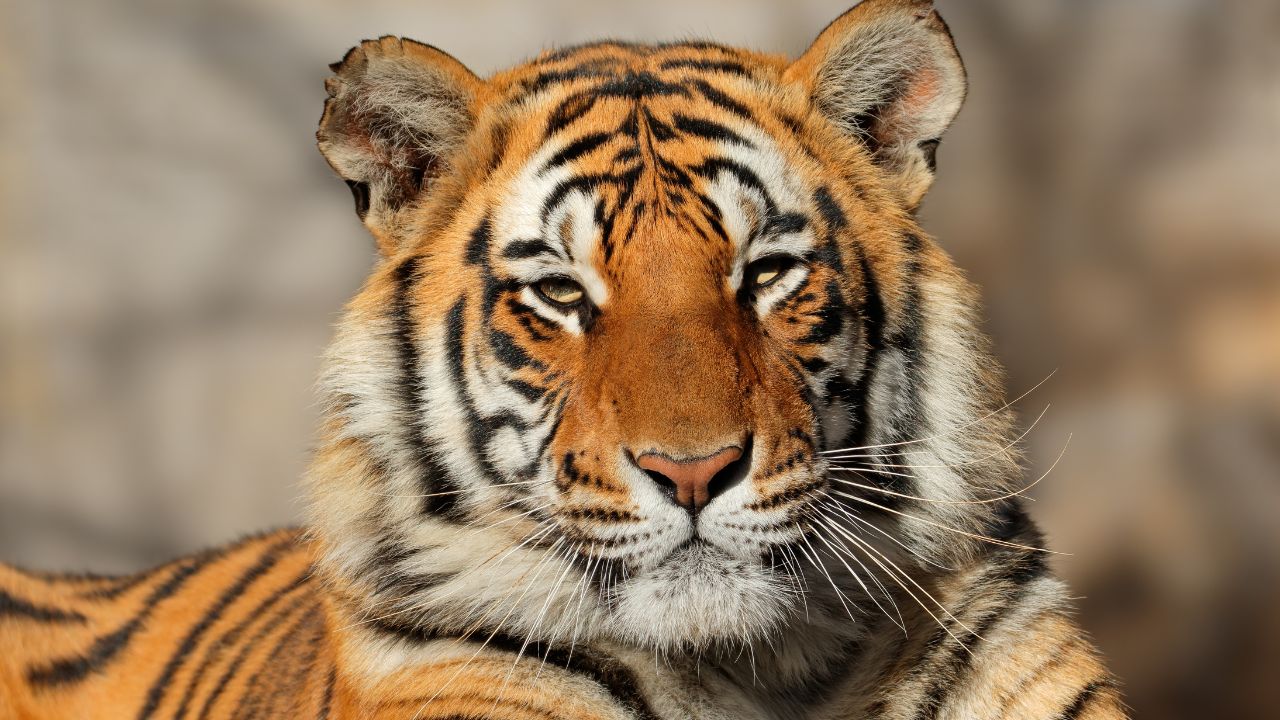
Scientific Name: Panthera tigris tigris
Type of animal: Mammal
Found in: India
Jaguars may be the largest cat in the Americas, but tigers take the title of the world’s largest cat. However, their numbers have been diminishing rapidly as loss of habitat and poaching have eradicated three of the eight tiger subspecies in the past century. Reports reveal that there are now fewer than 2,500 tigers left in the wild.
The Bengal Tiger is one of the remaining subspecies, boasting the most robust population numbers in Nepal, where work has been underway to help bring this animal back from the brink of extinction.
Tigers are voracious eaters capable of consuming up to 60 pounds of meat in a single feeding. Contrary to common belief, tigers are notoriously wary of humans and generally keep their distance.
Harpy Eagle
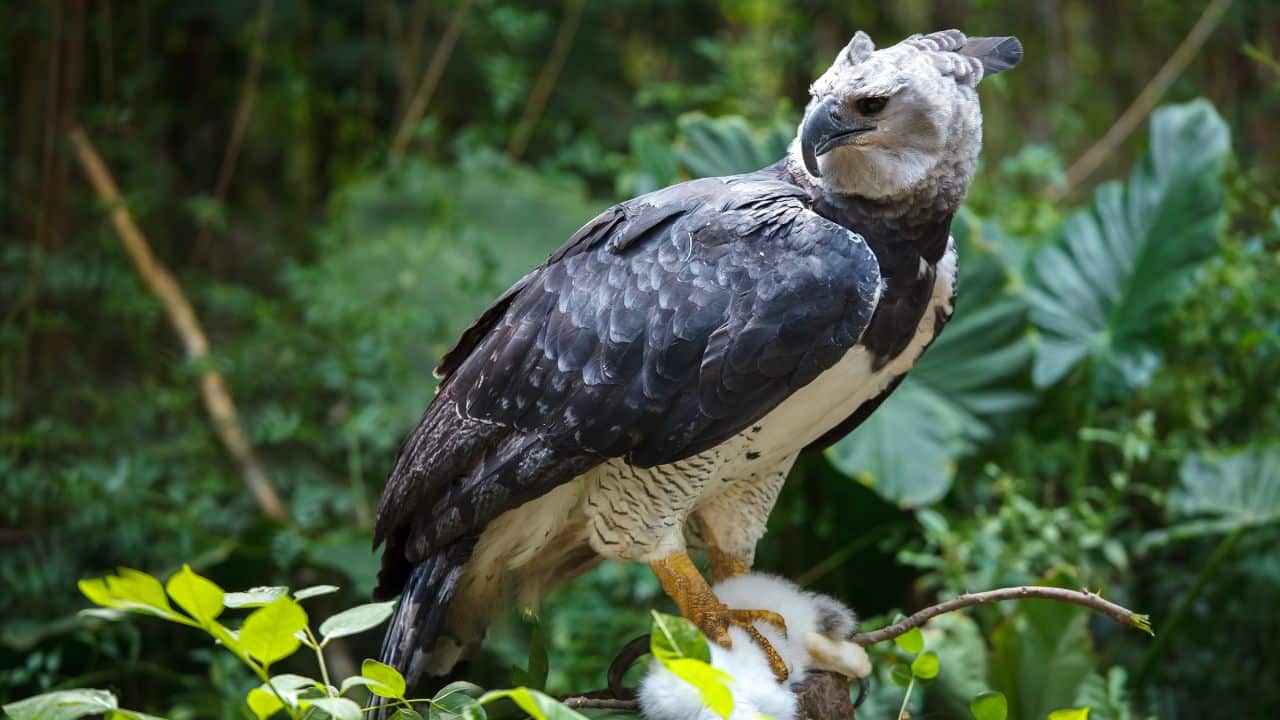
Scientific Name: Harpia harpyja
Type of animal: Raptor
Found in: South America & Central America Tropical Lowland Rainforest
Lovers of history will recall the Harpies of Greek mythology, avian monsters with human faces that inspired the name of the Harpy Eagle. Modern culture gets a nod as well, with Harry Potter’s Phoenix inspired by the unique looks of the Harpy.
The largest raptor in the Americas, these impressive birds boast thick legs that can be as large as a human arm and three-inch talons. For reference, that is the same length as the claws on most bears. But as fearsome as these birds sound, they bear no resemblance to the monsters of lore – they prefer to feast on tree-dwelling mammals, reptiles, and other birds and bear no threat to humans!
Unfortunately, their docile nature to humans is a contributing factor in their dwindling population count.
Scarlet Macaw
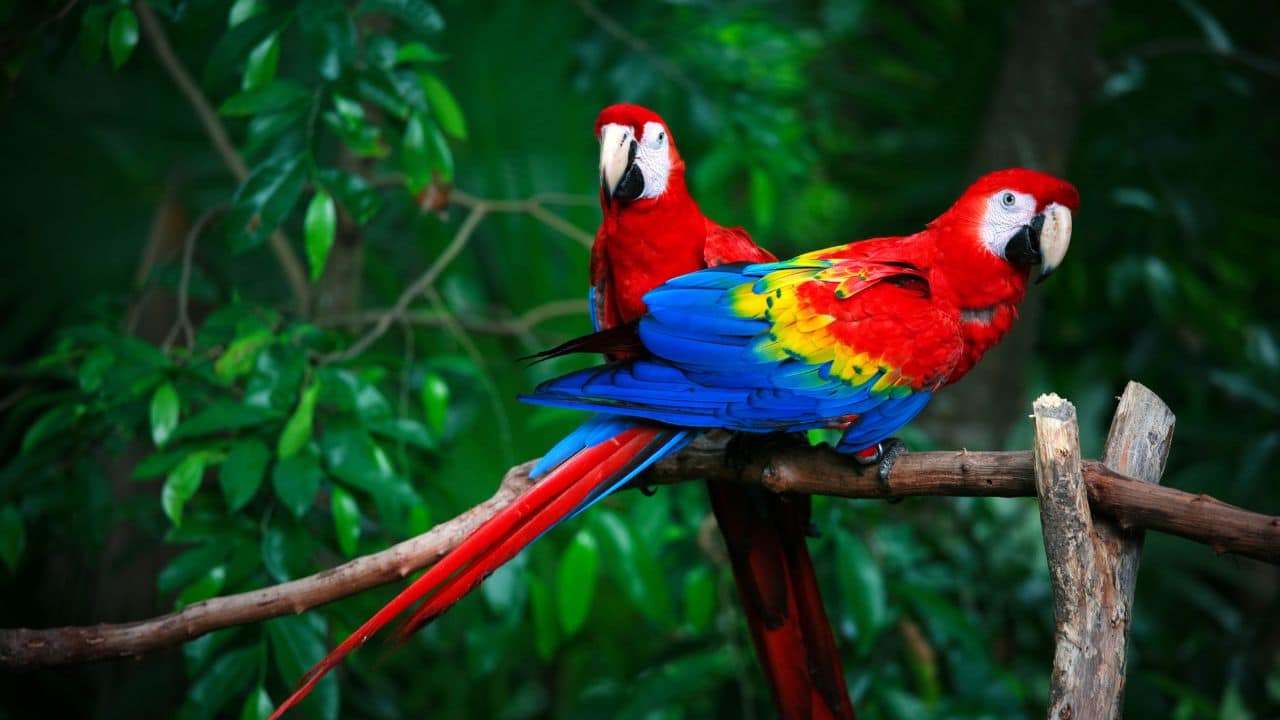
Scientific Name: Ara Macao
Type of animal: Psittacidae
Found in: Mexico, Central America, & South America
When one envisions a parrot, it is generally the bright scarlet and cobalt blue plumage of the Scarlet Macaw that comes to mind first. What’s more interesting is that these parrots are one of the rare birds to have both males and females sporting the same vibrant colors.
Unfortunately, their stunning good looks have been a detriment to their survival in the wild, with many being captured to be traded illegally.
Three-Toed Sloth
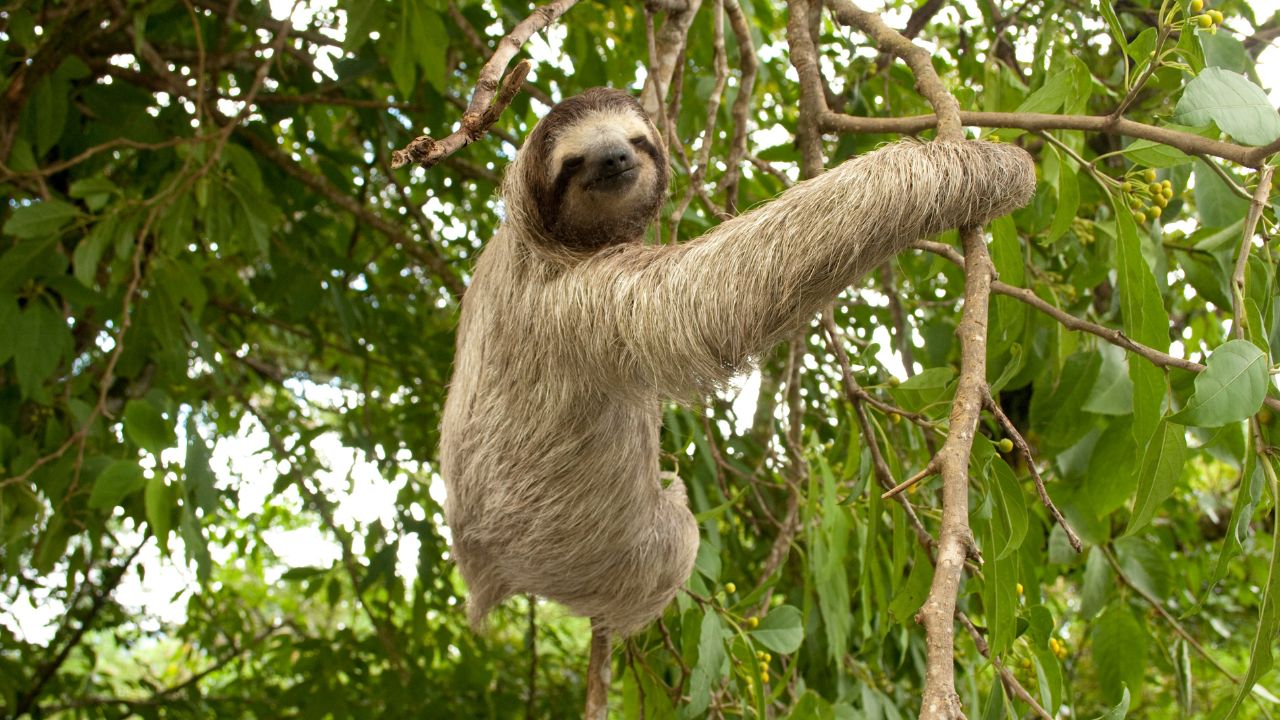
Scientific Name: Bradypus pygmaeus
Type of animal: Mammal
Found in: Central & South American Rainforests
If there was an award for the world’s slowest mammal (and there definitely should be), the three-toed sloth would win hands down. These slow-moving herbivores are so sluggish that their average speed is 0.24 km/h (0.15 mph).
Sloths are not made for moving on solid ground and instead spend most of their lives hanging by their powerful arms in the rainforest canopy. They are also adept swimmers and often drop straight out of the towering treetop for a dip in the river.
Here’s a fun fact: Sloths are categorized based in part on the number of toes they have on each foot (two-toed sloths and three-toed sloths). Three-toed sloths are unique for their distinctive high-pitched screech and having an extra vertebra in their neck that allows them to swivel their head approximately 270 degrees.
Black Howler Monkey

Scientific Name: Alouatta caraya
Type of animal: Mammal
Found in: South America
The black howler monkey doesn’t really howl; their call sounds more like a rumbling piece of machinery than a winsome howl. Nevertheless, they are the loudest land animals – their calls are 140 decibels! And just for comparison, a normal human conversation is only at 60db.
So, how can this jungle animal produce such loud sound? Well, black howler monkeys have an enlarged hyoid bone in their throats, which amplifies their guttural calls, making their sound travel up to 2 – 3 miles.
Black howler monkeys, like other howler sub-types, are found throughout the Central & South America Rainforest regions, living in highly territorial groups. These solid, lumbering monkeys have a slightly hunched gait and move slowly, often staking out one location among the treetops or engage in a raucous howl-off with any neighboring howlers encroaching on their space.
Sun Bear

Scientific Name: Helarctos malayanus
Type of animal: Mammal
Found in: Southeast Asian Tropical Rainforests
Sun bears, or Malayan bears, are the smallest bears in the world, weighing around 60 – 140 pounds and roughly 3 – 4 feet long. They have a short snout that gives them a puppy-like countenance, earning them another name: dog bears. Some people also call them honey bears because they love honey!
The bear’s original name, sun bear, stems from the distinct contrasting swatch of lighter fur on its chest, generally a light golden yellow or ivory color, which local legend views as a mark of the rising sun.
Unlike their more cantankerous cousins, sun bears are fairly docile, preferring to spend their evenings roaming the forest looking for berries, small rodents, reptiles, or termites to feast on.
Green Anaconda
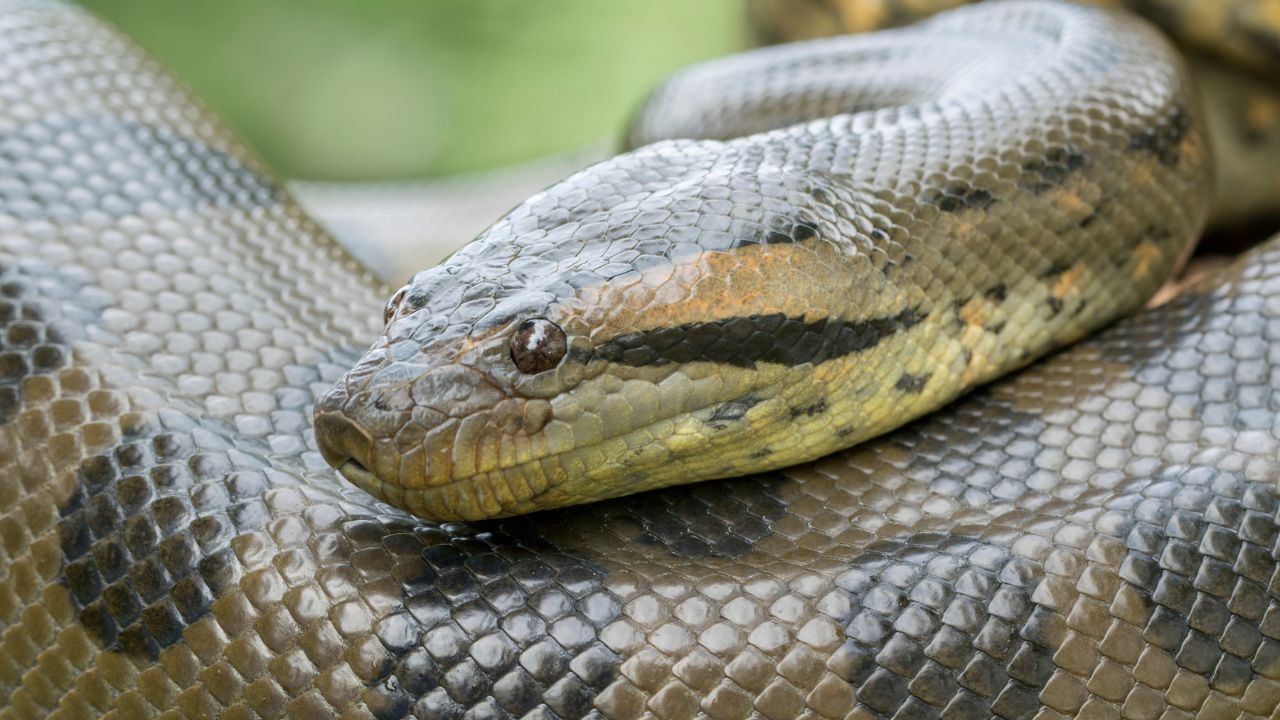
Scientific Name: Eunectes murinus
Type of animal: Reptile
Found in: Amazon & Orinoco Basins.
The Green Anaconda is the world’s largest snake – it is nearly 30 feet in length and can easily weigh more than 550 pounds! Unsurprisingly, these massive snakes tend to spend a significant portion of their time in the water as their weight and size are a hindrance on solid ground but powerful in the water.
Anaconda are at home in the tropical rainforest regions of the Amazon & Orinoco Basins, laying low in the vast swamps and streams waiting for unsuspecting prey to pass by.
Capybara
Scientific Name: Hydrochoerus hydrochaeris
Type of animal: Rodent
Found in: South America
The Capybara is the world’s largest rodent, and as horrifying as that sounds, they are some of the most adorable jungle animals you will ever see. These large rodents resemble a cross between a guinea pig and a rabbit, weighing around 100 pounds.
The uniqueness of these “straight out of a sci-fi novel” critters doesn’t stop there. These semi-aquatic rodents spend their time between land and water along the river banks of South America’s rainforest and marshlands. Their webbed feet allow them to speed through the water, and their unique facial structure helps them keep their eyes and noses above the water and the rest of their body submerged like a hippopotamus.
Capybaras are native to South America, but populations have been transplanted all over the globe. In true rodent fashion, capybaras tend to thrive wherever they land and have become invasive pests in some locations.
Poison Dart Frog
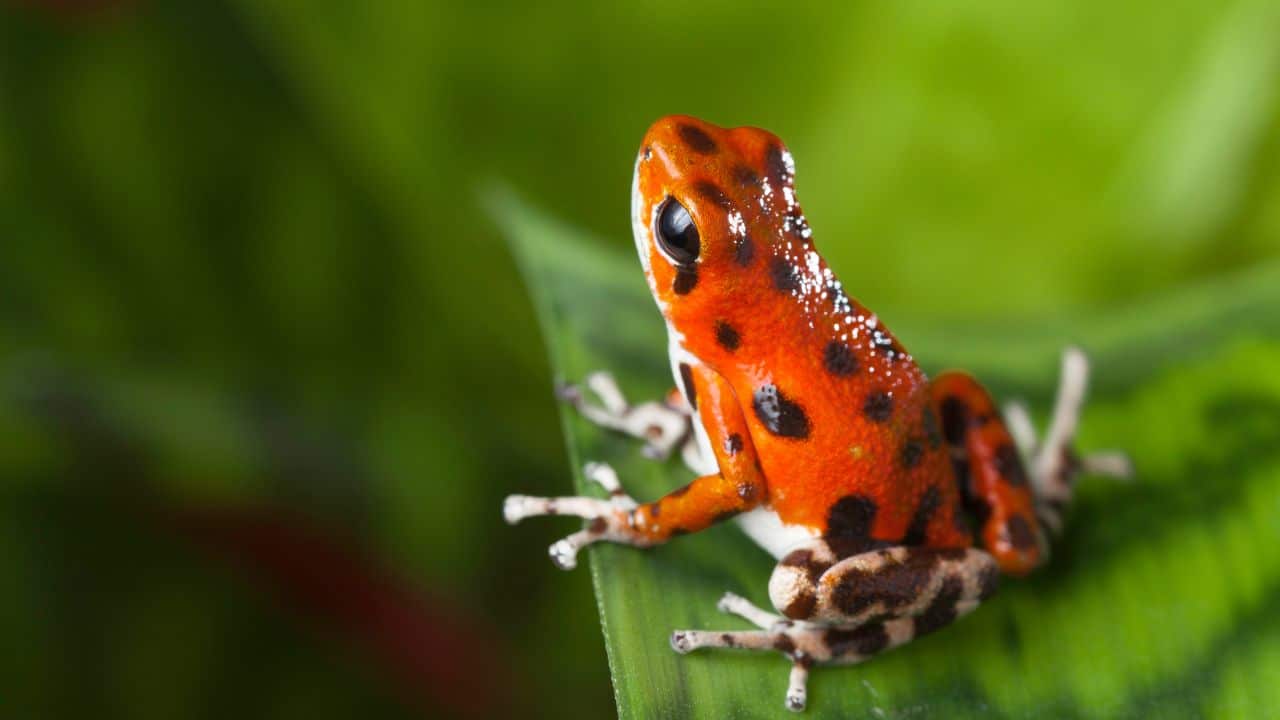
Scientific Name: Dendrobatidae
Type of animal: Amphibian
Found in: Central & South American Rainforests
Poison dart frog is an umbrella name applied to a group of frog species found in the tropical regions of the world. They are all characterized by brightly colored skin that serves as a warning to predators that their skin is toxic.
In case you’re wondering where they got their name, indigenous tribes used the toxins excreted through the frog’s skin to poison the tips of their arrows.
Okapi
Scientific Name: Okapia johnstoni
Type of animal: Mammal
Found in: The Ituri Rainforest in the Democratic Republic of Congo
The okapi is another animal that looks like it wandered off the pages of a fantasy novel. This hooved animal resembles a cross between a deer and a zebra, but it is neither. Believe it or not, it is a close relative of the giraffe.
Found only in the Ituri Rainforest in the Democratic Republic of Congo, the okapi has only been known to science since the 1900s, making it one of the newest species ever discovered.
These shy, peaceful animals feature the prehensile tongue of the giraffe made for stripping the leaves from branches. Their most striking feature, though, is their thick, velvety coat, with the stories of a zebra fading into a rich mahogany brown before fading again to ivory.
Forest Elephant
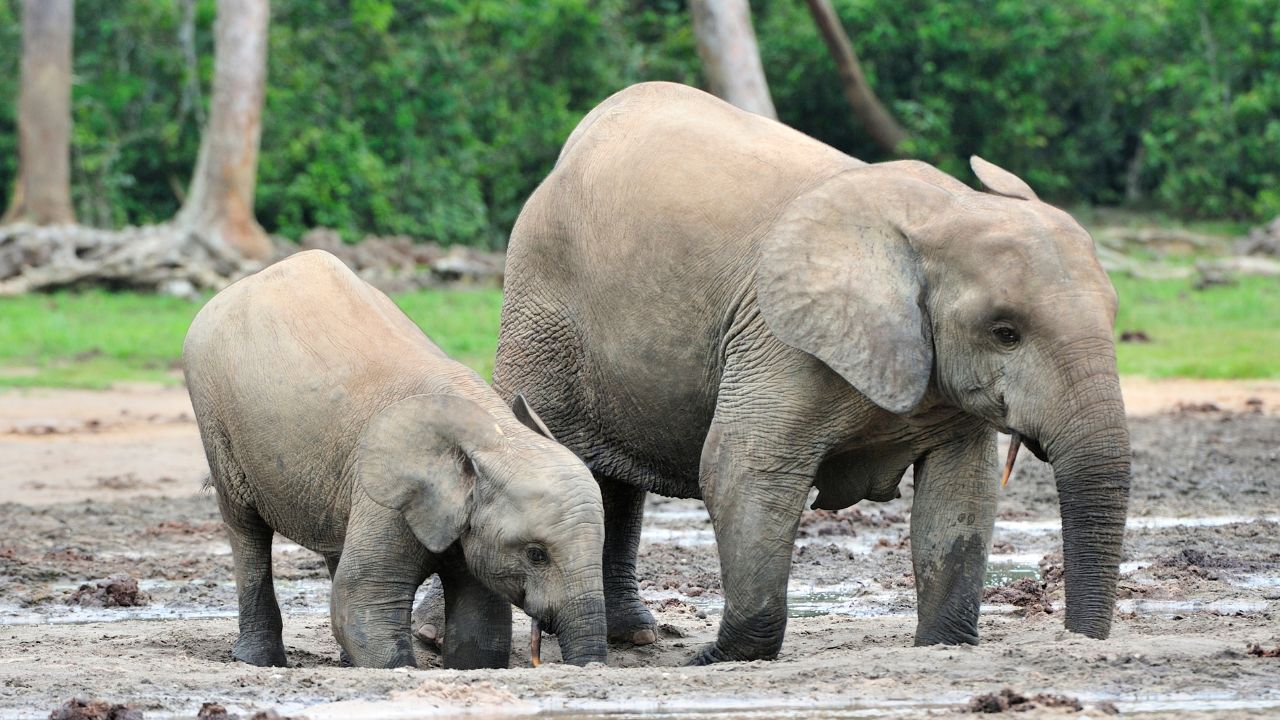
Scientific Name: Loxodonta cyclotis
Type of animal: Mammal
Found in: Western & Central Africa Tropical Rainforests
Forest elephants are the smaller of the two elephant species common to the African Savanna. Scientists believed they were sub-species of the African elephant, but a 2010 research discovered that the two elephants were, in fact, distinct species, with a point of divergence between 2.5 million and 5 million years ago. This is roughly the same timeframe that chimpanzees and humans were thought to have diverged from one another.
Besides their smaller size, forest elephants have several other marked differences, many of which hint at a closer resemblance to the traits of Asian elephants than the African species. Their tusks are straight and long rather than short and curved. Their ears are rounded rather than angular, and they have five toenails on their front feet and four on the back, like Asian elephants.
Unfortunately, the forest elephant also boasts tusks of much higher grade of ivory than any other elephant species, making them a prime target for poachers.
List of Jungle Animals
- African Grey Parrot
- Amazon River Dolphin
- Asian Elephant
- Axolotl
- Axolotl
- Aye-aye
- Babirusa
- Barbary Macaque
- Bengal Tiger
- Binturong
- Birds of Paradise
- Black howler monkey
- Blue Morpho Butterfly
- Blue-throated Toucanet
- Bongo (antelope)
- Bonnet Macaque
- Bonnethead Shark
- Bonobos
- Brazilian Wandering Spider
- Bushbaby
- Butterflies
- Capuchin monkey
- Capybara
- Chimpanzees
- Civet
- Cloud Rat
- Clouded Leopard
- Coatimundi
- Coelacanth
- Dhole
- Electric Eel
- Emerald Tree Boa
- Fennec Fox
- Forest Elephant
- Fossa
- Gaur
- Gibbons
- Golden Lion Tamarin
- Gorillas monkey
- Green Anaconda
- Green Iguana
- Harpy Eagle
- Hippopotamus
- Hoatzin
- Jaguar
- Jaguarundi
- King Cobra
- Kinkajou
- Komodo Dragon
- Komodo Dragon
- Lemur
- Lemur
- Lemurs
- Malachite Kingfisher
- Malayan Tapir
- Malayan Tiger
- Manatee
- Mandrill
- Mantis Shrimp
- Markhor
- Mexican Beaded Lizard
- Mountain gorilla
- Nile Crocodile
- Nile Monitor Lizard
- Ocelot
- Okapi
- Orangutans
- Pangolin
- Panthers
- Parrots
- Philippine Eagle
- Philippine Tarsier
- Pileated Gibbon
- Poison Dart Frog
- Proboscis Monkey
- Pygmy Marmoset
- Quokka
- Quoll
- Red Howler Monkey
- Red Panda
- Red Uakari
- Red-bellied Piranha
- Red-eyed Tree Frog
- Saltwater Crocodile
- Scarlet Macaw
- Sloth Bears
- Snakes
- Spectacled Caiman
- Squirrel monkey
- Sun Bear
- Sun Conure
- Tapir
- Tapirs
- Tarsiers
- Tasmanian Devil
- Thorny Devil
- Three-Toed Sloth
- Toco Toucan
- Toucans
- Tufted Puffin