You’ll find letter T words tucked into more of your wardrobe than you might expect. Some carry centuries of history, while others became staples only in the last hundred years. Here’s a look at where some of the most common clothes that start with T came from and how people use them today.
Related:
- Cloths vs. Clothes: Which One Should You Use?
- 150+ Words Related to Fashion
- White Tie vs. Black Tie: Is There a Difference?
T-Shirt
The T-shirt earned its name from its simple T shape, with a body and two short sleeves laid out flat. But did you know it started as an undergarment for soldiers and laborers in the late 1800s, worn beneath uniforms so nobody would see it?
Marlon Brando changed that completely in the 1950s when he wore one as outerwear in A Streetcar Named Desire, and the rest of the world followed.
In modern English, the word now covers anything from a plain basic to a graphic tee, and “T-shirt weather” has become shorthand for describing a warm, comfortable day.
Toga
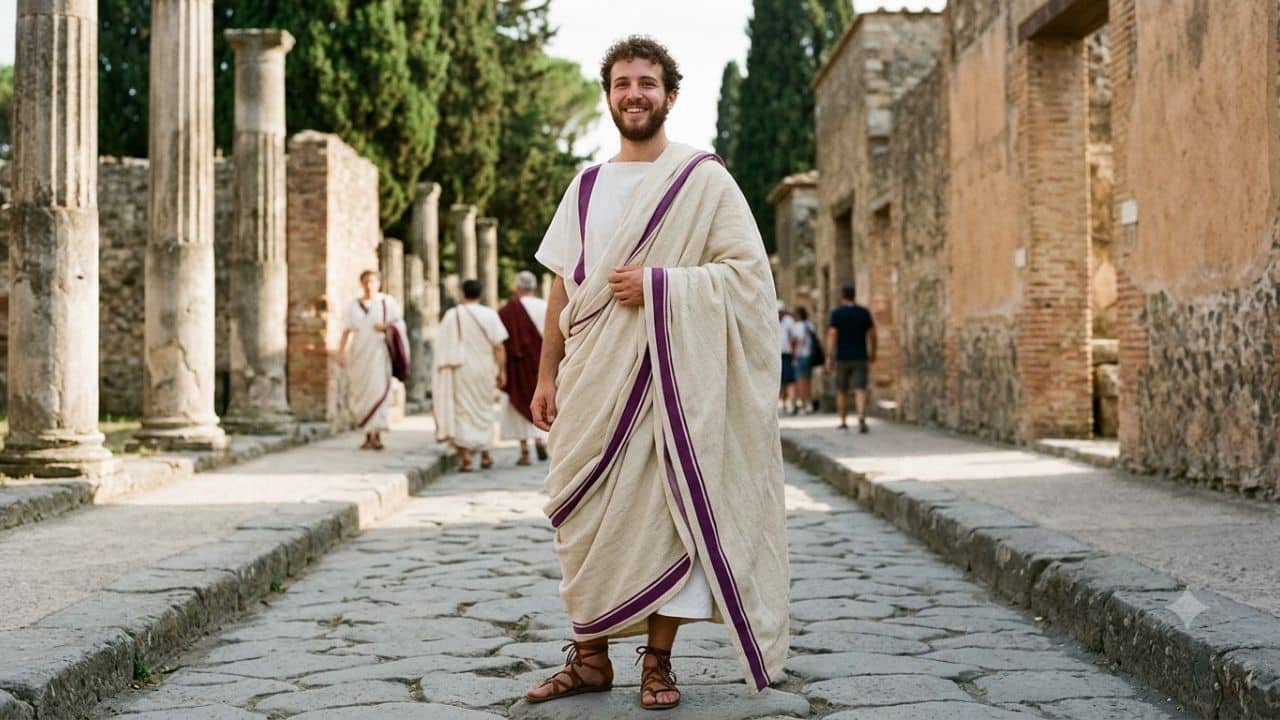
The toga was the signature garment of ancient Rome, a single long piece of fabric wrapped and draped around the body, with no stitches holding it together.
Only Roman citizens were technically allowed to wear one, which made it as much a status symbol as it was an outfit. Today, the word mostly survives in “toga party,” a casual, sheet-draped costume theme that has nothing to do with Roman rank or status.
Turtleneck
A turtleneck is a high, close-fitting collar top that folds over and covers the neck. Steve Jobs made it his personal trademark for decades, sourcing a custom black version from the same Japanese designer who made uniforms for Sony.
Trousers
Trousers cover any pants that run from the waist to the ankle, though the word itself leans more British, while Americans default to “pants.”
The garment dates back thousands of years to horseback riding cultures in Central Asia, who needed something more practical than robes or tunics for staying on a horse all day.
In modern English, “trousers” tends to signal slightly more formal or tailored language than “pants,” and it shows up most often in menswear, fashion writing, and British speech generally.
Tracksuit
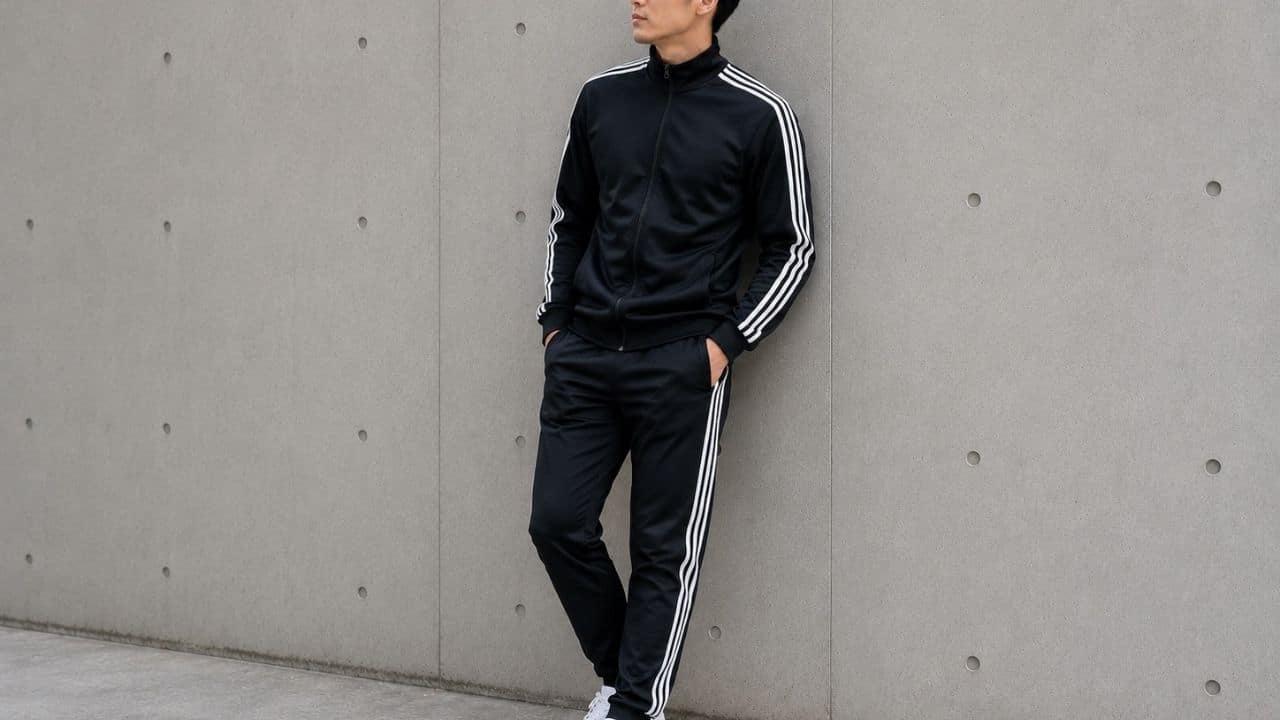
A tracksuit pairs a zip-up or pullover jacket with matching pants, originally designed for athletes to warm up or cool down before and after a race. Adidas helped turn the look into a cultural staple by the 1960s and 70s.
Comfort has always been the appeal, and that same comfort keeps pulling the tracksuit back into mainstream fashion every decade or so. Today, the word also gets used loosely for “athleisure,” any matching set worn more for looks than for actual exercise.
Trench Coat
The trench coat takes its name from World War I, where British and French officers needed something waterproof and durable for life in muddy trenches.
Both Burberry and Aquascutum had already been making weatherproof coats for decades before the war started. Its features, like the storm flaps, the belt, and the deep pockets, stuck around long after the fighting ended, turning the coat into a permanent fixture of detective films and fashion editorials alike.
Turban
A turban is a cloth wrapped around the head. In Sikhism, it carries deep spiritual significance, representing equality and commitment to faith.
Tuxedo
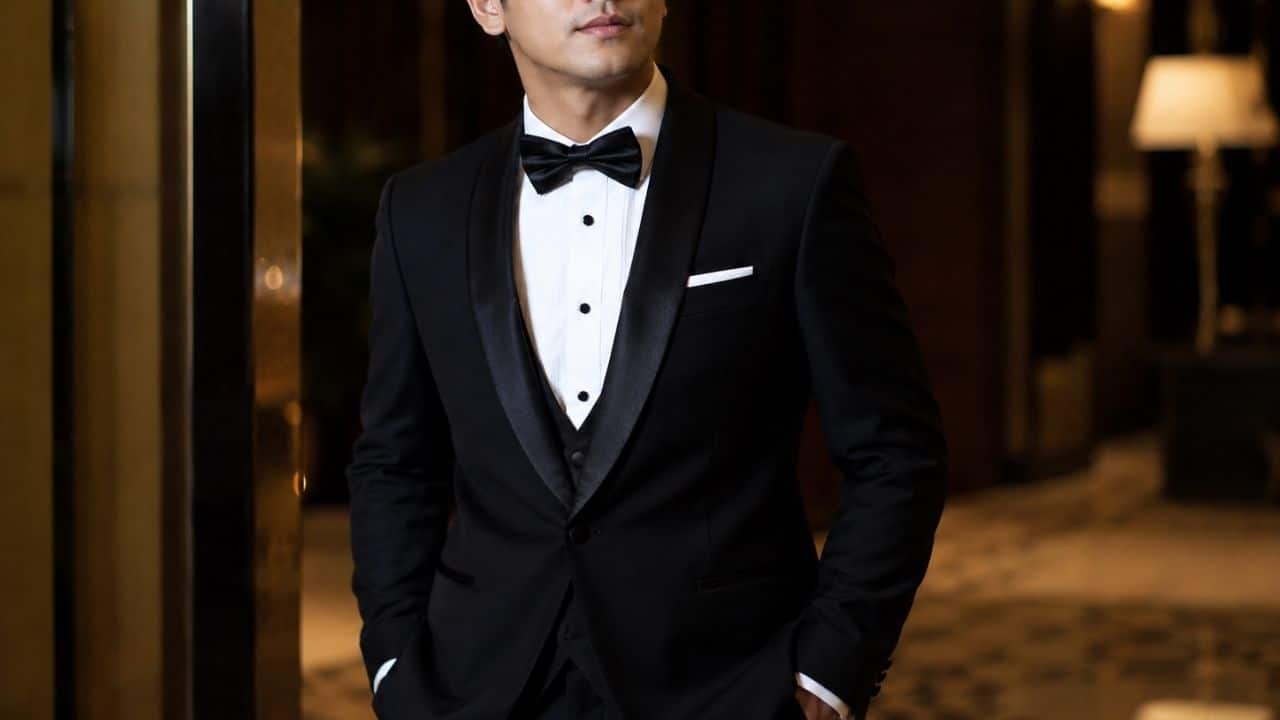
A tuxedo is built around three fixed pieces: a black jacket, satin lapels, and a bow tie. The color has stayed mostly black or midnight blue, too, with white reserved almost entirely for warm-weather events or anyone trying to stand out at a formal occasion.
In modern English, “tux” serves as casual shorthand for the whole outfit, and “black tie” has grown into a broader dress code term that builds directly on the tuxedo’s legacy.
Tights
Tights are a snug, stretchy garment that covers the legs and often the feet. Depending on the look, you can wear it under skirts and dresses or on its own.
Fun fact: Men actually wore tights long before women did, especially in European royal courts, where well-shaped legs were considered part of formal fashion for noblemen.
In modern English, the word also gets used loosely to mean leggings, even though the two are technically different in thickness and purpose.
Tutu
A professional tutu is built from dozens of layers of stiff netting sewn onto a fitted bodice. Dancers train themselves to move and even fall in one, since a poorly fitted tutu can shift or ride up mid-performance.
Outside of ballet, the word now appears in costume shops and kids’ dress-up sections, often used to describe any short, puffy skirt.
Thermal Underwear
Thermal underwear is a snug base layer worn under regular clothes, designed to trap body heat in cold weather without adding bulk.
Early versions relied almost entirely on wool while modern thermals lean on synthetic blends. In modern English, people often call it “long johns” or “base layers,” especially in skiing and outdoor gear marketing.
More Clothes that Start With T
- Tank top
- Tie
- Tankn\ini
- Tunic
- Tabard
- Tailcoat
- Tea grown
- Tennis skirt
- Tunic dress
- Top
- Twab (Thobe)
- Tabi
- Tami
- Tichel
- Taqiyah
- Telpek
- Thong
- Tube top
- Trunks
- Topcoat
- Trapper hat
- Trilby
- Toque
- Toboggan
- Trews
- Tibetan chuba
- Turkish Salvar