Have you ever seen photos or videos of people covered head to toe in vibrant powders, with clouds of color swirling through the air? That joyful scene is Holi—the Festival of Colors. In this article, we’ll explore the traditions, legends, and global celebrations behind this Hindu festival.
Related:
What Is Holi?
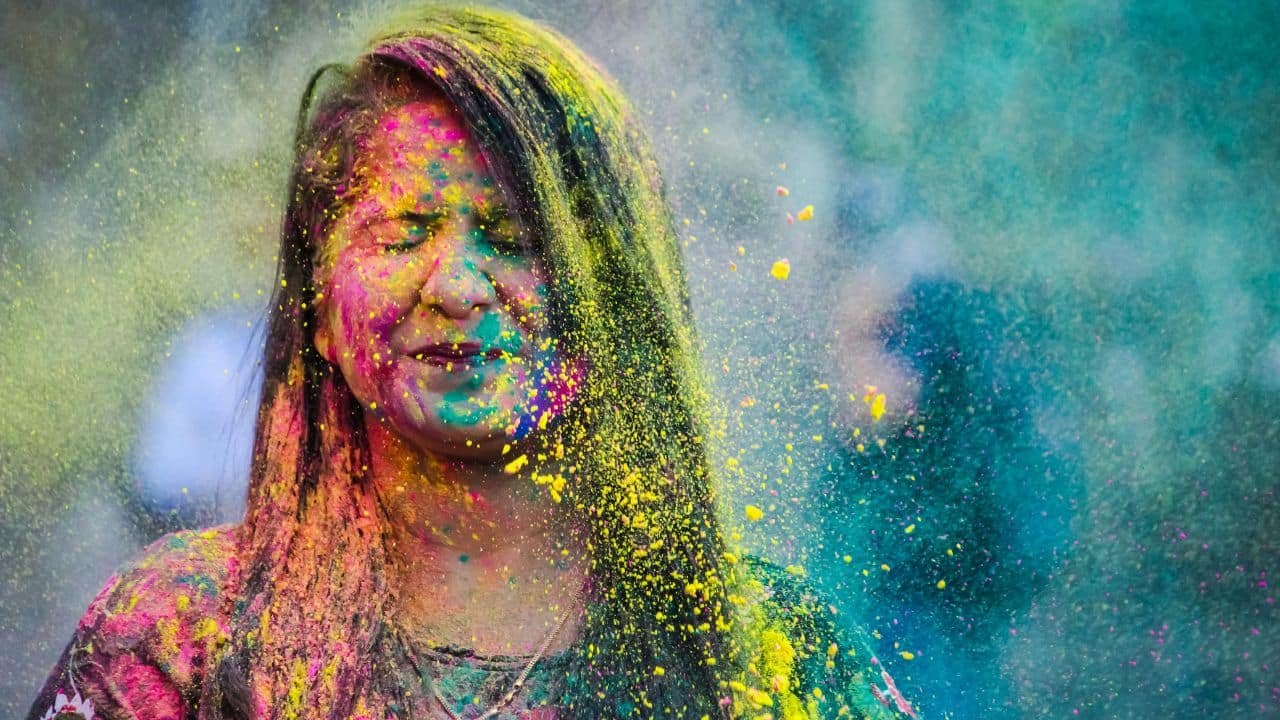
Holi takes place each year in March, on the full moon of the Hindu month of Phalguna. While the festival is famous for its playful clouds of colored powder (gulal) and water sprays (pichkaris), these traditions carry deeper meaning. Holi marks the arrival of spring, new beginnings, and the timeless triumph of good over evil.
The Meaning and Legends Behind Holi
Holi is rooted in ancient legends. One tells the story of Holika and Prince Prahlada, reminding devotees that faith and goodness ultimately triumph over evil.
Another beloved tale is that of Radha and Krishna. According to legend, Krishna playfully colored Radha’s face, a gesture that blossomed into a tradition of joy and equality. Since then, colors have symbolized love, connection, and unity.
Beyond mythology, Holi is also linked to agriculture, marking the arrival of the spring harvest.
How Is the Festival of Colors Celebrated?
Celebrations begin the night before Holi with Holika Dahan, also called Chhoti Holi—a communal bonfire symbolizing the victory of good over evil.
The next morning, the festival bursts into life. People of all ages take to the streets, tossing gulal, splashing water, and filling the air with laughter. Yet Holi is about more than just colors.
Traditional dances fill courtyards and public squares, with participants singing, clapping, and moving in rhythm. Hugs are freely exchanged, and families prepare sweets such as gujiya, a pastry filled with nuts and spices. Neighbors often visit one another, sharing food and joy.
How People Celebrate Holi Around the World
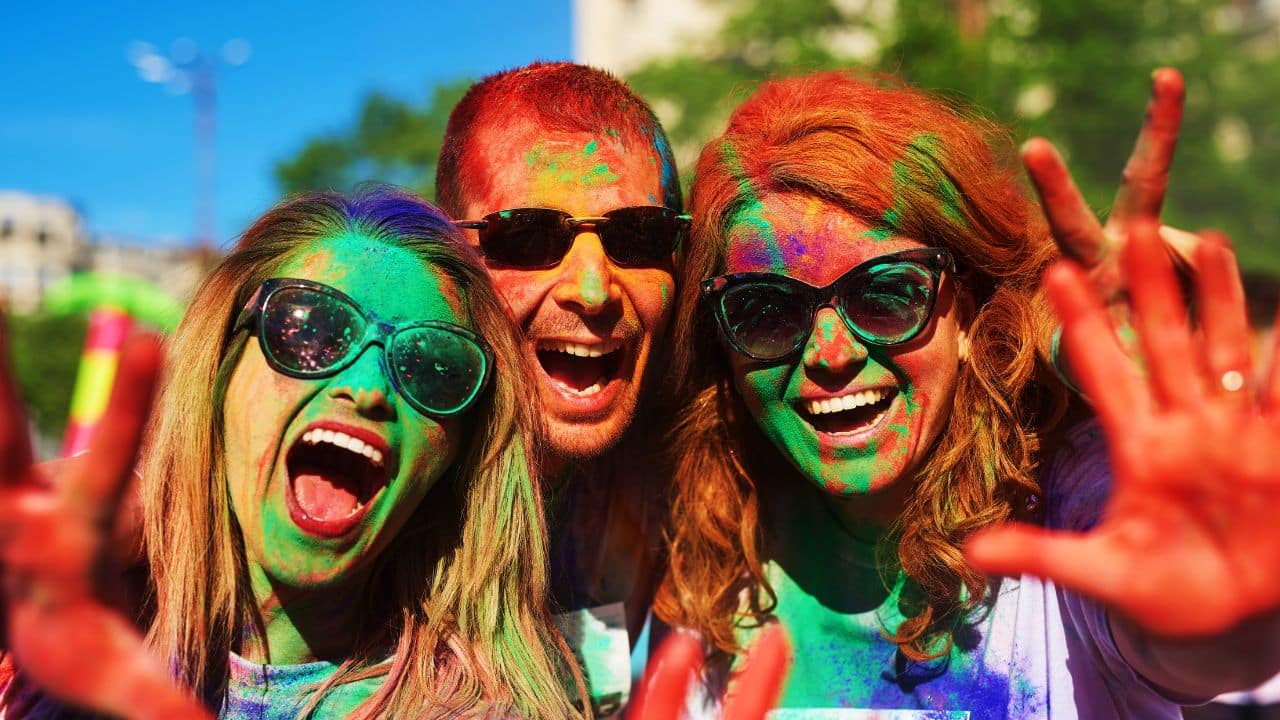
While Holi is deeply rooted in Hindu tradition, it has grown into a cultural celebration embraced by people of many backgrounds. Around the world, Holi festivals often feature music, dancing, and vibrant clouds of color. Though global events may lean more toward entertainment—sometimes with DJs, food stalls, and large gatherings—they remain inspired by the traditional celebrations of India, carrying the same spirit of joy and togetherness.
Why Do They Throw Colors During Holi?
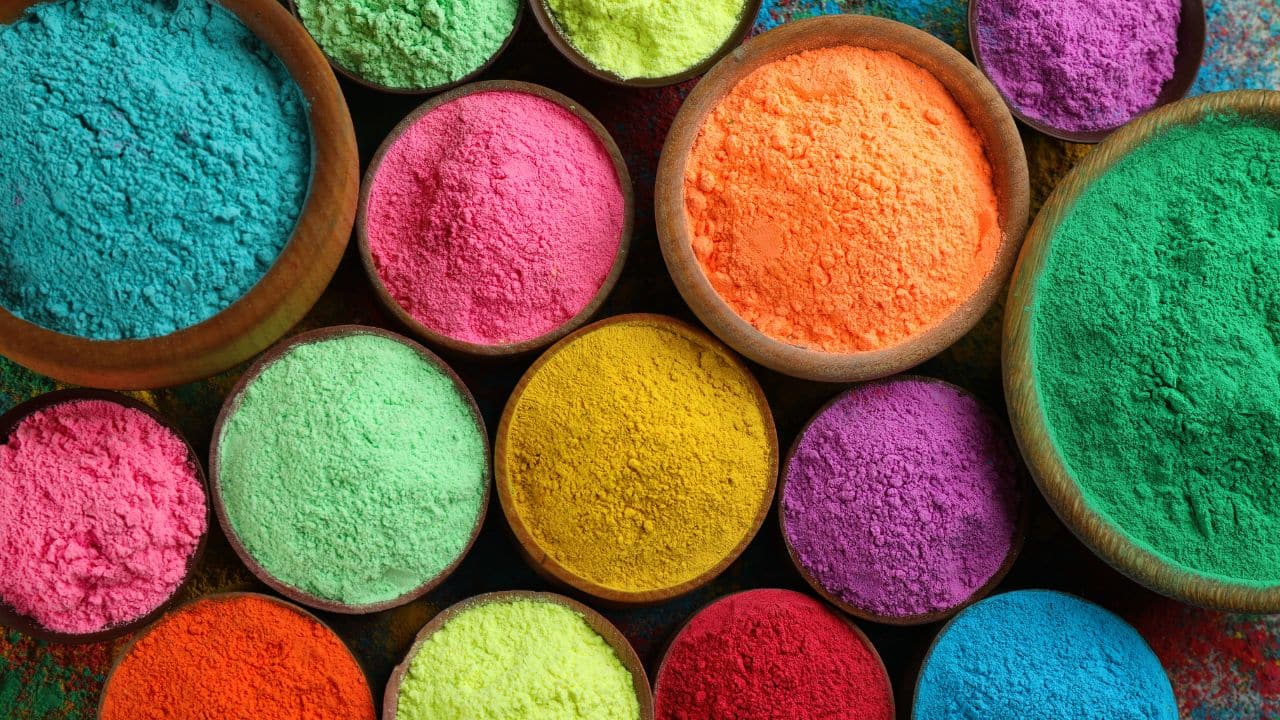
Throwing colors is the heart of Holi, and it’s not just for fun. According to legend, Krishna playfully colored Radha’s face, and this tradition grew into the colorful spirit of Holi.
Each color has its own meaning:
- Red: symbolizes love
- Blue: associated with the Hindu god Krishna
- Yellow: reflects turmeric’s sacred power
- Green: stands for renewal and new beginnings
How Do You Greet Someone on Holi?
A common greeting during Holi is the cheerful cry of “Holi Hai!” (meaning “It’s Holi!” or “Happy Holi!”). Friends and strangers alike joyfully smear gulal on one another’s faces, exchange smiles, and celebrate together. The greeting is both a welcome and an invitation to join in the festive spirit.
Final Thoughts
And there you have it—Holi isn’t just about tossing colors into the air. Whether in India or at a Holi event elsewhere in the world, remember that it’s a festival filled with stories, traditions, and togetherness.