White tie and black tie invitations can cause a double-take. They sound almost the same, but in practice, they ask for very different levels of formality. So, before you show up underdressed or overdressed, here is a closer look at their differences:
Related:
- What Is Gorpcore and How Did It Go From Hiking Trails to Street Style?
- From Ivy-League Look to Bold & Pink: The New Meaning of Preppy
- A Closer Look at the Anti-bride Trend (Meaning and Tips)
What Is the White Tie Dress Code?
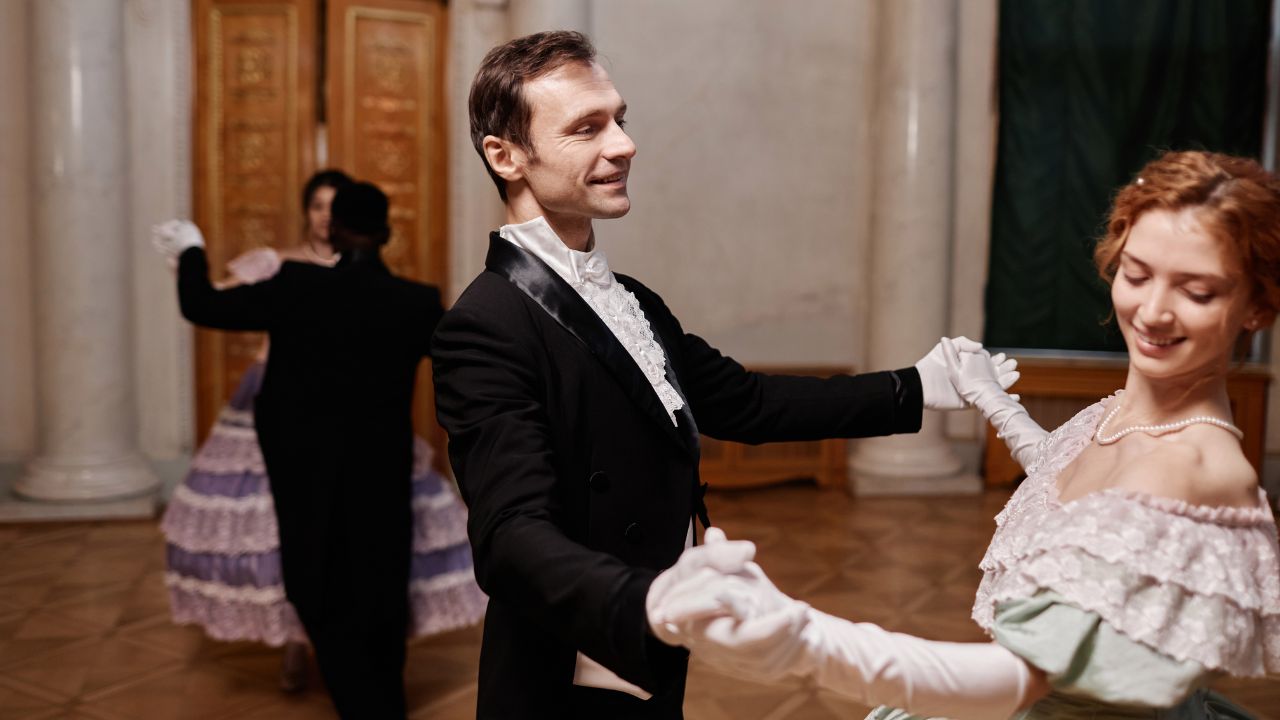
If you are looking for the most formal evening dress code in Western fashion, that would be white tie. It’s associated with royal banquets, state occasions, and events like the Nobel Prize banquet. It’s rare today, but when it does appear, it signals a night of maximum elegance.
For Women
Women at a white tie event are expected to look regal. Floor-length gowns are non-negotiable and typically made from luxurious fabrics such as silk or velvet. And, of course, no short dresses or casual evening wear.
Other details complete the look:
- Gloves: Opera-length gloves are a classic accessory, traditionally removed at dinner.
- Jewelry: This is one of the few dress codes where tiaras are still considered appropriate (though usually limited to royal or aristocratic settings). Fine diamonds, pearls, or heirloom pieces are common.
- Shoes: Closed-toe heels, often satin-covered to match the gown.
- Hair and makeup: Polished updos or styled curls, paired with makeup that’s bold yet refined.
For a visual reference, look to royal women at state banquets hosted by the British monarchy. When Queen Máxima of the Netherlands attended a Buckingham Palace banquet, she paired her gown with both gloves and a tiara, perfectly in line with tradition.
For Men
White tie for men is the most exacting of dress codes, with each element carefully defined.
- Tailcoat: Always black, cut short at the front with long tails at the back.
- Shirt: White with a stiff bib front and wing collar.
- Waistcoat: White and low-cut, made from pique cotton.
- Bow tie: White, hand-tied, and matching the waistcoat.
- Trousers: High-waisted with two silk braids on each leg.
- Shoes: Patent leather court shoes or highly polished oxfords.
- Accessories: White gloves are still correct. Top hats and canes, while traditional, are rarely seen today.
This is the dress code of kings and presidents. When the Nobel laureates attend their banquet in Stockholm each year, every man is dressed in the same silhouette: tailcoat, waistcoat, and bow tie, a uniform of formality.
What Not to Wear: White Tie
- Women: Short dresses, sandals, or flashy costume jewelry.
- Men: Standard tuxedos, black waistcoats, jeans, t-shirts, sneakers, or pre-tied bow ties. Even minor substitutions look out of place.
What Is the Black Tie Dress Code?

Black tie is still formal, but it’s a step down from white tie. It began as a less rigid alternative in the 19th century and is now the go-to for weddings, gala dinners, and glamorous ceremonies like the Academy Awards. The red carpet at the Oscars is essentially a parade of black tie looks—some traditional, some modern twists.
For Women
Black tie offers more flexibility than white tie. Floor-length gowns are common, but elegant cocktail dresses are also acceptable.
Accessories play a big role in this look:
- Jewelry: Statement earrings, cocktail rings, or bold necklaces are fine, as long as they don’t overshadow the dress.
- Shoes: Heels or chic flats, chosen for both style and comfort.
- Bag: A clutch or small evening bag is expected.
- Hair and makeup: Can range from sleek Hollywood waves to playful updos.
For inspiration, look to stars like Lupita Nyong’o or Margot Robbie at the Oscars, where gowns vary from classic Old Hollywood glamour to modern minimalist designs, all perfectly within black tie standards.
For Men
For men, black tie centers on the tuxedo. The foundation is strict, but there’s more room for variation than white tie allows:
- Dinner jacket: Black is traditional, but midnight blue is also accepted. In recent years, velvet and patterned jackets have made appearances, especially at Hollywood events.
- Shirt: White with a pleated or plain front. Turn-down collars are more popular than wing collars today.
- Bow tie: Always black, usually silk or satin.
- Trousers: Matching the jacket with a single satin stripe.
- Shoes: Patent leather shoes or highly polished oxfords.
- Accessories: Cufflinks, pocket squares, and subtle dress watches.
Daniel Craig’s James Bond premieres are a perfect example of black tie done right: timeless tuxedos with sleek tailoring and just enough personality in the details.
What Not to Wear: Black Tie
- Women: Sundresses, casual jumpsuits, or oversized handbags.
- Men: Business suits, long ties, or brown shoes. Even small departures from the tuxedo standard stand out.
White Tie vs Black Tie: What Are the Differences?
At a glance, both look formal: long gowns for women, bow ties for men. But the differences are sharp once you look closer.
| White Tie | Black Tie | |
| Occasions | State banquets, Nobel Prize banquet, royal galas | Weddings, gala dinners, red carpet award shows |
| Women’s Attire | Floor-length gowns, gloves, fine jewelry, and tiaras | Evening gowns or cocktail dresses, statement jewelry |
| Men’s Attire | Black tailcoat, white waistcoat, white bow tie, patent leather court shoes | Tuxedo, black bow tie, dinner jacket, polished shoes |
| Accessories | Gloves, tiaras, sometimes top hats | Clutches, cufflinks, pocket squares |
| Formality Level | Ultra-traditional, ceremonial | Formal but adaptable |
Key Differences to Keep in Mind
- White tie is ceremonial, while black tie is glamorous.
- A tailcoat is the hallmark of white tie, while a tuxedo is the hallmark of black tie.
- Gloves and tiaras still appear at white tie events, but never at black tie.
- Women’s white tie gowns lean toward regal and dramatic; black tie gowns can be modern or minimalist.
- White tie is rare today, mostly seen at royal banquets and Nobel ceremonies. Black tie is far more common, from weddings to Hollywood premieres.
Final Thoughts
And there you have it! White tie and black tie are both formal dress codes, but they carry very different expectations.
White tie is steeped in tradition, the kind of attire seen in royal courts and Nobel ceremonies. Black tie, while still formal, has room for creativity and modern tailoring, making it the dress code of Hollywood red carpets and stylish weddings.