Ever get tangled up trying to figure out if something happened, has happened, or had happened? English gives us twelve tenses to navigate time, which, admittedly, sounds like a lot. So, if you’re ready to stop second-guessing English verb tenses, read on!
Related:
- What Is a Verb and Its Types, Forms, and Tenses?
- The No-Nonsense Guide to Grammar Rules (Capitalization, Nouns, Verbs & More!)
- Common English Verbs You Should Add to Your Vocabulary
Tenses Chart
| Tense | Past | Present | Future |
| Simple | I played football with my cousin over the weekend. | I play football with my cousins every weekend. | I will play football with my cousins next weekend. |
| Perfect | I had played football with him before we went to the shop. | I have played many games this week. | I will have played three matches by the end of the month. |
| Continuous | I was playing darts when my father arrived. | I am playing darts while waiting for lunch. | I will be playing for the darts national team next week. |
| Perfect Continuous | I had been playing for the youth team before I was awarded a professional contract. | I have been playing for the youth team since I turned ten. | I will have been playing for the youth team for a year next Tuesday. |
Present Tenses
When you want to refer to things currently happening, you use these types of tenses. It could be something occurring right now, one that has recently been completed, or one that started a short while ago.
| Simple Present Tense | Present Perfect Tense | Present Continuous Tense | Present Perfect continuous tense |
| I work out during my free time. | I have worked out three times this week. | I am working out while waiting for my girlfriend to arrive. | I have been working out for the past ten years. |
Simple Present Tense
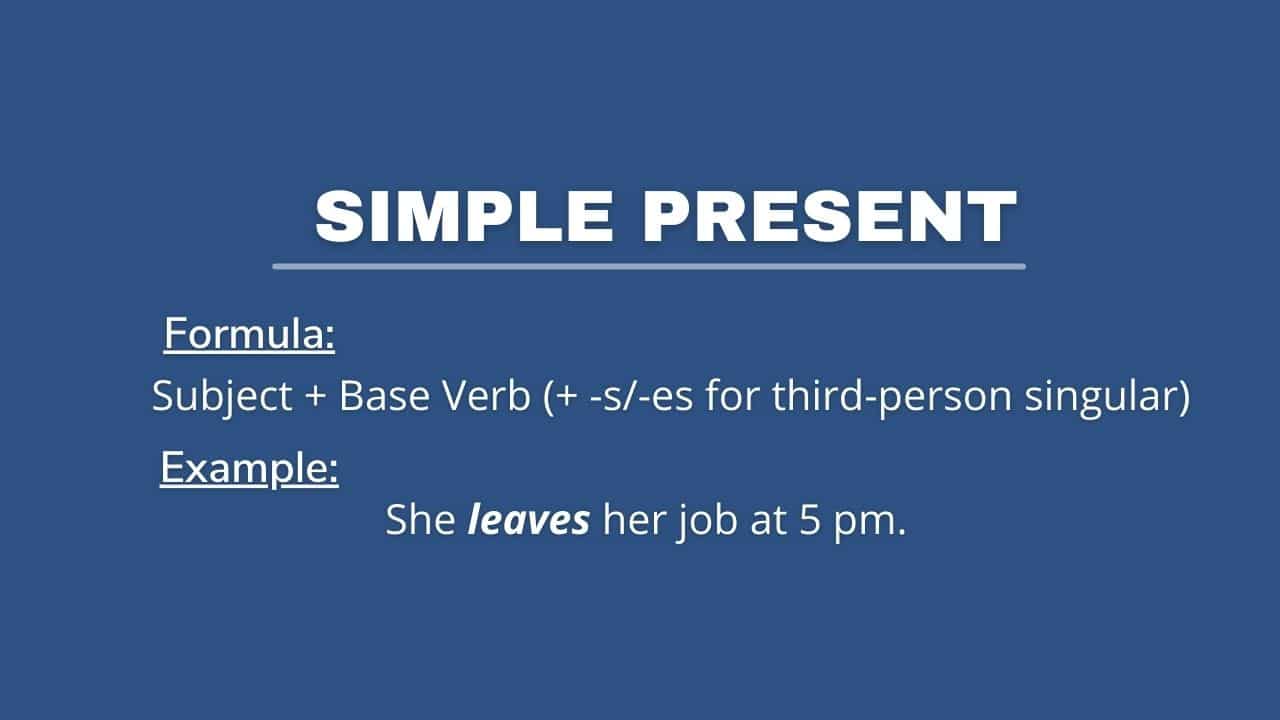
Of the 12 English tenses, this is the most basic. It describes actions taking place regularly, habitually, or facts and truths that are generally unchanging.
In most cases, it uses the base form of the verb. However, for third-person singular subjects (he, she, it, a singular noun), you typically add the suffix –s. For verbs ending in -o, -s, -ss, -sh, -ch, -x, or -z, you add the suffix –es in the third-person singular. You can use the simple present tense to express facts and truths not affected by time, as well as routines and habits.
Formula: Subject + Base Verb (+ -s/-es for third-person singular)
Example sentences:
- I play tennis every day.
- She leaves her job at 5 pm.
Present Perfect Tense
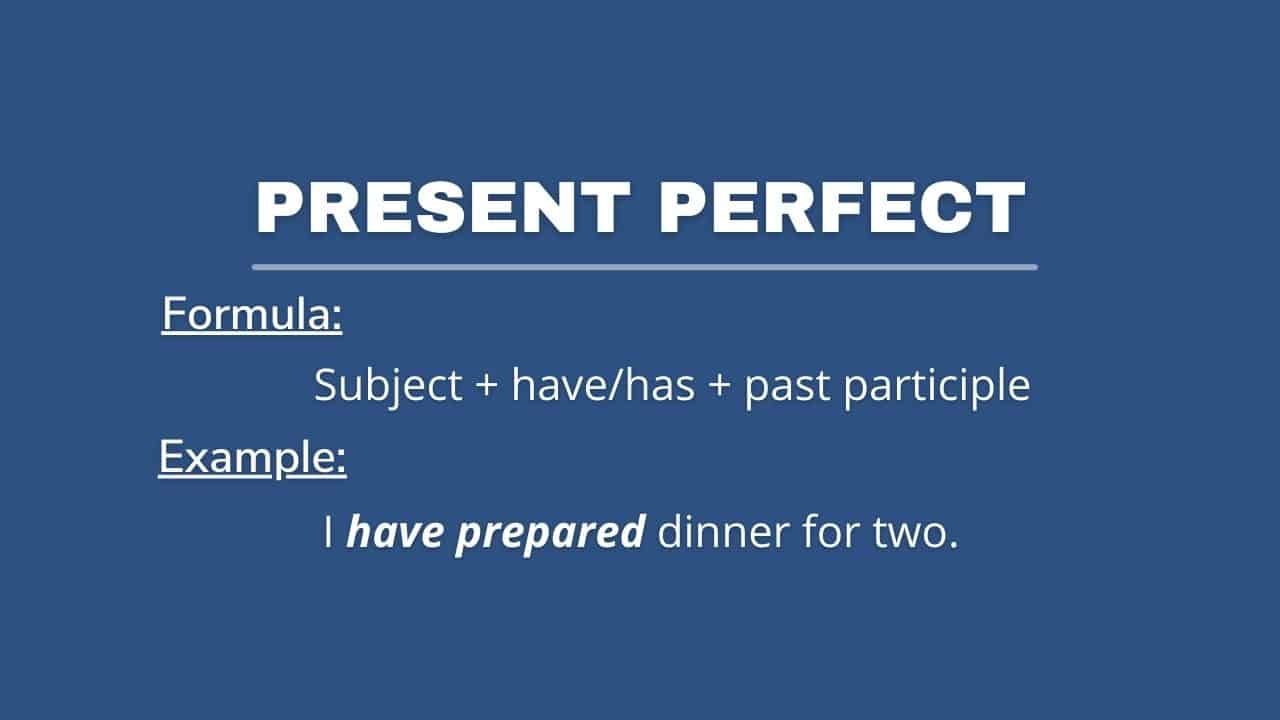
Unlike most other tenses, the present perfect tense can describe several occurrences. You can use it to describe a just-concluded action, an action completed several times before and expected to be completed again, as well as an action that started some time back and is not completed yet.
Formula: Subject + have/has + past participle
Example sentences:
- I have prepared dinner for two.
- The students have travelled a lot this year!
Present Continuous Tense
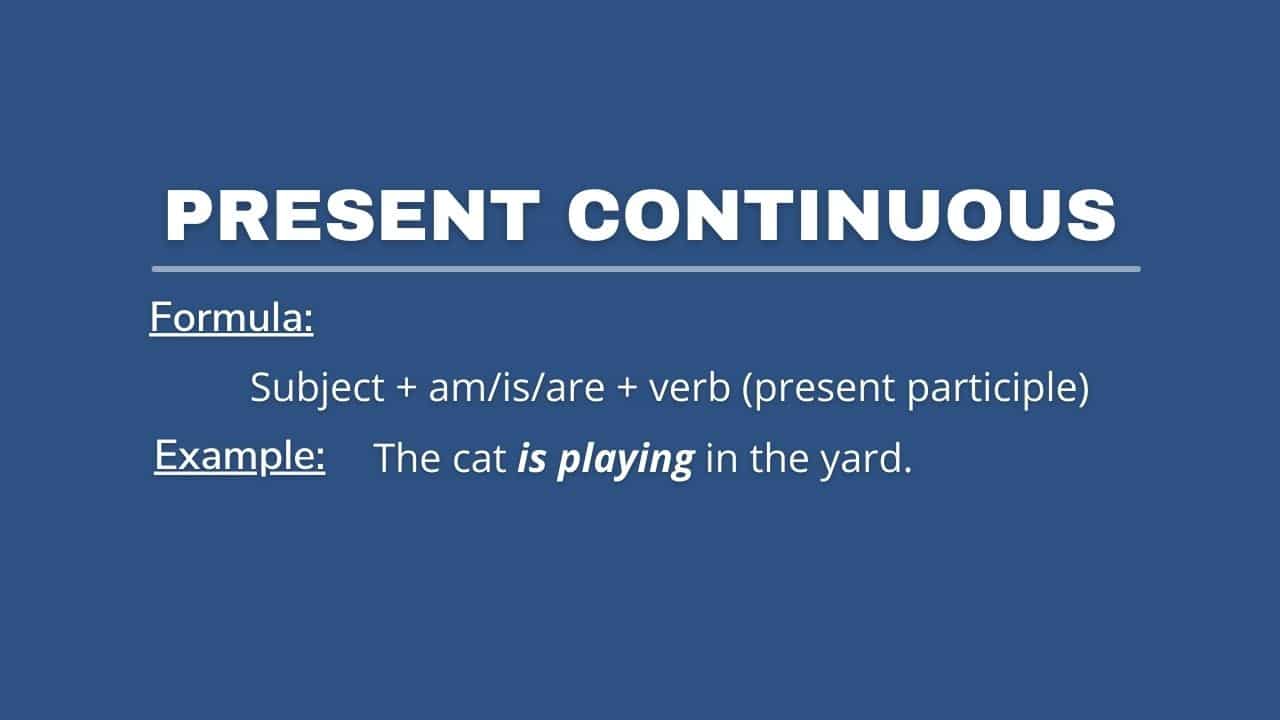
You use this tense to describe an action that is currently taking place. Usually, it’s a temporary action.
Formula: Subject + am/is/are + verb (present participle)
Example sentences:
- The cat is playing in the yard.
- I am revising for the exam.
Present Perfect Continuous Tense
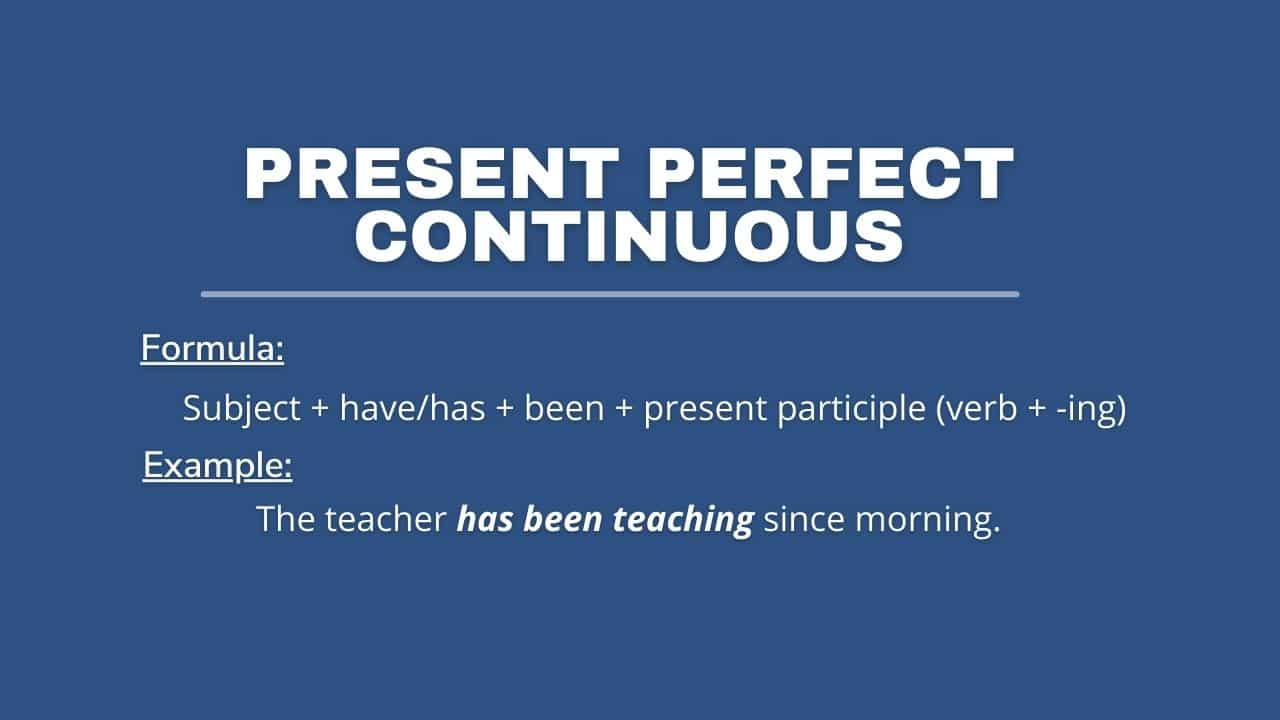
This tense gives attention to the duration of an activity while describing an action that began some time back and is still going on. Other times, it also describes an action that has just ended.
Formula: Subject + have/has + been + present participle (verb + -ing).
Example sentences:
- The teacher has been teaching since morning.
- I have been waiting for your call before I leave the concert.
Past Tenses
The past tense highlights things that have taken place (like a past action), formed by simply adding -ed to a regular verb. Sometimes, however, it can take different aspects. In that case, you’ll have to discuss what happened, when it happened, and whether it was still going on when something else popped up.
| Simple Past Tense | Past Perfect Tense | Past Continuous Tense | Past perfect continuous tense |
| I walked to work last Wednesday. | I had walked for ten minutes when we met. | I was walking to work when we met. | I had been walking to work for 2 years before I bought a car. |
Simple Past Tense
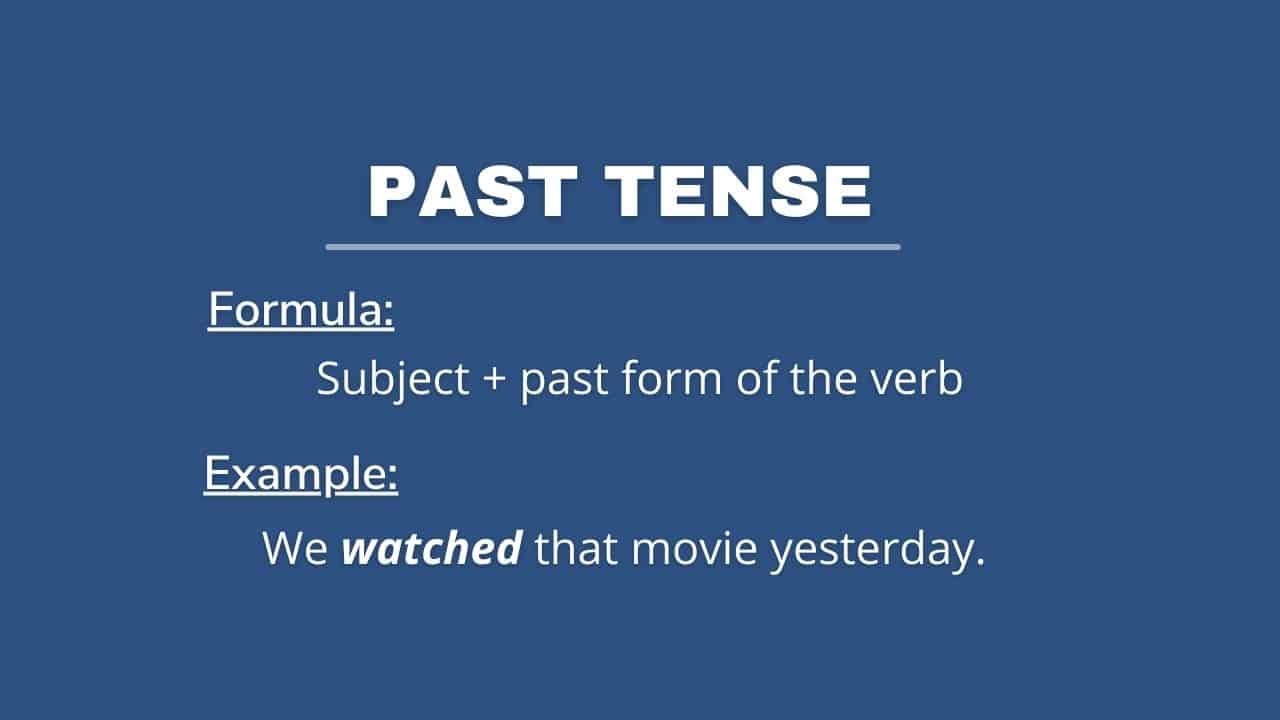
When you want to talk about something that happened and was completed in the past, you use the simple past tense.
It’s simple because you don’t have to provide extra information. The simple past tense ignores all questions about duration and only shows that something is done.
For regular verbs, it’s super easy. You just add “-ed” to the base form, and you’ll have your simple past tense. So, ‘walk’ becomes ‘walked’ and ‘finish’ changes to ‘finished.’ However, things get a little complicated when it comes to irregular verbs. They have no specific pattern, and you’ll have to memorize them. Like, “go” turns into “went,” and “eat” becomes “ate.”
Formula: Subject + past form of the verb
Example sentences:
- She visited Paris last summer.
- We watched that movie yesterday.
Past Perfect Tense
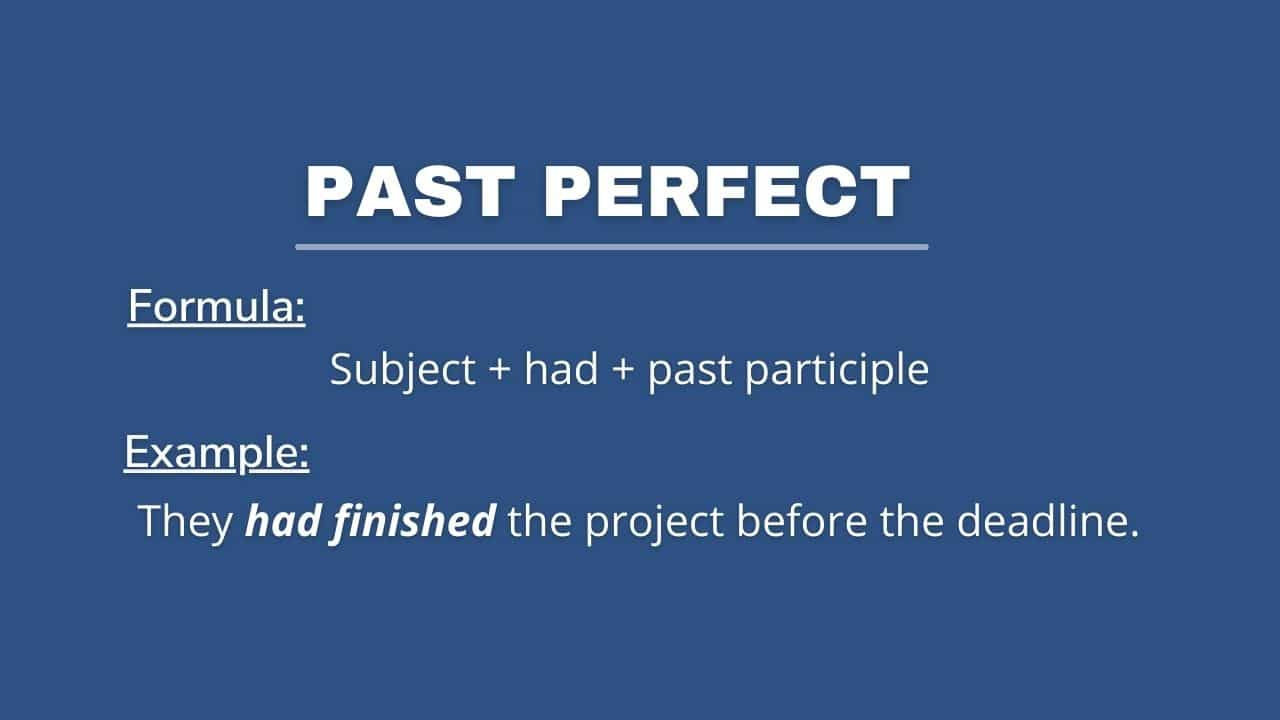
The past perfect tense allows you to talk about two events, one happening before the other in the past. More like saying, “Something happened before I did this.” It works well in storytelling, particularly when demonstrating the correct sequence in multilayered narratives.
Formula: Subject + had + past participle
Example sentences:
- They had finished the project before the deadline.
- We had argued about the project.
Past Continuous Tense
You use the past continuous tense for past ongoing events. For instance, when you want to talk about something that was still happening at a particular time in the past. You could say, “I was sleeping when he arrived,” meaning that when the act of arrival happened, the sleeping process was ongoing.
Formula: Subject + was/were + verb-ing
Example sentences:
- She was driving when the accident happened.
- We were studying all night.
Past Perfect Continuous Tense
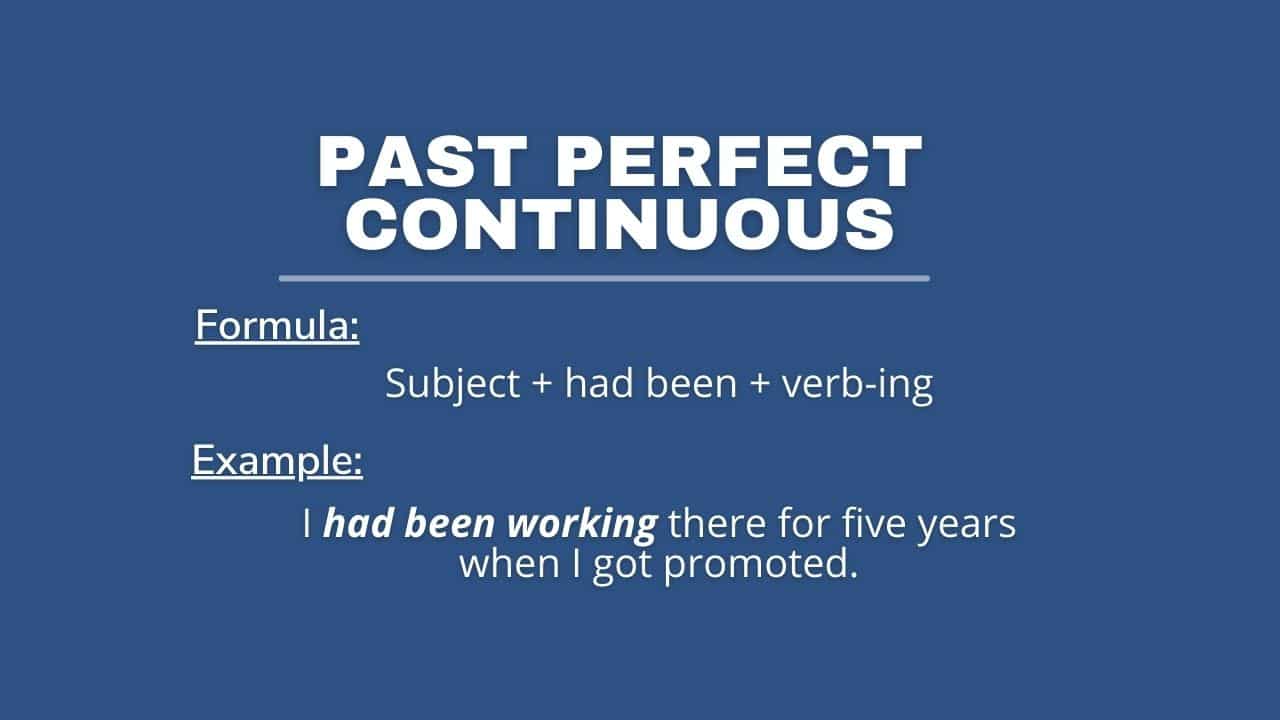
You use this when you want to show that something happened and that it was already happening for some time before something else.
For example, “I had been practicing for weeks before the finals.” This means I had practiced for several weeks by the time the final was played.
Formula: Subject + had been + verb-ing
Example sentences:
- I had been working there for five years when I got promoted.
- They had been arguing for hours before they agreed.
Future Tenses
Want to make future statements like promises and predictions? Future tenses allow you to talk about what’s going to happen. Depending on the aspect, you can discuss prospective action occurrence, end results, or duration of occurrence.
| Simple future tense | Future perfect tense | Future continuous tense | Future perfect continuous tense |
| I will go to the theater on Saturday. | I will have gone to the theater by Saturday. | I will be going to the theater on Saturday. | By Saturday, I will have been going to the theater for 20 years. |
Simple Future Tense / Future Simple Tense
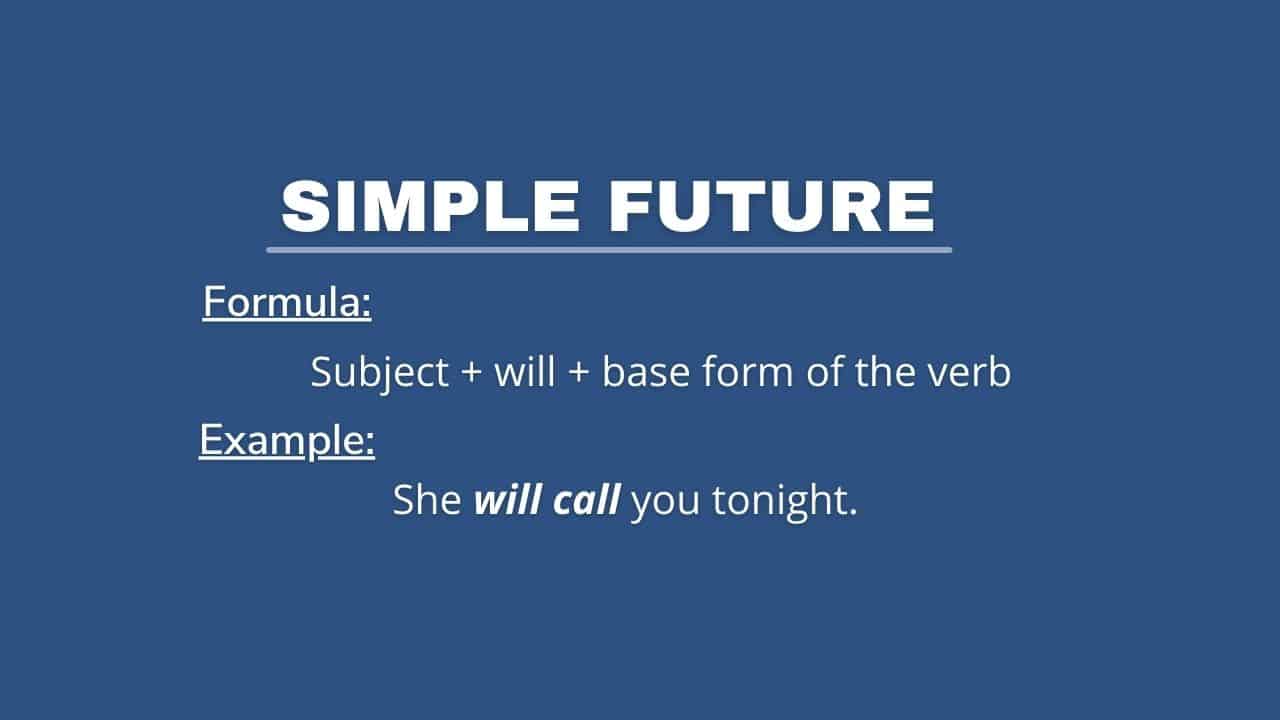
Simple future tense describes activities that exist beyond the present time. Want to make a promise, an offer, or maybe predictions about the future? You can never go wrong with simple future tense.
Formula: Subject + will + base form of the verb
Example sentences:
- She will call you tonight.
- We will travel next month.
Future Perfect Tense
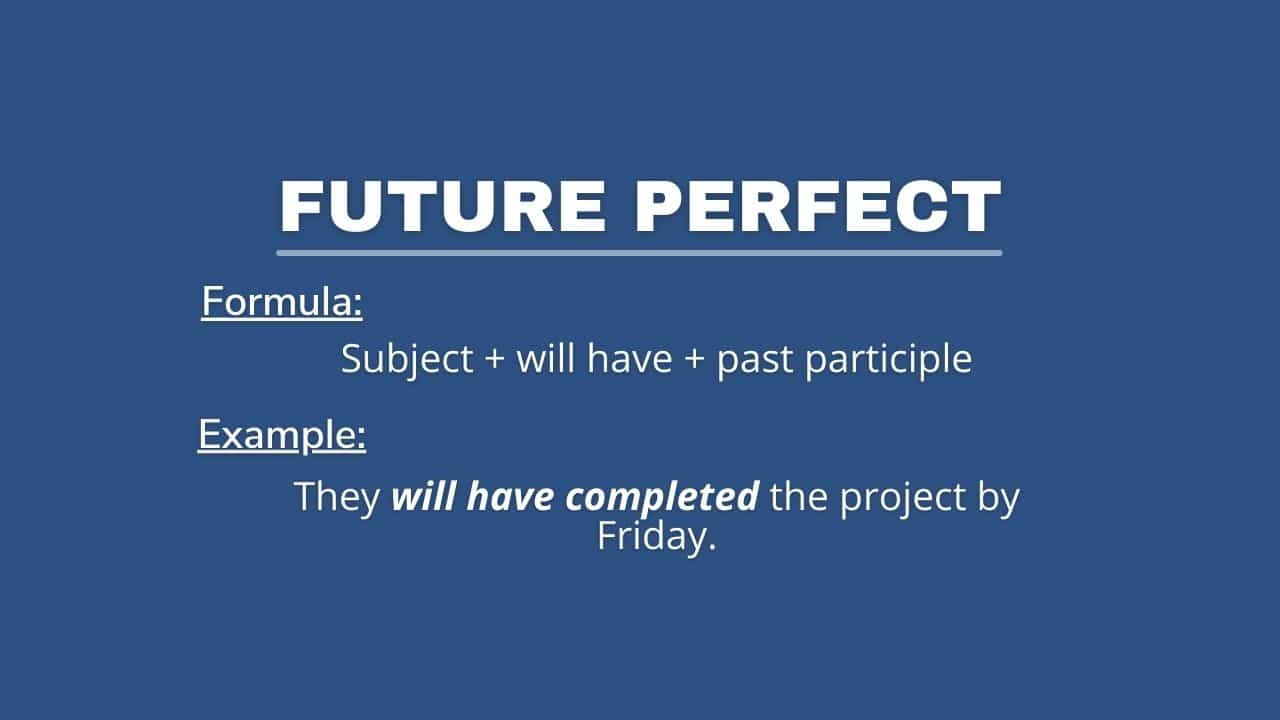
Do you have a task you intend to complete before a specific time in the future? In English grammar, you use the future perfect tense to discuss something that needs completion before an upcoming deadline. “I will have gone home by ten” shows that you’re looking to leave the place by ten.
Formula: Subject + will have + past participle
Example sentences:
- They will have completed the project by next week.
- I will have finished the book before summer.
Future Continuous Tense
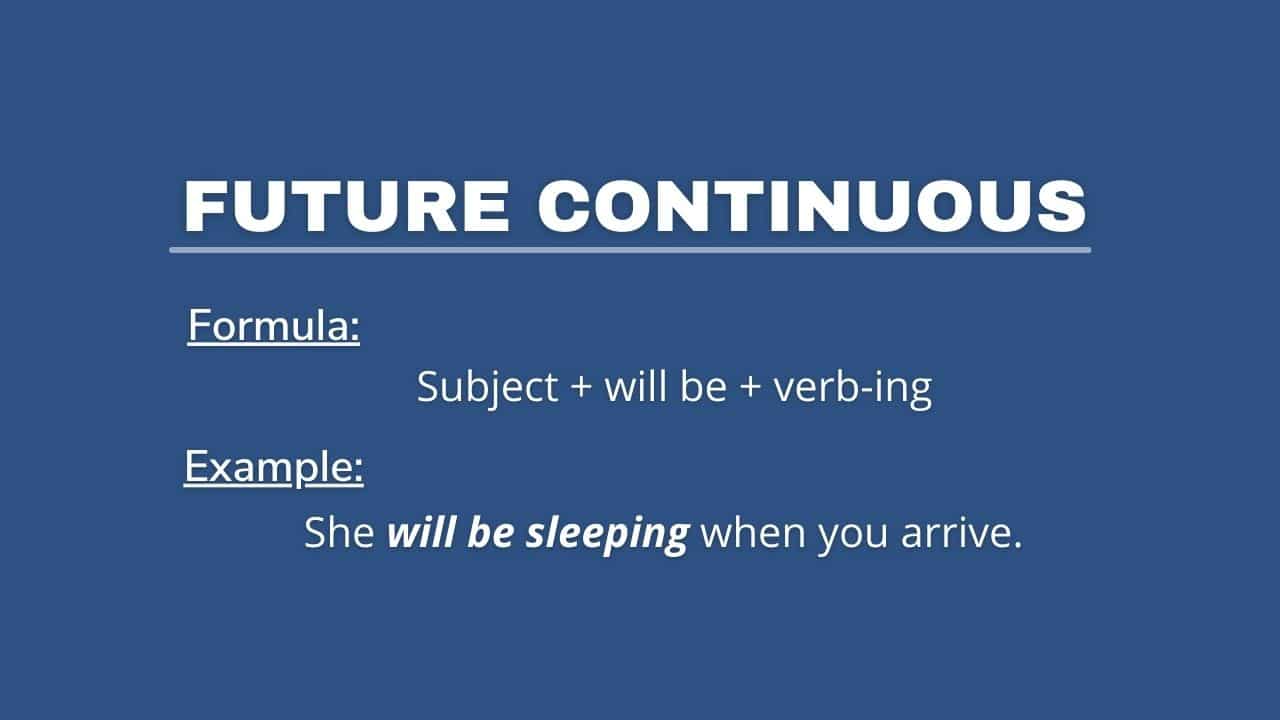
The future continuous tense is about future events that will persist for a certain period of time. Using this tense shows a high degree of certainty that the action will take place.
Formula: Subject + will be + verb-ing
Example sentences:
- She will be sleeping when you arrive.
- They will be attending tomorrow.
Future Perfect Continuous Tense
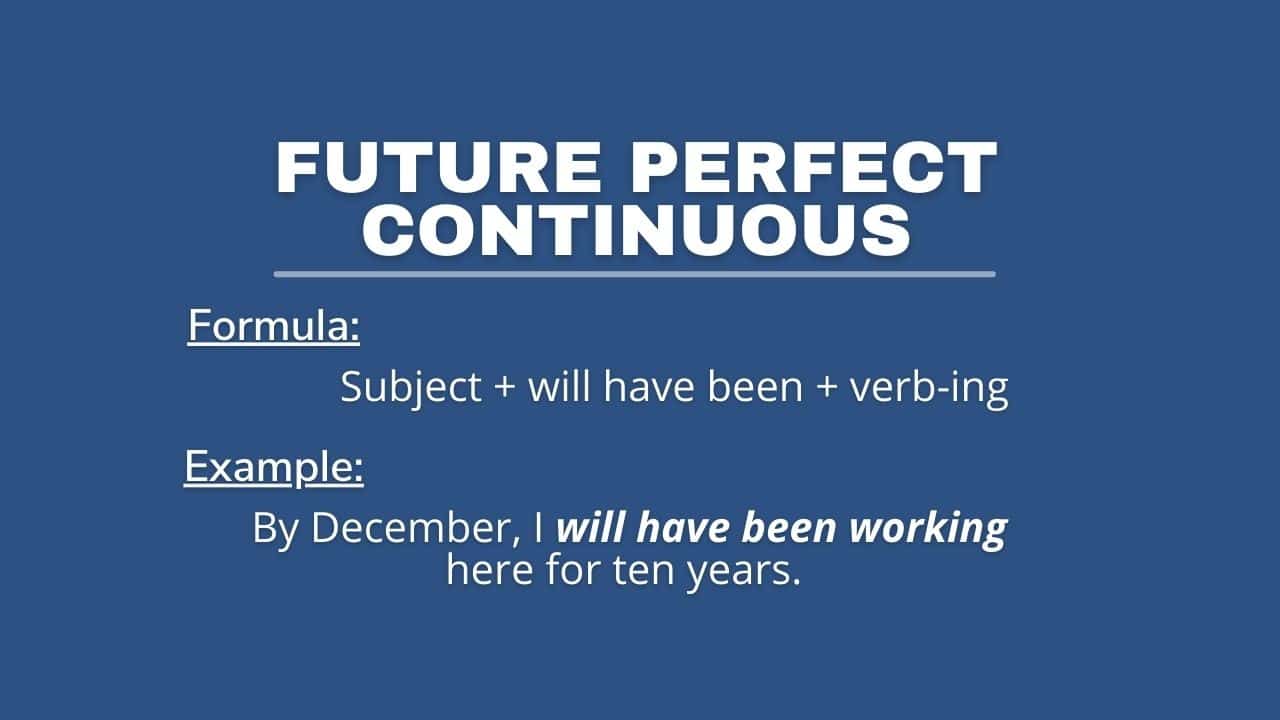
This tense describes actions extending from the present to a designated future time. It is formed using the auxiliary verbs will, have, and been, followed by the present participle (verb + -ing), providing detailed information about ongoing processes while emphasizing their expected duration.
Formula: Subject + will have been + verb-ing
Example sentences:
- By December, I will have been working here for ten years.
- She will have been studying for hours by the time the exam starts.