
Are you a fan of science fiction literature? Do you want to explore the worlds of imaginative and visionary famous sci-fi authors who have expanded the borders of our imagination with their gripping narratives?
In this article, you’ll learn more about the most famous and best science fiction authors of all time and their must-read books. So, whether you’re an occasional reader or just starting to venture, you’re sure to find something that piques your interest in this list of captivating stories. So, let us get started!
Isaac Asimov

Isaac Asimov, a prolific science fiction author and biochemistry professor, was widely known to be one of the most significant literary voices of the 20th century.
He authored over 500 books and countless short stories., making him one of the most productive writers in history.
Asimov authored several influential books that shaped the science fiction genre. One of his most notable works was the “Foundation” series. The series won multiple Hugo Awards, cementing Asimov’s place as one of the most influential and famous sci-fi authors ever.
Must-Read Book: Foundation Trilogy
No products found.Isaac Asimov’s Foundation trilogy is one of history’s most pioneering works of science fiction. It is renowned for its intricate plot, complex characters, and exploration of sociopolitical themes such as governance, power, and rebellion.
It tells the story of a mathematician named Hari Seldon, who predicts the collapse of a galactic empire and establishes a foundation to preserve knowledge and ensure a smoother transition into the future.
Ursula K. Le Guin

Ursula K. Le Guin, an acclaimed American author who wrote science fiction and fantasy, is acknowledged as one of the foremost literary figures of the 20th century.
Throughout her career, she authored numerous novels, short stories, and poems that explored themes of gender, politics, and society in imaginative ways.
Her works, such as The Left Hand of Darkness and The Dispossessed, have been praised for their insightful commentary on power, freedom, and morality.
Le Guin was recognized as one of the greatest sci-fi writers of her century when she received the National Book Foundation Award for Outstanding Service to American Letters in 2014.
Must-Read Book: The Left Hand of Darkness

The Left Hand of Darkness occurs in Gethen, where the inhabitants are androgynous and have no fixed gender identity.
The story follows the character of Genly Ai, an envoy from Earth who is sent to Gethen to convince its leaders to join a coalition of planets.
As Genly Ai navigates the complexities of Gethenian society, he encounters various characters, including the Prime Minister of Karhide, Estraven, and the Gethenian Lord of Estre, Tibe.
Through his interactions with these characters, Genly Ai begins to understand the unique challenges of communication and diplomacy in a fundamentally different society.
The Left Hand of Darkness’s main topic is the flux of gender and how it affects identity and society. Le Guin’s depiction of Gethenian civilization questions conventional ideas of gender and pushes readers to think about how cultural expectations and standards affect how we perceive ourselves and others.
Ray Bradbury
American novelist Ray Bradbury, born in 1920, made a tremendous impact and became among the most significant science fiction writers. He produced multiple science fiction novels, including the renowned Fahrenheit 451 and over 600 short stories.
Bradbury received various honors during his career, including the National Medal of Arts in 2004 and the title Grand Master of the Science Fiction and Fantasy Writers of America.
Themes like the perils of technology, the nature of humanity, and the value of creativity were all tackled in Bradbury’s literature.
Must-Read Book: Fahrenheit 451
Ray Bradbury’s apocalyptic book Fahrenheit 451 was released in 1953.
In this novel, books are forbidden in America, and “firemen” are entrusted with destroying any discovered. Guy Montag, the protagonist, is a fireman who starts to doubt his place in society and eventually runs away after being found in possession of a book.
Bradbury ponders issues like censorship, the value of education, and the perils of uniformity throughout the book. The characters are deep and diverse, with Guy Montag going through a dramatic transition as he starts questioning authority and humanity’s purpose.
The novel Fahrenheit 451 has received high praise for its potent social satire and ability to connect with readers of all ages.
Frank Herbert

Among the significant science fiction authors, Frank Herbert is best known for his sweeping Dune trilogy. It is recognized for its complex world-building, political issues, and intriguing characters. It has been transformed into various media, including a 2021 movie starring Timothée Chalamet.
He started writing professionally in the 1950s, and during his career, he near future-both short stories and novels was widely distributed.
Must-Read Book: Dune

Dune was first released in 1965. It centers on Paul Atreides, a young nobleman overseeing the desert planet Arrakis, the sole source of the spice melange.
Paul finds himself involved in a power battle involving opposing groups and frightening monsters as he navigates Arrakis’ intricate political system. He gains incredible skills along the road and struggles with his fate.
Paul and his mother, Lady Jessica, and his opponent, Baron Harkonnen, are among the book’s memorable characters.
Robert Heinlein

Heinlein, also one of the most famous sci-fi authors, produced many books and short tales throughout his career, covering various subjects, including individualism, political philosophy, and space travel.
Several of Heinlein’s ideas and concepts have become permanent fixtures of science fiction, significantly affecting popular culture. For instance, he popularized the idea of a “waterbed” in his book Stranger in a Strange Place, which brought it to the globe.
Must-Read Book: Starship Troopers
No products found.Starship Troopers follows the story of Juan “Johnnie” Rico, a young man who joins the military to fight against an alien species called the “Bugs.” The book features secondary characters such as Johnnie’s love interest, Carmen Ibanez, and his mentor, Sergeant Zim.
Heinlein weaves in aspects of military strategy and tactics as Johnnie and his troops battle the Bugs. This resulted in the novel being praised for its realistic portrayal of military life and battle and its examination of complex political and social issues.
Arthur C. Clarke

British science fiction author and futurist Arthur C. Clarke was born in Somerset in 1917. He is well known for his novel 2001: A Space Odyssey, which Stanley Kubrick subsequently turned into a critically acclaimed movie.
Clarke was also a prolific writer of short stories, essays, and nonfiction books. Along with his literary accomplishments, Clarke was a forward-thinking individual who prophesied several technical developments that have subsequently come to pass, including satellite communication and the internet.
Over his career, many accolades and prizes, like the Nebula, Hugo, and John W. Campbell Memorial Awards, were bestowed on Clarke. In 1997, he was honored with a spot in the Science Fiction and Fantasy Hall of Fame.
Must-Read Book: Space Odyssey Series
No products found.Space Odyssey consists of 2001: A Space Odyssey, 2010: Odyssey Two, 2061: Odyssey Three, and 3001: The Last Odyssey.
The first novel, “2001: A Space Odyssey,” inspired the great Stanley Kubrick film.
The plot centers on an astronaut team traveling to Jupiter with the help of the intelligent computer HAL 9000. They come across a mysterious black monolith along the road that appears to have a significant impact on their voyage and humanity’s future.
In 2010: Odyssey Two, a combined Soviet-American expedition is dispatched to Jupiter to investigate what happened in the first book. They learn that a formidable extraterrestrial intellect is at work. So they are forced to act quickly to avert a catastrophe that might endanger all life on Earth.
A few decades later, in 2061: Odyssey Three, a new expedition to investigate a comet that has entered the solar system is followed. The group learns about the monoliths and their significance in human history.
The final book in the series, 3001: The Final Odyssey, is set a millennium after the first events. As he explores a very different universe and learns a devastating fact about the real nature of the monoliths and their purpose, the plot follows a revived astronaut from the previous novel.
Jules Verne

French author, poet, and dramatist Jules Verne were born in Nantes, France, in 1828. He is regarded as one of the pioneers of science fiction and is well-known for his innovative and forward-thinking work.
Early on, Verne concentrated on writing plays and short tales, but his adventure books, such as Journey to the Center of the Earth and Twenty Thousand Leagues Under the Sea,” helped him achieve fame.
These books and From the Earth to the Moon comprise the Voyages Extraordinaires series, solidifying Jules Verne’s standing as a science fiction author.
Must-Read Book: Twenty Thousand Leagues Under the Sea
No products found.Jules Verne’s famous science fiction book, “Twenty Thousand Leagues Under the Sea,” was first released in 1870.
During their dangerous quest to find a strange sea creature that has been terrifying ships, Professor Pierre Aronnax, his devoted servant Conseil, and the Canadian harpooner Ned Land are followed throughout the novel.
Their exploration, however, takes an unexpected turn when they learn that the creature is the Nautilus, an advanced submarine created and commanded by the mysterious Captain Nemo.
The protagonists encounter a variety of exotic marine life and extraordinary natural occurrences as they journey into the ocean’s depths onboard the Nautilus.
In addition, they get into a series of clashes with Captain Nemo, who has a bitter hatred for humans and their negative effects on the environment and other hazardous marine monsters.
William Gibson

American-Canadian science fiction author William Gibson is one of the forerunners of the cyberpunk subgenre. The Nebula Award, the Hugo Award, and the Philip K. Dick Award are just a few of the accolades he has received for his writing.
Gibson is renowned for his futuristic explorations of technology, society, and human identity. His first book, Neuromancer, which won the Nebula Award, the Hugo Award, and the Philip K. Dick Award, is what most people remember him for.
Gibson is the author of several other well-praised books, including Count Zero, Mona Lisa Overdrive, and Pattern Recognition. He also has written scripts and worked with other creatives, such as musician Brian Eno.
Must-Read Book: Neuromancer
No products found.In 1984, William Gibson released the science fiction book Neuromancer.
Set in a dystopian future, corporations have replaced governments as the dominant force, and cybernetic implants are now a feasible option for enhancing human bodies.
The novel’s protagonist is Case, a former computer hacker who an unidentified employer hires to carry out a hacking operation that can potentially alter the course of history.
Mary Shelley

A British novelist, Mary Shelley, is primarily known for the Gothic book Frankenstein. She was the daughter of political philosopher William Godwin and feminist writer Mary Wollstonecraft, who lived in London at the time of her birth in 1797.
When Shelley was just eighteen years old, she started writing Frankenstein. In 1818, the book was published, however, under an assumed name.
Other important works by Shelley include the post-apocalyptic book The Last Man which was released in 1826, and the novel Mathilda, which wasn’t released until 1959.
As a female novelist in the early 19th century, Shelley’s literary accomplishments were ground-breaking. Even famous authors like H.G. Wells and Jules Verne were influenced by her writing.
Must-Read Book: Frankenstein
No products found.In Frankenstein, a young scientist Victor Frankenstein produces a hideous yet sentient monster.
Before ultimately succeeding in bringing his brainchild to life, he spends years performing covert experiments in his lab. Victor quickly regrets his actions after creating the horrifying and ugly monster.
However, the creature is intellectual and empathetic. It eventually longs for a company, setting off a fatal series of events.
The concept of Frankenstein’s monster has evolved into an iconic presence in literature and culture because of the book’s various film, television, and stage adaptations.
Margaret Atwood

Canadian author Margaret Atwood is renowned for her critically acclaimed novels, poetry, and essays.
Atwood, born in Ottawa, Canada, in 1939, began writing at a young age and later pursued studies in English literature at Radcliffe College in Cambridge, Massachusetts, and the University of Toronto.
Atwood has garnered various honors for her literary works, including the coveted Booker Prize, which she won twice for The Blind Assassin (2000) and The Testaments (2019). She has received the Franz Kafka Prize, the Governor General’s Award, and the Arthur C. Clarke Award, among others.
Social justice, environmental conservation, and feminism are all common topics in Atwood’s writing. Her best-known work, The Handmaid’s Tale, has become a cultural classic and has been made into a lucrative television series.
In the novel, women are deprived of their rights and made to act as surrogates for affluent families in a dystopian future.
Atwood has authored over 50 books, spanning fiction, nonfiction, and poetry collections. Her works have received recognition for their strong storytelling, complex symbolism, and vivid imagery.
Must-Read Book: The Heart Goes Last
No products found.The Heart Goes Last shows Attwood’s captivating writing style that skillfully combines themes of love, grief, power, and control.
The setting for the book is a near-future world where the economy has crashed and crime rates have increased. During the narrative, Stan and Charmaine, a married couple, struggle to make it through each day.
After losing their employment and house, the couple has little choice but to live in their automobile. They choose to participate after seeing an advertisement for the Positron Project, a social experiment.
The participants in the initiative will reside in a model suburban neighborhood where every aspect of their life will be managed and observed by the government.
The members rotate between living in the community and working as convicts in the adjacent jail in exchange for a pleasant lifestyle.
As the plot develops, Stan and Charmaine learn that the project is not what it first appears to be, and they become caught up in a web of fraud and corruption. They are compelled to make challenging decisions to defend one another and themselves.
Liu Cixin

Chinese science fiction author Liu Cixin has won multiple awards for his writing, including the esteemed Hugo Award for Best Novel in 2015.
He began writing science fiction in the early 1990s, and his 2008 release of The Three-Body Problem in China helped him become well-known.
The trilogy’s first volume, “Remembrance of Earth’s Past,” has earned various accolades, including the Hugo Award for Best Novel in 2015, which made Liu the first Asian author to receive the honor.
In addition to science fiction, Liu has penned several nonfiction books and articles. He is renowned for examining scientific ideas and incorporating Chinese history and cultural elements into his writing.
Must-Read Book: Three-Body Problem

The Trisolarans are an extraterrestrial society that humans first encounter in the novel. They are from a planet with three suns and chaotic, erratic weather patterns.
It centers on Ye Wenjie, a scientist who suffers tragedy at the hands of the state and looks for consolation by getting in touch with an alien race.
More people are introduced as the plot develops, including Wang Miao, a nanomaterials researcher who discovers an online mystery game that appears to be related to the Trisolarans.
The book examines issues including the Fermi paradox, the morality of interacting with extraterrestrial civilizations, and the very essence of humankind.
Orson Scott Card

American novelist Orson Scott Card is well-known for his work in the science fiction and fantasy genres.
The book Ender’s Game, which took home the Hugo and Nebula Awards in 1986, is Card’s best-known creation.
The Alvin Maker series, the Homecoming Saga, and Speaker for the Dead, the follow-up to Ender’s Game, are some of his other significant works.
Card has also penned countless short tales and more than 50 books.
Must-Read Book: Ender’s Game
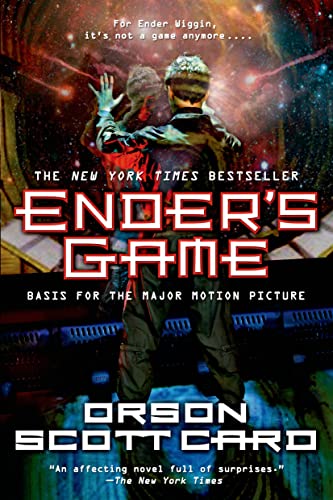
The science fiction book Ender’s Game centers on a young boy named Ender Wiggin, who the government chooses to enroll at Battle School, a facility created to prepare kids to serve as military leaders in a conflict against an alien civilization.
Ender establishes himself as a great tactician and moves up the ranks fast. Still, as he prepares for the aliens’ ultimate fight, he must deal with moral ambiguity, loneliness, and manipulation. The story looks at issues like loyalty, leadership, and the effects of violence.
Dan Simmons
American author Dan Simmons has earned multiple honors for his science fiction and horror writing, including the Hugo, Nebula, and Bram Stoker Awards.
He has written in various genres, including science fiction, horror, and historical fiction, and is renowned for his flexibility. He is behind some of the most well-known books, such as Hyperion, The Terror, and Ilium.
Aside from having a strong literary career, Simmons has also held positions as a college lecturer and high school teacher.
Must-Read Book: Hyperion
No products found.Hyperion takes place in a far-off future where humankind has colonized the whole galaxy and is split into many groups.
The plot centers on a group of seven pilgrims who journey to Hyperion, searching for the enigmatic and potent Time Tombs. Each pilgrim shares their trip, explaining why they traveled and became acquainted with the Time Tombs.
A priest, a soldier, a poet, a scholar, a detective, a diplomat, and a cyborg are among the characters.
Prices last updated on 2026-07-20


H. G. Wells is only mentioned in conjunction with Mary Shelley. He needs to be on this list. His novels (The Island of Doctor Moreau, The Time Machine, The Invisible Man, The War of the Worlds, When the Sleeper Wakes, The First Men in the Moon, The Food of the Gods, The Shape of Things to Come) and short stories were much more influential than many of the names listed. I know Heinlein indicated that Wells and Kipling were key influences on his work.
Additionally, Edgar Rice Burroughs continues to influence modern authors and references to his Martian novels continue to show up in books spanning from Heinlein to Erik Flint.
Philip K Dick should definitely be on this list. Is there an author with more direct Hollywood adaptations?